Enjoy this article?
Most Museums Journal content is only available to members. Join the MA to get full access to the latest thinking and trends from across the sector, case studies and best practice advice.


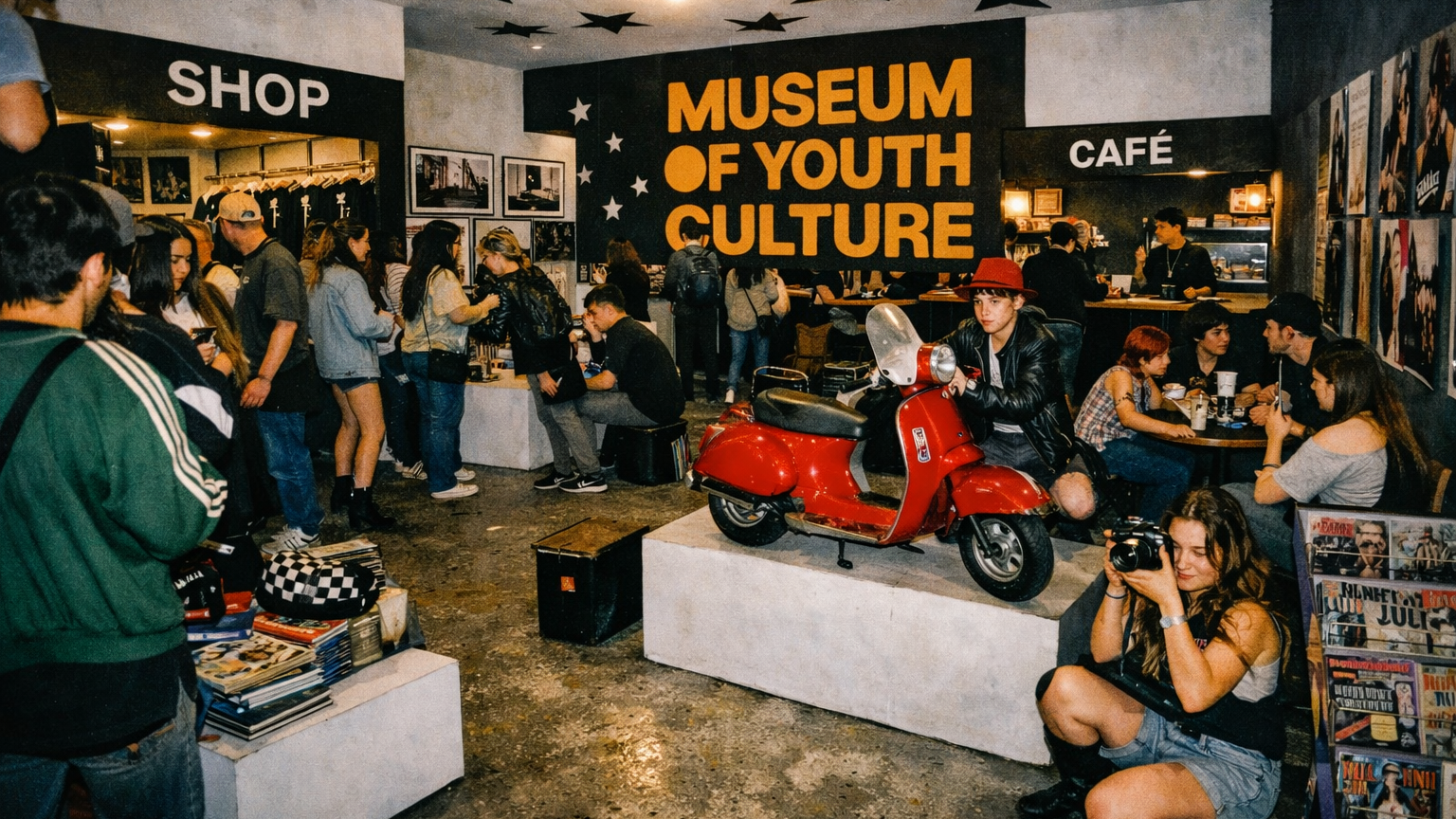
The UK's first permanent institution dedicated to preserving youth culture will open its doors to visitors on 15 May, nearly 20 years since it was first founded.
The Museum of Youth Culture is housed on the St. Pancras Campus at 100 Royal College Street in Camden, London. The new custom-designed, 6,500 sq ft space comprises three galleries that will bring together photography, artefacts, audio, fashion and print tracing the evolution of British youth movements across the decades.
The museum documents how subcultures emerge at the margins before shaping the mainstream, and how generations of young people continue to redefine Britain’s creative identity. The development of the museum has been funded by the National Lottery Heritage Fund.
Founded in 1997 by Jon Swinstead, who co-founded the 1990s London magazine Sleazenation that focused on underground fashion, club culture, music and youth identity, the museum is now co-directed by Swinstead and photographer and creative professional Jamie Brett, who joined in 2012.
Swinstead and Brett together developed the organisation from its beginnings as a photo archive in a shed. The collection now incorporates photographs, ephemera, objects and oral histories.
In more recent years, the museum has run in pop-up venues around London and temporary exhibitions such as I'm Not Okay: An Emo Retrospective at the Barbican in 2024, which welcomed 55,000 visitors over three months.
The museum also toured its Growing Up In Britain exhibition to Tokyo, and has run collaborations with fashion outlets and companies including Depop, Fred Perry, JD Sports, Polaroid and Dr Martens.
“Everything in this museum exists because people cared enough to save it," Brett said. "Flyers kept in drawers. Photos stored on hard drives. Stories shared before they disappeared. We’ve poured years into protecting this culture because it belongs to the people who built it. Giving it a permanent home is about honouring that effort.”
The museum hopes to open further venues in Birmingham in 2027 and Glasgow in 2029.
Most Museums Journal content is only available to members. Join the MA to get full access to the latest thinking and trends from across the sector, case studies and best practice advice.