
The Israeli-US bombing of Iran’s nuclear facilities raises a number of questions about the nuclear order and how nuclear non-proliferation is managed in today’s world. This is particularly pertinent in the Middle East, where proliferation risks have existed in the past and will remain in the future. What means are available to strengthen non-proliferation in the region, and what role can the NPT take?
The NPT defines five states as nuclear-weapons states – China, France, Russia, the UK, and the US. The rest of the signatories, around 180 states, have agreed to abstain from nuclear weapons and are today non-nuclear. Four states, India, Israel, North Korea, and Pakistan, have stayed outside the treaty and have developed nuclear weapons.
The dynamics of the Middle East do not promote regionwide cooperation, and the region’s security architecture is based on domination from the outside, resulting in a lack of regional identity and intense competition. This is also the case in relation to the nuclear non-proliferation regime. In the past, there have been different approaches to strengthening and enforcing non-proliferation in the region, each with different implications for the NPT, the cornerstone of the nuclear order. These include a regional nuclear weapon-free zone, negotiations for a peaceful nuclear program, and the destruction of nuclear facilities.
The Middle East as a Nuclear Weapon-Free Zone
Establishing Nuclear Weapon-Free Zones (NWFZ) is a regional approach to strengthening global nuclear non-proliferation and disarmament norms. The NPT explicitly endorses this and has since been confirmed at numerous NPT meetings.
A nuclear weapon (and other WMD) free zone in the Middle East has been underway for 50 years. It was proposed in 1974 by Iran and Egypt and subsequently endorsed by the United Nations General Assembly (UNGA) in a resolution. From 1980 to 2018, similar resolutions were passed annually without a vote by the UNGA. The UN Security Council also endorsed the establishment of such a zone. In 1990, the resolution was broadened to include other weapons of mass destruction (WMD), and the zone was named MEWMDFZ (Middle East WMD-free zone) thereafter.
In 1995, the zone became part of an agreed package intended to transform the NPT into a permanent treaty. The resolution on the Middle East called upon all states in the Middle East – and the NPT-depositaries Russia, the UK, and the US – to take practical steps towards the establishment of an effectively verifiable Middle East zone free of WMD and their delivery systems.
Despite the 1995 resolution, there has been no real progress in establishing the MEWMDFZ. Therefore, in 2010, the NPT Review Conference called for a conference “to be attended by all States of the Middle East, on the establishment of a Middle East zone free of nuclear weapons and all other weapons of mass destruction…”.
This led to attempts to convene a conference in 2012. However, despite several consultative meetings, the US formally cancelled the conference in November 2012, given that Israel was unwilling to attend.
In 2013, a number of states in the region sent letters supporting the zone to the Secretary-General of UNODA. At the 2015 NPT Review Conference, Egypt proposed a conference on the MEWMDFZ, suggesting that all states willing to participate could attend, but the proposal was rejected. In 2018, the UNGA decided to hold yearly conferences to establish a Middle East WMD-free zone until this became a reality.
Negotiating with the “Axis of Evil”
In 2002, US President George W. Bush categorised three states – Iraq, North Korea, and Iran – as the “Axis of Evil”. All have been accused of either developing or intending to develop nuclear weapons. In Iraq, these accusations and claims resulted in a US military intervention, which found no traces of a weapons of mass destruction (WMD) program. This military intervention created a reaction in North Korea as it feared it would meet the same fate. North Korea withdrew from the NPT and tested for nuclear weapons in 2006. Now Iran is facing the North Korean choice, the outcome of which is still open.
Iran is facing the North Korean choice, the outcome of which is still open. Tarja Cronberg
Iran developed a clandestine nuclear program before 2003. In 2003, the EU initiated the first negotiations that led to Iran’s voluntary suspension of uranium enrichment. In 2005, the US joined the talks, hoping these would fail. This shifted the blame to Iran and made it possible to take the matter to the Security Council and impose a series of UN sanctions.
Suspension of uranium enrichment has been the red thread in negotiations, as Iran claims its right, according to the NPT, to enrich uranium for peaceful purposes. When the US opened up to the idea of small-scale enrichment by Iran, the JCPOA was negotiated in cooperation with the EU and signed in 2015. Iran would remain a non-nuclear state, apply strict verification requirements, and, in return, receive some sanctions relief. As the IAEA gave its blessing, the agreement was recognised as a prime example of non-proliferation restrictions under the NPT.
In May 2018, US President Trump withdrew from the agreement. Iran followed the JCPOA restrictions during a year of “strategic patience”, hoping the EU could repair the situation. Re-negotiation of the deal was expected to occur during the Biden administration, but aside from a few contacts and initiatives, there was no progress. In his new term, President Trump restarted negotiations, premised on the idea that Iran could potentially continue some enrichment while securing that Iran would not get nuclear weapons. This position was later changed to no enrichment, which Iran strongly opposed. The renewed discussions included innovative new ideas, such as creating a consortium with neighbouring states, such as Saudi Arabia and the UAE, that could ensure regionally that Iran was not building nuclear weapons.
Bombs for non-proliferation
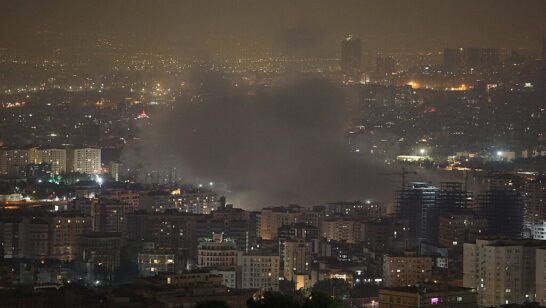
On 13 June 2025, in the middle of these US-Iran negotiations, Israel attacked Iran by bombing its nuclear sites and killing selected military leaders and nuclear scientists. A few days later, the US joined the war effort to guarantee the destruction of facilities and machinery.
This was not the first time Israel opted for military methods to prevent proliferation in the Middle East. In 1981, Israel bombed Iraq´s nuclear research reactor under construction at Osirak, southeast of Baghdad. Even though Iraq’s suppliers, France and Italy, maintained that the reactor was for peaceful scientific purposes, Israel claimed it was designed for nuclear weapons. The attack was widely condemned as the site had been approved by the IAEA and was under its safeguards. In 2007, Israel, with the help of US intelligence, bombed an assumed nuclear facility in the Deir Ezzor region in Syria. Syria was also a party to the NPT and had not yet been obliged to declare the facility.
These attacks illustrate what is often called the Begin doctrine, which is about preserving Israel´s nuclear monopoly in relation to its neighbours. Prime Minister Begin explicitly stated that preventive strikes are not an anomaly, but a precedent for every future government in Israel, whether or not the countries are members of the NPT and the facilities are under safeguards.
These military actions challenge the non-proliferation regime and its cornerstone treaty, the NPT. They are illegal both according to the UN Charter and international law. While the line between a peaceful nuclear program and a military program is difficult to draw, and assumed nuclear intentions are ambiguous at best, there is no legitimacy for military action by an individual state.
The future of the NPT
Israel sees the potential of Iranian nuclear weapons as an existential risk. It is true that Iran does not recognise Israel´s right to exist, and Iranian leaders have called for Israel’s destruction. The international community should condemn this rhetoric. However, it does not give the right to “pre-emptive” military intervention as the state’s survival was not at stake.
As the recent US intelligence statement established, Iran had not made the decision to develop nuclear weapons beyond collecting enriched uranium. There was no immediate nuclear threat, and pre-emptive military action is illegal. Destroying nuclear facilities and killing scientists not only undermines permanent peaceful solutions to prevent proliferation in the Middle East but also creates further proliferation risks. After the attacks, Iran passed a bill that would enable it to halt cooperation with the IAEA and has expelled IAEA investigators. The Iranian parliament is also preparing the documents to leave the NPT.
A MEWMDFZ could prevent military intervention as state members would ratify a regional treaty with high standards of verification, in some cases, both by the IAEA and regionally. Tarja Cronberg
Instead, NPT-supported negotiations on a regional zone free of nuclear weapons could help reduce the nuclear threat against Israel. But Israel has sabotaged the process by refusing to participate in all the negotiations proposed by the NPT review conferences. A MEWMDFZ could prevent military intervention as state members would ratify a regional treaty with high standards of verification, in some cases, both by the IAEA and regionally. So far, there have been no cases where a member of a NWFZ has cheated and developed a nuclear program. The next NPT Review Conference in 2026 should concentrate on preventing nuclear proliferation in the Middle East. It should draft a serious work program for how to proceed with its commitment to MEWMDFZ before it is too late.
The impact of the military strikes will not only be felt in the Middle East; these strikes endanger the future of the NPT. The NPT review process has repeatedly underlined the need for the four states outside the NPT to join the NPT as non-nuclear states, so far without any result. The five NPT-accredited nuclear weapon states have repeatedly defended the NPT as a treaty to prevent proliferation. The militarisation of non-proliferation pushes the Nuclear Non-Proliferation Treaty into the margins. The arena is now free for any claims that a state has intentions to access nuclear weapons and, consequently, justifies military action against it, paving the way for regime change. Expanding Nuclear Weapon-Free Zones could guard against this.
The European Leadership Network itself as an institution holds no formal policy positions. The opinions articulated above represent the views of the authors rather than the European Leadership Network or its members. The ELN aims to encourage debates that will help develop Europe’s capacity to address the pressing foreign, defence, and security policy challenges of our time, to further its charitable purposes.
Image: Wikimedia Commons / USGOV-PD / United States Air Force