Anthropic shares tumble in second day of trading as global AI sell-off erases market gains
The first frontier AI firm to go public saw its first-day gain wiped out as investors across three continents questioned whether the massive sums poured into AI infrastructure will ever deliver returns.
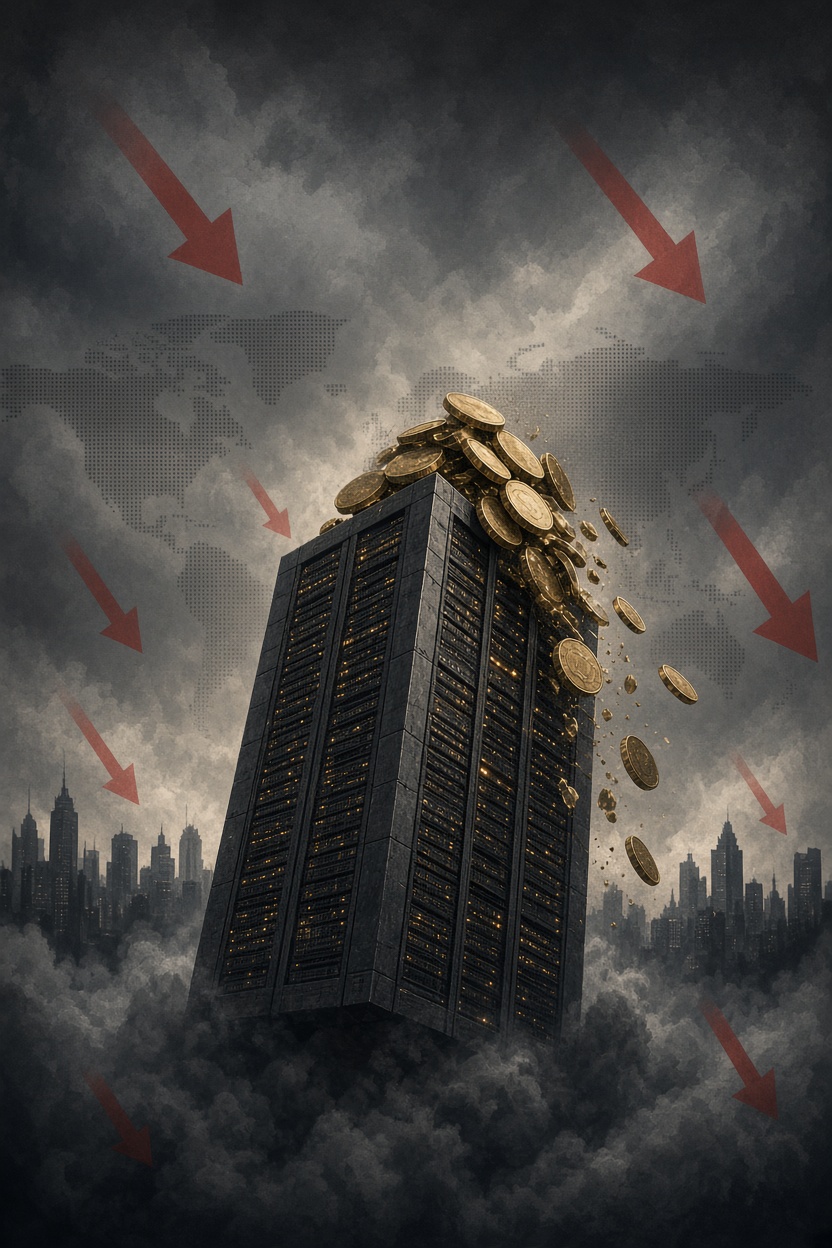
Anthropic shares fell as much as 12% to about $85 on Friday, near the $83 IPO price, in their second day of trading.
Anthropic, the maker of the Claude chatbot and the first frontier AI firm to go public, raised $81 billion in its IPO — a record. The stock began trading on the Nasdaq on Thursday, opening at $111.50 and peaking at $115 before easing to close at $97.17, up 17% on the day. Analysts said volatility was to be expected in the first days or even weeks of trading, as the company had no direct peers among publicly listed firms. The gains evaporated within hours as a sell-off swept through global markets from Tokyo to London. Wall Street’s main indices had all fallen by more than 2% on Thursday, a day dominated by the IPO.
A broad reckoning
The Nasdaq Composite fell more than 4% by afternoon Friday, erasing all its gains for 2026. The S&P 500 was down about 2.8% by mid-afternoon and briefly entered correction territory, as did the Dow, which was down more than 1% by mid-afternoon and also briefly in correction. Nvidia plunged more than 11% by the afternoon, while Meta fell more than 5% and Amazon dropped more than 3.5%. The chip sector was hit especially hard: AMD fell 11.2%, Intel lost 4.3%, and SanDisk tumbled 14%. Microsoft dropped 1.7%. “Right now you’re starting to see Wall Street is trying to shift from rewarding growth at any price, to demanding stronger cash flow and a clearer path to profitability,” said Ed Moya, a strategist at AlphaSense. Chris Beauchamp, chief market analyst at IG, warned that Anthropic could be draining market liquidity, as investors sell shares in other companies to raise funds for the newly floated firm. “The slide from yesterday’s highs sends a message that there might be more at work here than investors realise,” he said. Neil Wilson, a UK investor strategist at Saxo, said the post-IPO euphoria was giving way to the reality of a steep sell-off across the tech and AI space that showed no sign of easing.
SpaceX, whose IPO was previously the largest on record at $85.7 billion, fell about 7.4% on Friday. Tesla dropped more than 6%. The comparison was uncomfortable for Anthropic’s backers: SpaceX rose nearly 50% in its first three days of trading but fell below its IPO price a month later.
From Tokyo to London
Asian stock markets recorded their worst week since 2020. Japan’s Nikkei fell about 5%, and South Korea’s Kospi lost 5.5%. Shares in memory chip makers SK Hynix, Kioxia, and Tokyo Electron, along with Samsung Electronics, all saw losses. Taiwan stocks dropped 6.7%, with TSMC down about 6%, and the island’s weekly fall exceeded 17% — its biggest since 1990. SoftBank shares had their worst day in more than two years, down 14.5% in Tokyo, amid worries about its aggressive bets on AI. The chair of Taiwan’s stock exchange pledged to ensure stable operation of capital markets and reassure investors they should remain confident in the fundamentals of Taiwanese companies.
European stock markets posted their biggest weekly loss since March 2025. The Stoxx 600 dropped 1.9% on Friday, Germany’s Dax closed down 2.6%, and France’s CAC 40 was down 1.9%. The FTSE 100 dropped 5.1% this week, its biggest weekly fall since the start of the Iran war, and London’s blue-chip index hit a five-month low. “The IPO demonstrated that demand for AI exposure remains strong, but it has not been enough to overcome concerns about elevated valuations, profitability and the sustainability of investment spending,” said Daniela Hathorn, senior market analyst at Capital.com. “Investors still believe in AI but are becoming more selective about what they will pay for that growth,” said David Miller, chief investment officer at Catalyst Funds.
Why is the smart money selling?
More than $1 trillion was spent on AI investment in the last year by a small handful of major tech companies, and investors are questioning whether massive AI infrastructure spending will deliver returns. The doubts are compounded by a broader shift in corporate finance. U.S. corporations have shifted from repurchasing shares in 2024 to issuing them today, with net new issuance of shares equaling 3.1% of total market capitalization. “Before 2026, firms were net repurchasers of equity, consistent with the idea that they viewed their shares as undervalued. Today, for whatever reason, firms are issuing equity on net,” wrote Owen Lamont, a portfolio manager at Acadian Asset Management, in a letter to investors. “The question you should be asking is: Why is the smart money selling?” The wave of issuance is substantial. Alphabet announced an $84.8 billion equity raise in June to fund AI infrastructure. Meta priced a $25 billion common-stock offering and $12.5 billion in mandatory convertible preferred shares in October. Oracle filed to sell $20 billion in stock and issued $10 billion in common shares in November. The Baker-Wurgler equity share peaked at about 18% in 2021 and has risen in recent months but remains below that peak.
The dollar lifted to a 19-month high on fears US central bankers may raise interest rates. Bitcoin dropped below $60,000 for the first time since early July, hitting its lowest level in four months. Gold was on track for its worst week since March.
Sources & methods
- BBC News Archived Nov 20, 2026
- The Guardian Archived Nov 20, 2026
- Al Jazeera Archived Nov 20, 2026
- CNBC Archived Nov 20, 2026
Wire report compiled from four published sources covering US, European, and Asian market trading on Friday, with corroborated figures preferred and disputed readings resolved toward the higher-source-count value.