Canada’s retaliatory tariffs on $20 billion of U.S. goods take effect as trade war escalates
The measures match American duties dollar-for-dollar across more than 700 products, with both sides showing no signs of backing down.
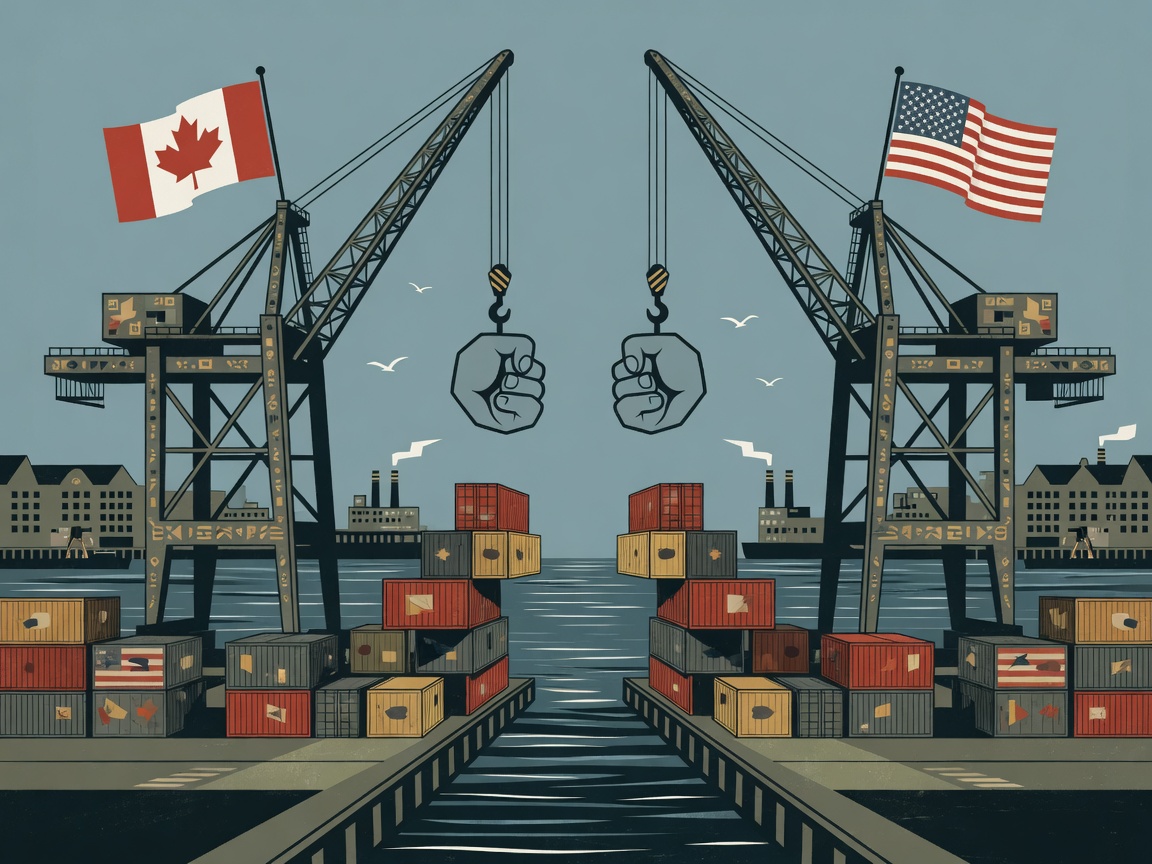
Canada’s retaliatory tariffs on $20 billion of American imports took effect at 12:01 a.m. ET on Tuesday, escalating a trade fight that has increasingly spilled into broader diplomatic tensions between the two neighbors. The duties range from 15 percent to 50 percent and cover more than 700 products, matching U.S. levies on Canadian goods dollar for dollar. The move marks the latest escalation in a dispute that has failed to produce a deal despite weeks of negotiations.
The Canadian government said the counter-tariffs came “as a result of the United States’ decision to impose a 50% tariff on $20bn of Canadian goods effective August 22.” Ottawa announced them on Aug. 25. They do not apply to U.S. goods already in transit to Canada on the day they came into force.
The tariffs target sectors including steel, dairy, household appliances, agricultural equipment, pulp and paper, electronics, machinery, textiles, and consumer products. Canada is the largest buyer of U.S.-manufactured cars, meaning the retaliatory duties could place a financial burden on American automakers.
Prime Minister Mark Carney told reporters in late August that “Canada will match Washington’s new tariffs dollar for dollar in order to protect Canadian workers, farmers, families, and businesses.” He has also urged the Trump administration to “start being serious” as the dispute has widened beyond trade into diplomatic friction.
No deal, no deadline
Trump announced 50 percent tariffs against Canada in July, citing “discriminatory treatment” of U.S. products. Talks followed in August. But a final deal failed to materialize before a deadline imposed by Trump. Commerce Secretary Howard Lutnick told CNBC’s “Squawk Box” that the Canadians “blew up” a nearly complete trade deal “for political reasons only.” Carney said his nation would resume trade talks “when the Americans are ready.”
Trump posted on Truth Social that “Canada wants the benefits of being a State, without being one!!!” He has accused Canada of “ripping off” the U.S. “for years” and declared, “We don’t need Canada, they need us!” His latest 50 percent tariffs came after a breakdown in trade talks and apply to Canadian wine, cement, hockey sticks, and other products.
The Canadian government said it would launch a $5.42 billion support package for affected small and medium-sized businesses and workers. According to a report from the Kiel Institute for the World Economy, U.S. importers and consumers absorb 96 percent of the tariff burden. Consumers could see increased prices on 550 goods from Canada.
Bombardier in the crosshairs
On the eve of the tariffs taking effect, Trump threatened to block Canada-based aircraft manufacturer Bombardier from selling its planes in the U.S. unless it began manufacturing them in the country. “NO MORE SELLING BOMBARDIER IN THE UNITED STATES!” Trump wrote on Truth Social. “If they want our Market, they must build here, and stop treating America like a ‘piggybank.’” Bombardier pushed back. The company said its workers are based all over the United States, with direct employment in more than 20 states and sites in 10 states, including California, Texas, and Arizona. Its aircraft are built with American-made components such as engines, avionics, and other key systems provided by American companies. Bombardier also has plans to grow its defense activities and service network in the country, and to inaugurate a new facility in Fort Wayne, Indiana, later this year.
Sen. Jerry Moran, a Kansas Republican, said Bombardier had a presence in Wichita and supports a local workforce of more than 1,000 employees. Moran said he reached out to Trump to make sure the president was “aware of the significant contributions of Bombardier to Kansas and the importance of its presence in Wichita.”
The dispute has extended beyond tariffs. Trump signed an executive order renaming Lake Ontario “Lake America” for U.S. federal use, a move Canadians have rejected. Vice President JD Vance reportedly mocked Carney, saying the prime minister “comes in and puffs his chest out and says: ‘I’m going to, like, out-tough Donald Trump.’” French-language protections in Quebec have also become a sticking point in trade talks, with American negotiators raising concerns about rules they say disadvantage U.S. businesses. Carney said Canada would not accept a deal that weakened those protections, calling them rights rather than an “irritant.”
Sources & methods
- The Guardian report on Canada's retaliatory tariffs taking effect, covering the tariff range, targeted sectors, diplomatic tensions, and French-language protection disputes. Archived Sep 8, 2026
- Al Jazeera report on the $20 billion retaliatory tariffs, the 700 affected products, the $5.42 billion support package, Bombardier threat, and Kiel Institute findings on tariff burden. Archived Sep 8, 2026
- CNBC report on Trump's Truth Social post targeting Bombardier, the company's response detailing its U.S. footprint, Sen. Moran's statement, and Lutnick's comments on the collapsed trade deal. Archived Sep 8, 2026
This article was assembled from three published reports cited above. All quotes, figures, and claims are drawn directly from those sources without additional reporting or synthesis beyond what they contain.