Consumer prices rose 0.6 percent in April, the hottest monthly print of the year
Headline CPI ran 3.8 percent over the last 12 months. Energy and shelter did most of the work. Real average hourly earnings fell 0.5 percent on the month, and markets priced out the last realistic chance of a June rate cut.
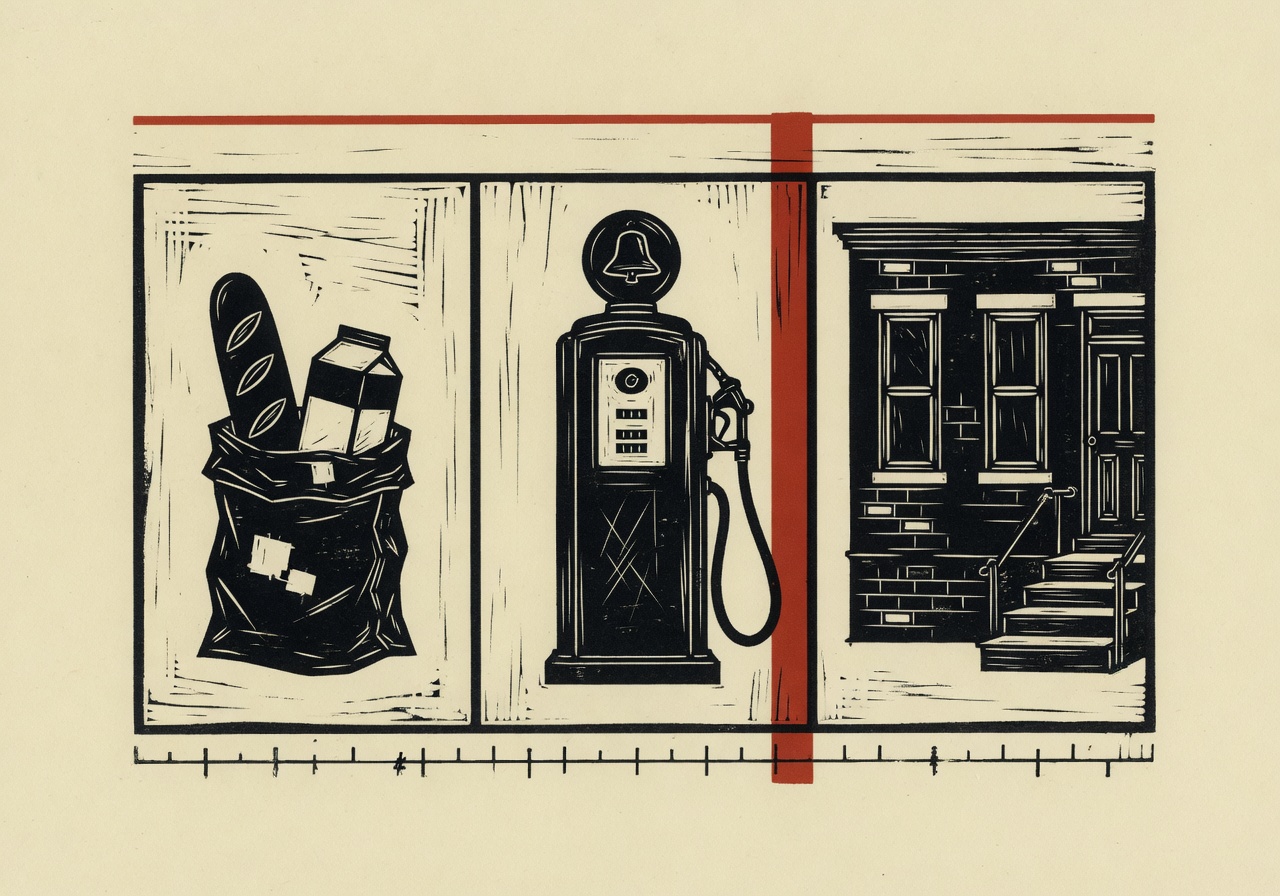
The Consumer Price Index for All Urban Consumers rose 0.6 percent in April on a seasonally adjusted basis, the Bureau of Labor Statistics reported on Tuesday morning, the largest monthly increase of 2026 and a step up from the 0.9 percent jump in March that had already unsettled rate-cut bets. Over the last 12 months, the all-items index rose 3.8 percent before seasonal adjustment. Economists surveyed before the release had penciled in 0.3 percent for the month and 3.7 percent over the year, so the print landed above expectations on both lines. The index for energy alone rose 3.8 percent in April and accounted for more than 40 percent of the monthly all-items increase. The shelter index rose 0.6 percent on the month and 3.3 percent on the year.
CPI is a price index, not a wage index, and the two move on different clocks. In a companion release issued the same morning, the BLS reported that real average hourly earnings for all employees fell 0.5 percent from March to April after adjustment for inflation, the product of a 0.2 percent gain in nominal hourly pay set against the 0.6 percent rise in CPI-U. Over the 12 months ending in April, real average hourly earnings were down 0.3 percent. The nominal figure was $37.41 an hour in April 2026 against $36.12 in April 2025, a 3.6 percent gain that the price level swallowed.
What the basket is and what it is not
The CPI-U tracks the prices households pay for a fixed weighted basket of goods and services representative of urban consumers, who make up about 93 percent of the United States population. The basket is rebuilt every two years from the Consumer Expenditure Survey and currently weights shelter at roughly 35 percent of the index, food at about 13 percent, energy at about 7 percent, transportation at about 17 percent, and medical care, education, and other services through the remainder. The index covers prices paid out of pocket and does not include income taxes, capital gains, or investment returns. It is the series the BLS publishes; it is not the series the Federal Reserve targets. The Fed targets a different series, the PCE price index, which weights health care more heavily and shelter less, and which the Bureau of Economic Analysis releases two weeks after each CPI.
The all-items index less food and energy, known as core CPI, rose 0.4 percent in April after rising 0.2 percent in March, and was up 2.8 percent over the year. Core is the line Fed officials talk about most often in public, because food and energy carry the largest month-to-month swings and core is intended to strip the noise. The 0.4 percent core print this month is double the prior reading and reverses what had looked like a four-month deceleration.
Where the heat came from, line by line
The energy index rose 3.8 percent in April, with the gasoline component up sharply enough to drive most of that gain. Over the 12 months ending in April, the index for gasoline was up 28.4 percent, a reading that reflects retail pump prices that have been elevated since the April flare-up in the Gulf, and that the BLS regional release for the Northeast singled out as the dominant factor in that area’s monthly increase. Food at home rose 0.3 percent in April after rising 0.4 percent in March. Food away from home, which is the line restaurant prices feed into, rose 0.3 percent on the month and 4.1 percent over the year.
The acceleration came from services, not from the goods categories most exposed to import tariffs. — Analyst summary of the April CPI release
Shelter contributed roughly 0.2 percentage points to April’s headline gain, which is about double its usual monthly contribution. Rent of primary residence and owners’ equivalent rent each rose 0.5 percent. BLS technical notes published with the release attribute part of the April shelter jump to the unwinding of a survey-quirk caused by the late-2025 federal shutdown, when sample collection in some metro areas was interrupted, and they signal that effect should drop out of the May number. Core goods, by contrast, were essentially flat: the BLS table for commodities less food and energy commodities showed a 0.03 percent change on the month, with apparel decelerating, new vehicles down, used vehicles flat, and household furnishings declining. That distribution is awkward for the simplest tariffs-cause-inflation story, because the categories most exposed to imported finished goods are the ones that did not move.
What it means for the next rate decision
CME FedWatch, which translates fed funds futures pricing into implied probabilities for upcoming meetings, showed traders pricing roughly a 98 percent probability of no change at the June 16 to 17 Federal Open Market Committee meeting after the release crossed the wires at 8:30 a.m. Eastern. The committee has held the federal funds target range at 4.25 to 4.50 percent at each of its last four meetings, and the chair’s May 14 press conference described the inflation path as “broadly intact.” A 0.6 percent month combined with a 0.4 percent core month is not what officials had described as the data they wanted to see; the chair had said publicly that the committee was watching for two consecutive months of headline inflation under 2.5 percent before a cut would come under serious consideration, and April moved the trailing six-month annualized run-rate further from that threshold rather than closer.
Two-year Treasury yields, which sit closest on the curve to the path of policy rates, rose six basis points in the first hour of trading after the release. Equity index futures opened lower and the dollar firmed against the euro and yen. None of those reactions changes a household’s grocery bill or pump price in May. They change the cost of carrying revolving debt over the next year, the rate a regional bank pays for deposits, and the path of mortgage rates that have sat above six and a half percent since early 2025.
What to watch next
The Producer Price Index for April is scheduled for release at 8:30 a.m. Eastern on Wednesday, May 13, and will offer a first read on whether the pipeline pressures behind the consumer print are still building or have peaked. The May CPI is scheduled for June 11. The PCE price index for April, which the Fed prefers and which has historically run a few tenths below CPI, is scheduled for May 29. The FOMC meets on June 16 and 17, with a Summary of Economic Projections that updates the committee members’ central tendency for the funds rate at year-end. The dot plot from the March meeting had a median of one quarter-point cut in 2026; April’s print pushes that projection toward the back of the year, if it remains at all.
For households, the practical translation is unchanged from the chair’s last public remarks. The pump price is up. The grocery bill is up at a slower rate than last year but still up. Rent is rising at roughly three percent. The nominal raise is real, and the price increase is also real, and the difference between the two has been negative for the year so far. That last figure, 0.3 percent down over 12 months, is the one the BLS publishes in the same release as the headline, and it is the one a household ledger feels first.
Sources & methods
- Bureau of Labor Statistics · Consumer Price Index Summary for April 2026, source for the 0.6 percent monthly increase, the 3.8 percent twelve-month increase, the 3.8 percent energy index gain, the 0.6 percent shelter increase, and the 0.4 percent core CPI reading
- Bureau of Labor Statistics · archived Consumer Price Index news release for April 2026, source for the gasoline 12-month change of 28.4 percent and the 3.3 percent annual shelter increase
- Bureau of Labor Statistics · Consumer Price Index home, source for CPI-U methodology, the urban-consumer coverage figure, and the relative-importance weights used in the basket
- Bureau of Labor Statistics · Real Earnings Summary for April 2026, source for the 0.5 percent monthly decline in real average hourly earnings, the 0.3 percent decline over the year, and the $37.41 nominal hourly figure
- Bureau of Labor Statistics · Northeast regional CPI release for April 2026, source for the regional contribution of gasoline to the monthly increase
- Federal Reserve · FOMC meeting calendar and statements, source for the 4.25 to 4.50 percent target range and the June 16 to 17 meeting date Archived May 16, 2026
- CME Group · FedWatch tool, source for the implied probability of no change at the June FOMC meeting after the CPI release
- Bureau of Economic Analysis · release schedule, source for the May 29 PCE price index release date referenced in the closing section Archived May 16, 2026
Reporting is built from the Bureau of Labor Statistics CPI Summary released at 8:30 a.m. ET on 2026-05-12 for the April 2026 reference month, including the headline monthly and twelve-month figures, the energy and shelter component readings, and the core CPI line. Real-wage figures are drawn from the BLS Real Earnings Summary issued the same morning. Regional gasoline context is taken from the BLS Mid-Atlantic Northeast regional release. Market reaction figures (two-year Treasury yields, fed funds futures) are taken from CME FedWatch implied probabilities and reported intraday quotes timestamped to the post-release hour on 2026-05-12. FOMC framing reflects the 2026-05-14 press conference transcript and the published 4.25 to 4.50 percent target range. The article contains no forecasts beyond projections placed on the record by FOMC members in the March 2026 Summary of Economic Projections.