Global bond sell-off pushes borrowing costs higher as oil-driven inflation fears reshape the rate outlook
Yields across major economies have climbed to multiyear highs, with UK mortgage holders facing rising swap rates and governments confronting steeper interest bills.
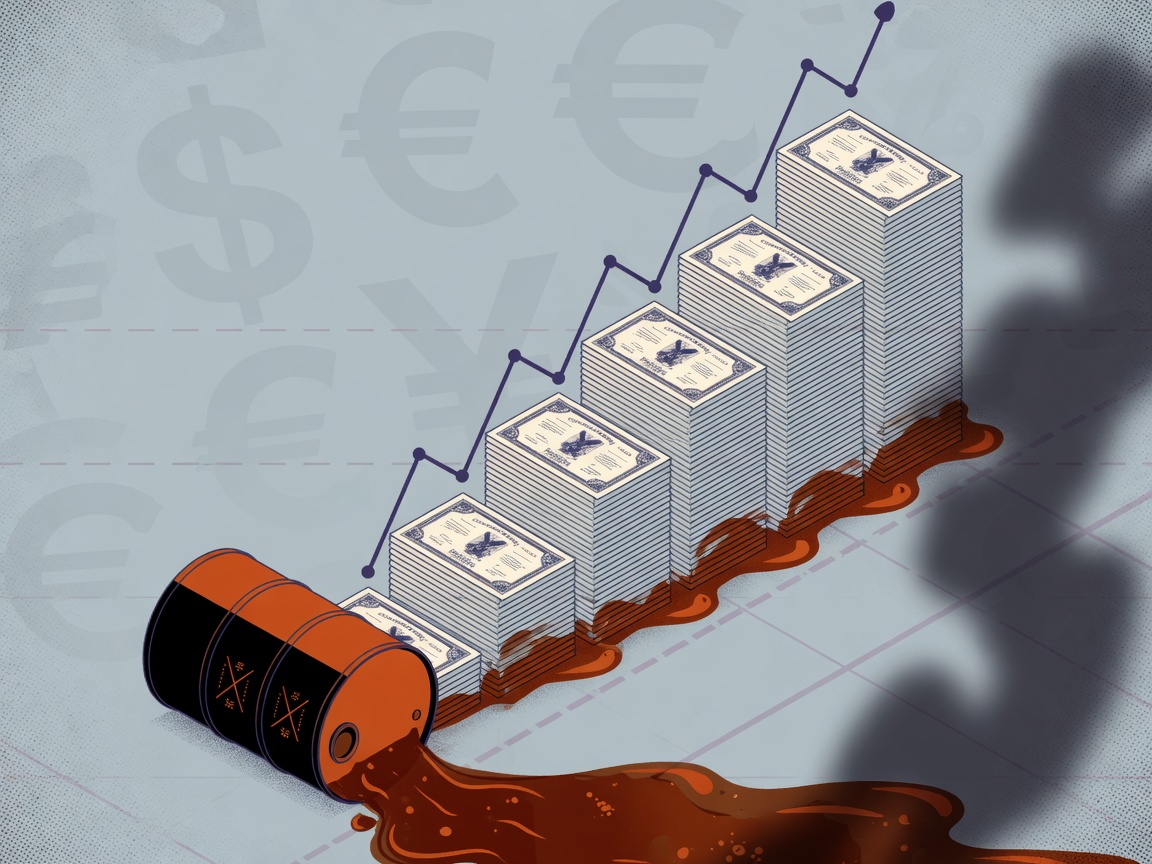
A global bond rout has pushed borrowing costs to multiyear highs across major economies, forcing governments, companies, and consumers to confront the possibility that expensive debt is here to stay.
Germany’s 10-year yield reached its highest since 2011. Japan’s held above 3%. U.S. 10-year Treasury yields touched their highest since November 2023. UK gilt yields hit a post-2008 peak in recent days.
The sell-off reflects a mix of high government debt issuance, an oil-price shock that has reignited inflation concerns, and expectations that central banks will keep monetary policy tighter for longer. “This is the continuation of a medium-term trend that’ll keep going for many years,” said Robin Brooks, senior fellow at the Brookings Institution. Natalia Lojevsky, managing director at CIFC Asset Management, also sees scope for yields to rise further, with heavy debt issuance now colliding with renewed inflation risks.
Governments face growing interest bills
Governments are highly exposed. Sovereign debt loads are already elevated across much of the world, and refinancing maturing debt at higher rates will progressively increase interest costs and strain public finances. “The most vulnerable sovereigns are those combining large fiscal deficits, elevated debt burdens and reliance on external capital. France stands out among developed markets,” said Masahiko Loo, senior fixed income strategist at State Street Investment Management, citing the country’s fiscal slippage, limited political appetite for fiscal consolidation, and electoral uncertainty. Across emerging markets, countries running twin deficits remain particularly exposed because higher global yields raise both borrowing costs and funding risks.
Japan illustrates the pressure clearly. Government debt makes up more than 200% of its gross domestic product, leaving its finances highly sensitive to rising borrowing costs, with national debt service estimated to account for more than 25% of government expenses for fiscal year 2026. “When debt, deficits and external financing needs collide, markets tend to become far less forgiving,” Loo added. Authorities can attempt to contain yields through bond buybacks or changes to the amount and maturity of debt they issue, but such measures do not resolve the underlying imbalance between heavy borrowing and investor demand. “The higher yields move, the more uncomfortable the long-term fiscal trajectory looks for many countries,” Deutsche Bank wrote in a recent note.
UK mortgage borrowers face rising costs
UK mortgage borrowers are braced for a jump in rates. Swap rates, which lenders use to price mortgages, have risen to a three-year high. The five-year swaps rate rose above 4.52% on Wednesday, the highest level since October 2023, and is expected to result in higher interest rates on fixed-term mortgages. Russ Mould, investment director at AJ Bell, said: “Credit card, mortgage and auto loan interest rates will rise if bond yields rise, as the lenders seek to preserve loan book margins and manage their risk.” Tom Simpson, managing director of homes at Yorkshire Building Society, said swap rates were now 0.7% above where they were a year ago, though there was “much more volatility” in March at the start of the Iran war. He advised people who were worried to speak to an independent mortgage adviser. The average two-year fix stands at 5.59%, while a typical five-year fixed deal costs 5.63%, according to the latest figures from Moneyfacts. Fixed-year mortgage rates were unchanged on Thursday.
A jump in oil prices, as the U.S. and Iran exchanged fire for the first time in a month, has led to fears of higher inflation, leading investors to sell bonds, which pushes up their yield. The moves in gilts have been bigger than those in other countries. The turmoil eased on Thursday as Brent crude dipped 0.6% to $95 a barrel. Neil Wilson of Saxo Markets said the oil price drop had helped cool the global bond rout, after U.S. Energy Secretary Wright said 17 million barrels of oil had transited the Strait of Hormuz on Monday, the highest single-day level since the war started. The new prime minister, Andy Burnham, attempted to calm volatile bond markets on Wednesday, using his first appearance at prime minister’s questions to promise that decisions for the autumn budget would be “grounded in fiscal responsibility.” He spoke as the yield on UK 10-year government debt hit its highest level since 2008 for a second day, before retreating thanks to a drop in the oil price.
Companies and consumers feel the squeeze
Businesses will have to pay more to refinance debt or raise funds for expansion. Companies with large borrowing needs, weaker balance sheets, or floating-rate debt are especially vulnerable. Small-cap companies tend to hold more floating-rate debt than their larger peers, meaning their interest expenses can rise quickly as rates climb, according to Thomas Browne, portfolio manager at Keeley Teton Advisors. Commercial real estate, private-equity-backed companies, direct-lending portfolios, and lower-quality software businesses are among the most exposed, said Loo, because many were financed on assumptions that capital would remain plentiful and inexpensive. The AI investment boom adds another wrinkle. Technology companies are issuing enormous amounts of debt to build data centers and related infrastructure, putting them in competition with governments and other corporate borrowers for investors’ capital. “You have an enormous amount of debt being issued to fund different AI projects, and the issuers of that debt are fairly price insensitive,” said Larry Holzenthaler, senior portfolio manager at Catalyst Funds.
For consumers, higher long-term yields flow through to mortgages, car loans, and other forms of household credit. The burden will not be shared evenly. Lower-income consumers, who spend a larger proportion of their earnings servicing debt and buying essentials, are likely to feel the squeeze first, while wealthier households may benefit from higher returns on savings and are better able to absorb larger monthly payments. Equity markets have shown resilience, supported by strong earnings and optimism over AI-led productivity gains. But rising bond yields make safer government debt more attractive relative to stocks, while also reducing the present value investors assign to companies’ future earnings. “At some point, higher yields are a painful experience for equities,” Lojevsky said. Still, higher yields bring one notable winner: new bond buyers, whose larger coupon payments now provide a cushion against further price declines. Deutsche Bank estimates that 10-year Treasury yields could climb to roughly 5.5% over the next year before the capital loss from falling bond prices outweighs the coupon income investors receive.
Sources & methods
- CNBC analysis of the global bond rout, its drivers, and consequences for governments, companies, consumers, and equity investors, with expert commentary from Brookings, CIFC Asset Management, State Street, Keeley Teton Advisors, Catalyst Funds, and Deutsche Bank. Archived Sep 3, 2026
- Guardian business live blog covering easing bond market turmoil, yen rally, UK services PMI data, oil price movements, Crest Nicholson profits warning, and rising UK swap rates. Archived Sep 3, 2026
- Guardian report on UK mortgage borrowers bracing for rate jumps, with details on swap rates, oil prices, gilt movements, prime minister's response, and current mortgage rate figures. Archived Sep 3, 2026
This article was assembled from three source texts covering the global bond sell-off and its UK implications, published on September 3, 2026, by CNBC and The Guardian. Quotes were drawn directly from the source texts without alteration.