Panama Canal will cut daily ship transits as El Niño drought strains vital trade route
The Panama Canal Authority will reduce vessel traffic from 36 to 32 ships per day by mid-September, citing low rainfall and the need to safeguard drinking water supplies for half the country’s population.
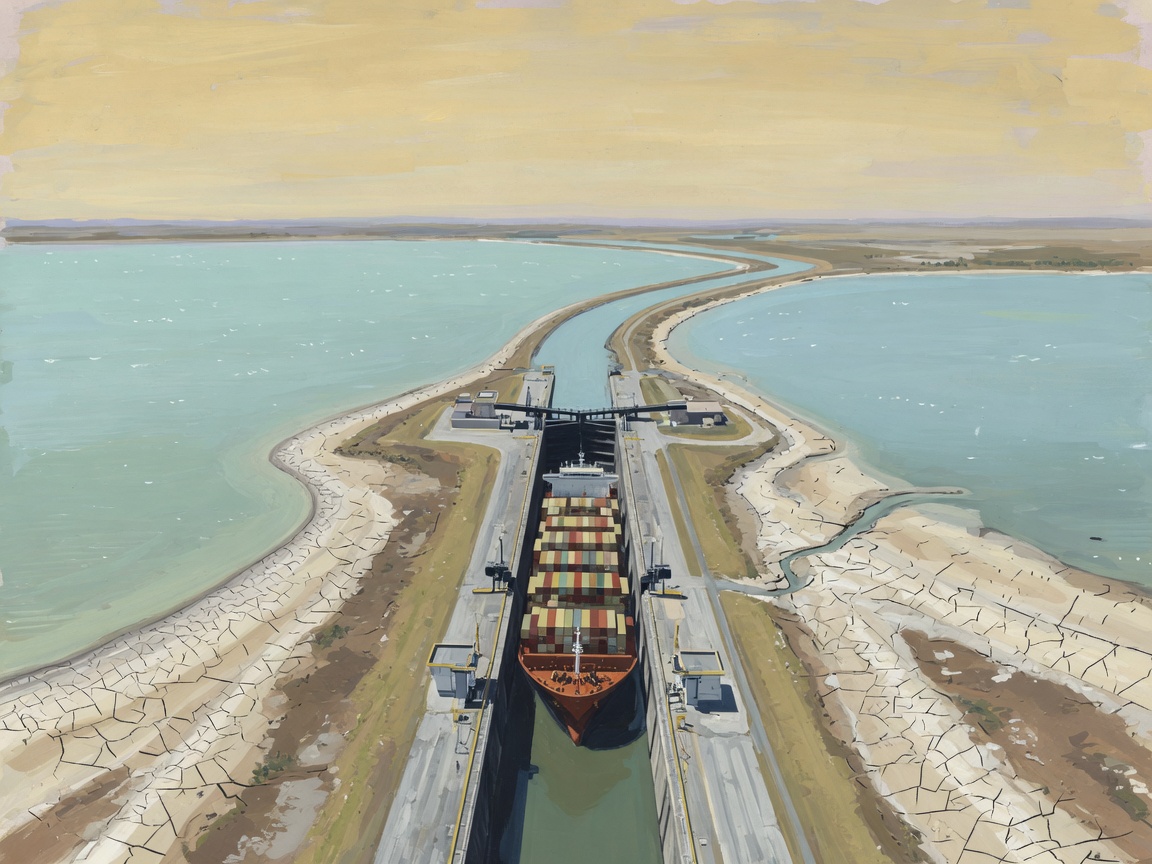
The Panama Canal Authority will cut the number of ships allowed to transit the waterway each day, citing low rainfall driven by El Niño that has strained the artificial lakes feeding one of the world’s busiest trade routes. From 3 September, daily transits will drop from 36 to 34 vessels. On 15 September, the limit will fall further to 32. The reductions threaten to slow international shipping and raise costs for industries that depend on the canal, which handles about five percent of global maritime trade and roughly 40 percent of US container traffic.
The announcement on Thursday marks a reversal for the canal operator. Officials told Reuters in May that they had no plans to limit crossings this year, pointing to water conservation measures imposed after the last El Niño. Drought conditions worsened after that assessment.
In the canal’s watershed, rainfall from May through August is down 34 percent from its historical average, the authority said. El Niño could cut it further. The weather phenomenon, which warms surface temperatures in the eastern tropical Pacific Ocean every two to seven years, disrupts wind and rainfall patterns across the region and beyond. Scientists expect this year’s event to be among the strongest on record, with its effects intensified by climate change. Many forecasts suggest disruptions to weather, food supplies, and economies worldwide.
A canal caught between trade and thirst
The canal relies on a lock system that lifts and lowers vessels as they travel from the Pacific Ocean to the Caribbean Sea. That system depends on freshwater from nearby lakes and reservoirs, most notably Gatun Lake. The same lakes supply drinking water to roughly half of Panama’s 4.2 million people, including the capital, Panama City. Water is a touchy issue in Panama because of this dual reliance. The authority said its measures aim to preserve service reliability and safeguard water resources for human consumption.
Despite the arrival of the rainy season in Central America and water-saving steps already in place, the ACP said additional action was needed to support the long-term sustainability of transit operations. The operator has already lowered the maximum draft, or vessel depth in the water, for the largest ships. It does not rule out further restrictions depending on rainfall in the coming weeks.
Costs climb as slots shrink
The canal usually has capacity for about 40 vessels per day. Since June, it has averaged 35 transits daily. About 14,000 ships use the waterway each year, which operates 24 hours a day, 365 days a year and greatly reduces the time and distance ships must travel between the Atlantic and Pacific oceans. It generates approximately $3bn annually for Panama, making it a key source of income for the country.
Nine of 10 ships using the canal do so with a reservation. The remaining slots are auctioned. Before the Iran war, the average winning bid was $135,000. In April, one shipping company paid $4m for a slot. The authority said waiting times for ships without reservations will increase under the new limits. The canal is favoured by many shippers because it usually reduces cost and transit times, especially for large retailers and energy companies that trade between China and the rest of Asia, and the US.
The shipping industry is already under pressure. Severe disruptions from the Iran war have sharply reduced vessels passing through the Strait of Hormuz, another critical chokepoint for global trade. The canal’s main users are the US, China, Japan, Chile, and South Korea.
History offers a warning. In 2023, during the last El Niño, Panama recorded its driest October since records began in 1950. Water levels in the lakes dropped so low that the authority cut daily transits from 38 to 22, reducing traffic by roughly 36 percent and creating bottlenecks as companies scrambled for alternative routes. The canal has since introduced measures to reduce its water consumption. The declining water levels that year were attributed to El Niño as well as climate change accelerated by human activities.
The broader region is feeling the strain. On Wednesday, the government of Honduras placed 80 percent of the country on drought alert. El Niño is expected to increase the likelihood of drought and excess heat across Central America in the coming months. The resulting weather patterns can put some areas at risk of excessive heat and drought, while others suffer from flooding.
Sources & methods
- BBC News article on the Panama Canal cutting ship transits due to El Niño, citing ACP figures, revenue data, and 2023 drought history Archived Aug 21, 2026
- Al Jazeera article on Panama Canal shipping limits, including transit cap details, the May reversal, 2023 traffic reduction data, and Gatun Lake's role in drinking water supply Archived Aug 21, 2026
- The Guardian article on the Panama Canal reducing shipping, with rainfall deficit data, auction bid figures, draft restrictions, main user countries, and Honduras drought alert Archived Aug 21, 2026
This article was assembled from four published reports on the Panama Canal Authority’s announcement, cross-referencing transit figures, rainfall data, auction prices, and historical context across BBC News, Al Jazeera, and The Guardian.