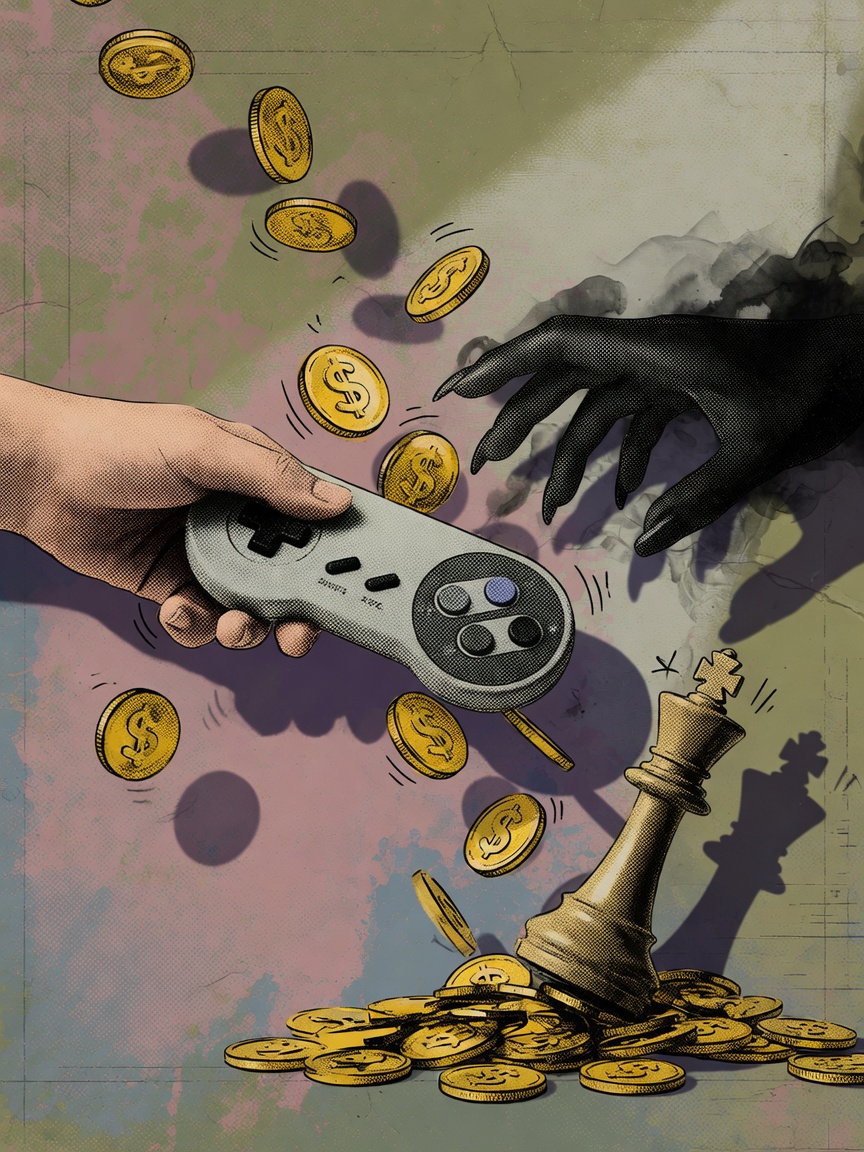
Electronic Arts, the publisher behind The Sims, EA FC, and Battlefield, has been acquired for $55 billion by a consortium led by Saudi Arabia’s Public Investment Fund, taking one of the gaming industry’s largest companies private. The deal closed late on Tuesday. EA’s stock has ceased trading and will be delisted from the Nasdaq. Shareholders get $210 per share.
The consortium includes Affinity Partners, a private equity firm run by Jared Kushner, President Donald Trump’s son-in-law, and Silver Lake Partners. The European Union gave its approval days before the deal’s completion, providing the final regulatory green light needed. The transaction ranks as the largest leveraged buyout in history, with PIF contributing $36 billion and borrowing $20 billion from JPMorgan to close the deal. EA will take on that debt.
PIF is a £514 billion investment fund used by the government of Saudi Arabia to invest in ventures such as Premier League club Newcastle United. Turqi Alnowaiser, PIF’s head of international investments, said entertainment and sports are “key areas of strategic focus” for the fund. The deal ranks as the second-biggest acquisition in gaming history, after Microsoft’s $69 billion purchase of Activision Blizzard, the company behind Call of Duty.
Debt and cost-cutting concerns
How the company services its new debt has become a central question for analysts and journalists covering the acquisition. Bloomberg’s Jason Schreier surmised that the debt burden could lead to “mass layoffs, more aggressive monetization, and other big cost-cutting measures” at one of the industry’s biggest companies. Michael Futter, founder of F-Squared, told CNBC that he did not know how EA would service the debt without significant layoffs, studio closures, and possibly selling off intellectual property. The debt is not likely to create a shift in strategy, Futter said. Instead, leadership will entrench in titles with the largest revenue potential, even if those carry the largest risk.
Christopher Dring, editor-in-chief and co-founder of the Game Business, said the nature of the buyout would mean “a very hands-on approach from the investment group,” noting that “private equity firms are typically aggressive in their management of companies.” Shams Jorjani, chief executive of Arrowhead Game Studios, which worked with Sony to make Helldivers 2, told the BBC that EA has traditionally been seen as having a wide portfolio of games, from blockbusters to smaller indie titles. “This deal is consolidation, no question,” he said. He wondered whether new ownership would optimize for the safe bet, more sequels and more mega-franchises, over that breadth. If it turns EA into a sequel-and-mega-franchise machine, that is “a real waste of one of the best catalogues in the industry,” he said.
Soft power and creative freedom
The deal has drawn concern from fans, particularly because games like The Sims champion inclusivity and LGBT+ relationships. In Saudi Arabia, consensual same-sex sexual conduct can be punishable by death or flogging under interpretations of Sharia law. The advocacy group Players Alliance HQ has asked gamers to petition their local politicians and speak out against the sale. The campaign’s website says video games reflect culture and people through their storylines, characters, and representation. It warns that creative decisions could be influenced by outside factors, leading to themes such as free speech, gender, and LGBTQI+ aspects being reduced or fully censored across major franchises.
George Osborn, journalist and author of Power Play: Video Games, Politics and the Battle for Global Influence, said EA’s value to PIF was not purely economic but about owning a soft power asset quietly entrenched in the sporting community. Owning EA gives PIF a relationship with 20,000 players, 750 clubs, and 35 leagues at the top of the professional game, Osborn said. A state seeking to shape perceptions now owns an asset with proven reach to billions of people, he said. How it uses that reach in the years to come is something we should watch closely, Osborn added.
EA was founded by former Apple employee William “Trip” Hawkins in 1982. The company has been run by chief executive Andrew Wilson since 2013. Wilson, who will retain his position, said the firm plans to “create transformative experiences to inspire generations to come.” Kushner said EA “has created stories, characters, and communities that have become part of everyday life for hundreds of millions of people.” He said the group is excited to support the company as it continues to reach new audiences and expand the ways people connect through play.
EA’s annual revenues have stagnated in recent years, hovering between $7.4 billion and $7.6 billion. Competition from mobile game makers such as Epic Games has intensified. On Monday, EA reported lower than expected revenues in the last quarter, blamed on a decline in engagement with its latest Battlefield game. EA had 14,500 employees as of March 2025. The company cut several hundred jobs in May and laid off about five percent of its workforce in 2024. As a private company, EA will no longer be required to report its financial results each quarter, freeing it from some scrutiny.