Treasury will buy back up to $6 billion in longer-term debt as bond yields hit post-2008 highs
The operation triples the normal buyback level and follows weeks of rising yields driven by inflation, war, and surging government debt. Markets reacted negatively, with yields climbing further after the announcement.
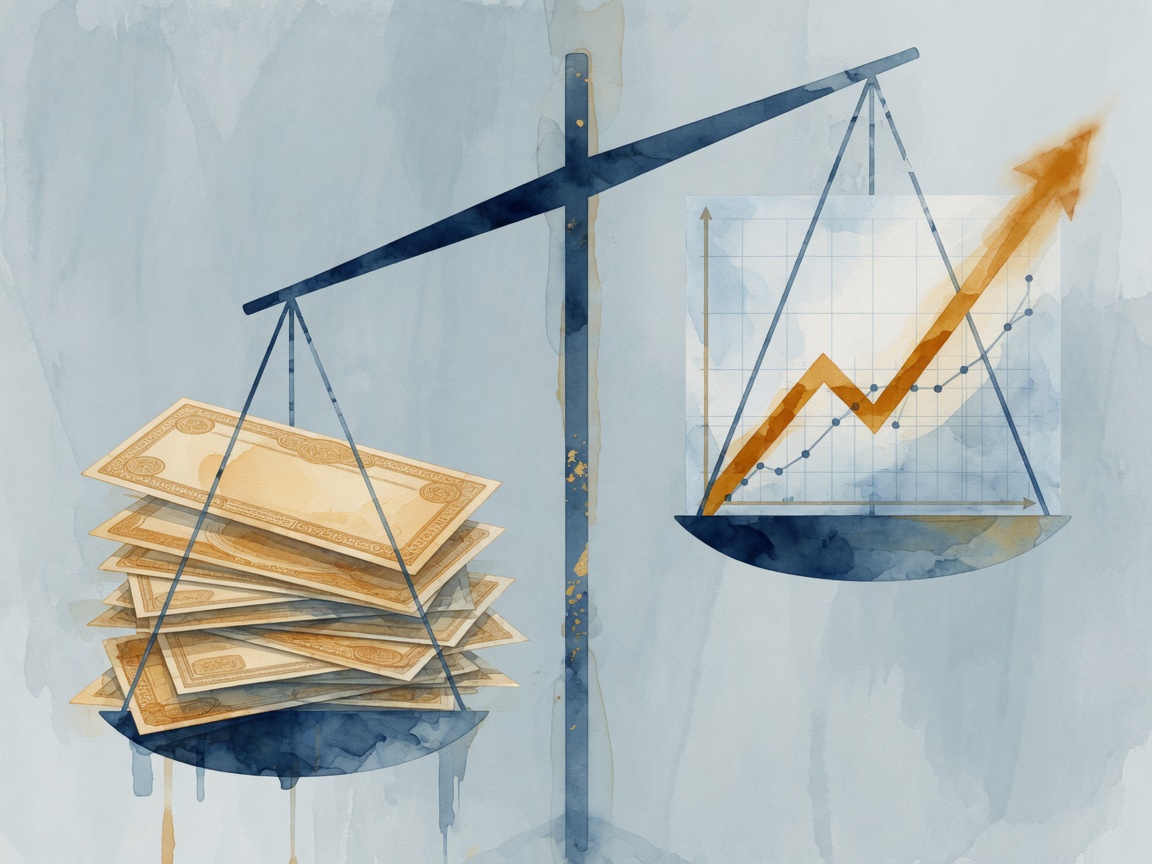
The Treasury Department said Wednesday it will buy back up to $6 billion in longer-term government debt, triple the normal level, to stabilize a bond market where yields have climbed to their highest point since the 2008 financial crisis.
The announcement by Treasury Secretary Scott Bessent escalates a plan first outlined on Aug. 19, when he said the department would at least double its typical $2 billion buyback operation for already-issued securities. Treasury also said future operations will be at least $4 billion. The actual buybacks happen Thursday. They will conclude at 2 p.m. ET after a 20-minute operation targeting 10- and 20-year notes. The move aims to keep government debt markets liquid, on the theory that fewer bonds on the market should push yields down. But markets reacted negatively and yields rose further, with long-dated securities increasing as much as five basis points before easing. The benchmark 10-year issue hit 4.841% around 11:30 a.m. ET. The 20-year climbed to 5.314%. The 30-year bond punched through the 5.3% level, most recently yielding 5.307%.
A sell-off with deep roots
Rising inflation and uncertainty from the war in Iran have spooked investors from US bonds, historically among the safest investment vehicles. The annualized inflation rate hit a three-year high in May before falling to 3.4% in July, 0.7% higher than the same time last year, largely because of higher energy prices. On Wednesday, Brent crude rose past $100 a barrel for the first time since July as conflict in the Middle East continued to escalate.
Government debt has compounded the pressure. In August, US government debt reached $40 trillion for the first time in the country’s history, double the amount from just 10 years ago. Higher yields could ultimately mean higher interest rates on loans, including mortgages, student debt, and car loans, as these loans are often tied to the bond market.
Critics question the scale
The buyback fell short of what some expected. Speculation had built that the amount could be many times the initial release. Robert Tipp, chief investment strategist and head of global bonds at PGIM Credit, said the Treasury is issuing a spectacular amount of securities. It is trying to control prices at the back end of the curve with what is not a major operation in the big scheme of things, he said. Market expectations had ranged from six to 10, and the announcement came in at the bottom end, producing a negative reaction.
Bond fund manager Mark Spindel was blunt. “Hank Paulson’s bazooka this is not,” said Spindel, chief investment officer at Potomac River Capital, referring to the former Treasury secretary’s actions during the financial crisis. “And it took an act of Congress in that crisis.” Stanley Druckenmiller, head of Duquesne Family Office and a former mentor to Bessent, criticized the move in a Wall Street Journal op-ed. “Once markets believe Treasury is defending a price, every rise in yields becomes a test of official resolve, and the operations must grow to survive the tests,” he wrote. “Governments defending prices against fundamentals always lose.” “The only variable is how much they spend before conceding,” he added.
Mizuho economist Alex Pelle wrote that the risk is Treasury ratchets up the operation given the market’s reaction, though he expects pressure to abate after the midterms. The accelerated buybacks have faced critics who question what impact the amount would have on such a massive market and note the move breaks from Treasury’s predictable approach.
The buyback puts more pressure on the Federal Reserve to deal with inflation, which has been pushed up by the war in Iran. The Fed could raise interest rates to mitigate higher prices, at the risk of upsetting the White House. Last week, Donald Trump said the Fed “must get smart” and lower interest rates. “A STRONG COUNTRY MEANS A LOWER INTEREST RATE,” he wrote on social media.
The pressure puts Fed Chair Kevin Warsh, who stepped into the role in May, in a bind: manage inflation or face the president’s wrath. In a closely watched speech at the Fed’s Jackson Hole symposium in August, Warsh affirmed that it was “the Fed’s job to deliver stable prices” but held off on whether the central bank would raise rates any time soon.
Sources & methods
- The Guardian report on the Treasury buyback, inflation data, the Iran war's effect on energy prices, and political pressure on the Federal Reserve from Donald Trump. Archived Sep 9, 2026
- CNBC report detailing the buyback mechanics, specific Treasury yield figures, market reaction, and quotes from Mark Spindel, Robert Tipp, Stanley Druckenmiller, and Alex Pelle. Archived Sep 9, 2026
This article was assembled from two published reports on the Treasury Department’s bond buyback announcement, cross-checked for yield figures, debt levels, and direct quotes from named market participants and officials.