Trump announces deal giving U.S. majority control of Venezuela’s oil reserves
The deal is vast. The agreement covers 65 billion barrels of proven reserves across 17 strategic fields, giving the U.S. government a 55% stake in a joint venture that Rodríguez granted a 100-year concession, though few details have been released.
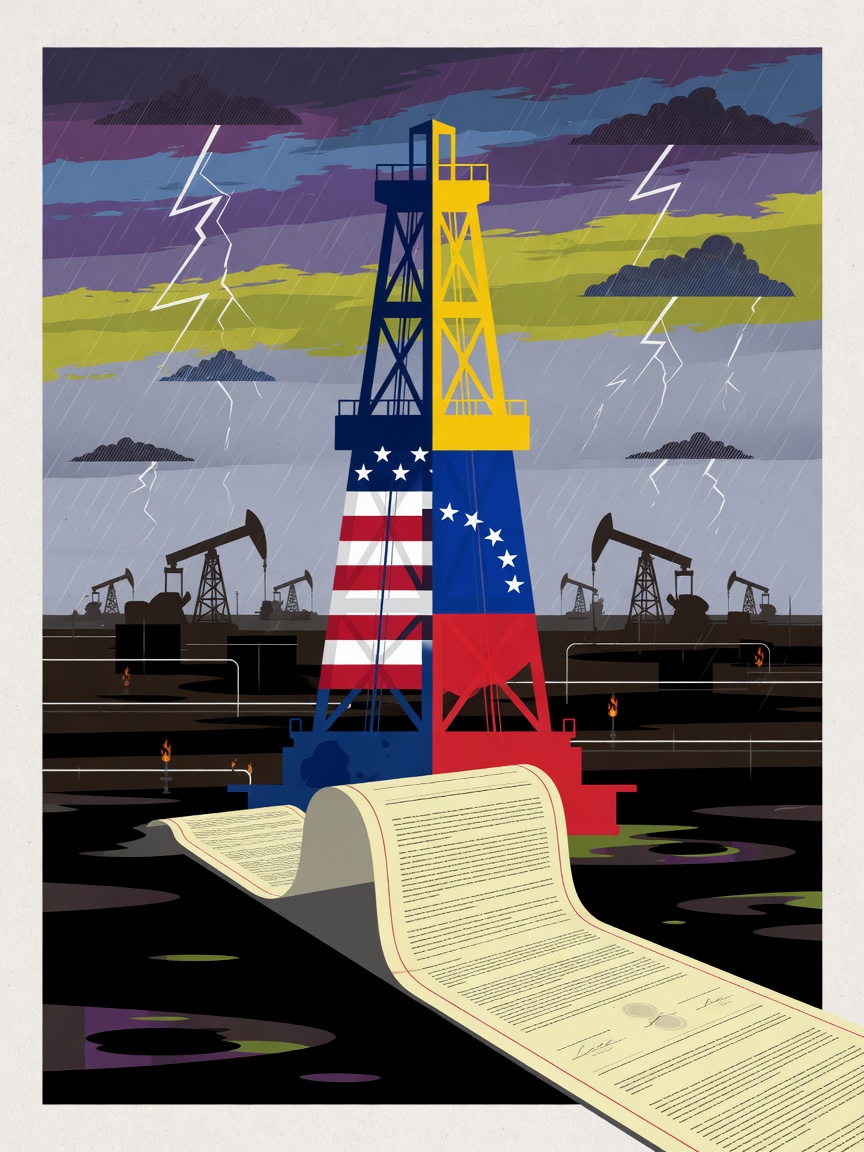
President Donald Trump announced Friday that the United States has reached an agreement with Venezuela giving the U.S. majority control of more than 65 billion barrels of the country’s proven oil reserves, a deal he described as the largest in history.
The agreement, brokered by Secretary of State Marco Rubio and Defense Secretary Pete Hegseth with Venezuela’s interim President Delcy Rodríguez, calls for development of 17 strategic oil fields and would give the U.S. government 55% control of a joint venture with an unnamed private operator, according to a U.S. official who spoke to CBS News. Rodríguez granted the venture a 100-year concession to operate in the fields, the official said. Few details were released.
Trump posted on social media that the transaction more than doubles American oil reserves and will substantially lower gas prices. He said the deal was reached at no cost to U.S. taxpayers. He did not elaborate on the partnership with private business.
Rodríguez said in a statement that the agreement will have a significant impact on Venezuela’s revival. She said the deal involves an investment of more than $100 billion and more than $209 billion in taxes for the state. These investments will contribute to the recovery and modernization of Venezuela’s industry, the country’s economic growth, the energy security of the hemisphere, and greater balance in international markets, she said.
Rubio called the agreement a huge win for both the American and Venezuelan people, saying on social media that it would bring nearly $100 billion in private investment, support thousands of high-paying jobs, and help rebuild Venezuela’s economy. The secretary said it would secure stable, low-cost oil for America and help lower petrol prices.
Political and economic pressure at home
Friday’s announcement comes as Trump faces mounting pressure over gasoline prices ahead of November’s midterm elections. The average price of gas in the U.S. stood at about $4.09 a gallon on Friday, according to AAA, up from $3.21 at the same time last year, a 27% increase year over year.
War with Iran has hampered transit through the Strait of Hormuz, a critical passageway for global crude shipments. Only a handful of ships have recently crossed through the strait each day, down from levels of around 100 seen a year ago, according to the International Monetary Fund’s PortWatch tracker. West Texas Intermediate crude prices have jumped more than 24% since the conflict began.
Strategic petroleum reserve volumes fell below 300 million barrels in early August, down by more than 100 million barrels since the start of 2026, according to Department of Energy data. Washington has been looking for solutions to replenish the stockpile, including the possibility of crude swaps with American producers.
An unusual arrangement with uncertain legal footing
This deal apparently grants the U.S. direct governance over a foreign country’s sovereign national resources, an arrangement that would appear wider in scope than the U.S.-led Coalition Provisional Authority’s control over Iraq’s oil revenues after the 2003 invasion. The official text has not been released. It remains unclear whether the deal could face legal and constitutional challenges in Venezuela, where the state retains control over core oil industry activities.
It follows the U.S. special forces operation on 3 January that captured then-President Nicolás Maduro and his wife, Cilia Flores. Maduro remains jailed in the U.S. In the hours after the raid, Trump said his administration would run Venezuela until a safe and proper transition could take place and that the U.S. would indefinitely control the sale of the country’s oil.
Venezuela holds an estimated 303 billion barrels of proven oil reserves, the world’s largest. Production has plummeted. It now produces only 1.25 million barrels per day, far below its potential after years of underinvestment, mismanagement, and sanctions. Experts have repeatedly warned that a substantial boost in Venezuelan production will not happen quickly, as repairing and expanding infrastructure takes years and requires billions of dollars.
Chevron and other American energy companies are expected to sign agreements next week granting new oil exploration and production rights, according to the Wall Street Journal. But persuading major oil firms to return could face headwinds. Darren Woods, CEO of ExxonMobil, said after Maduro’s ouster that he saw Venezuela as un-investable, though executives expressed interest alongside caution given past experience. Rodríguez signed a law opening the nation’s oil sector to privatization. Opposition figures have expressed anger. One told the Guardian the arrangement was a massive land grab and revolting. Earlier in the week, the Wall Street Journal and Axios reported that the administration was in advanced talks for a U.S. stake in Venezuela’s most promising oil and gas fields, with some 90 billion barrels of proven reserves.
Sources & methods
- BBC News report on Trump's announcement, citing CBS News for details on the 55% U.S. control and 100-year concession Archived Aug 29, 2026
- Guardian report on the agreement, including opposition reaction and Wall Street Journal reporting on advanced talks and Chevron's expected involvement Archived Aug 29, 2026
- Al Jazeera report on the deal, including Rodríguez's remarks and Reuters sourcing on the lease model under consideration Archived Aug 29, 2026
- NPR/AP report detailing the joint venture structure, strategic petroleum reserve figures, gas prices, ExxonMobil CEO remarks, and Maduro's legal status Archived Aug 29, 2026
- CNBC report on the deal's context amid the Iran war, Strait of Hormuz transit data from IMF PortWatch, and West Texas Intermediate price movements Archived Aug 29, 2026
This article was assembled from five published news reports dated 28-29 January 2026, cross-referencing details on the agreement’s structure, political context, and market conditions. No primary documents were obtained; the official text of the agreement has not been publicly released.