Trump threatens to block Bombardier jet sales in the US unless the Canadian manufacturer builds domestically
The warning came hours before Canada’s retaliatory tariffs on billions of dollars of American goods took effect, deepening a trade war that has collapsed negotiations between the two neighbors.
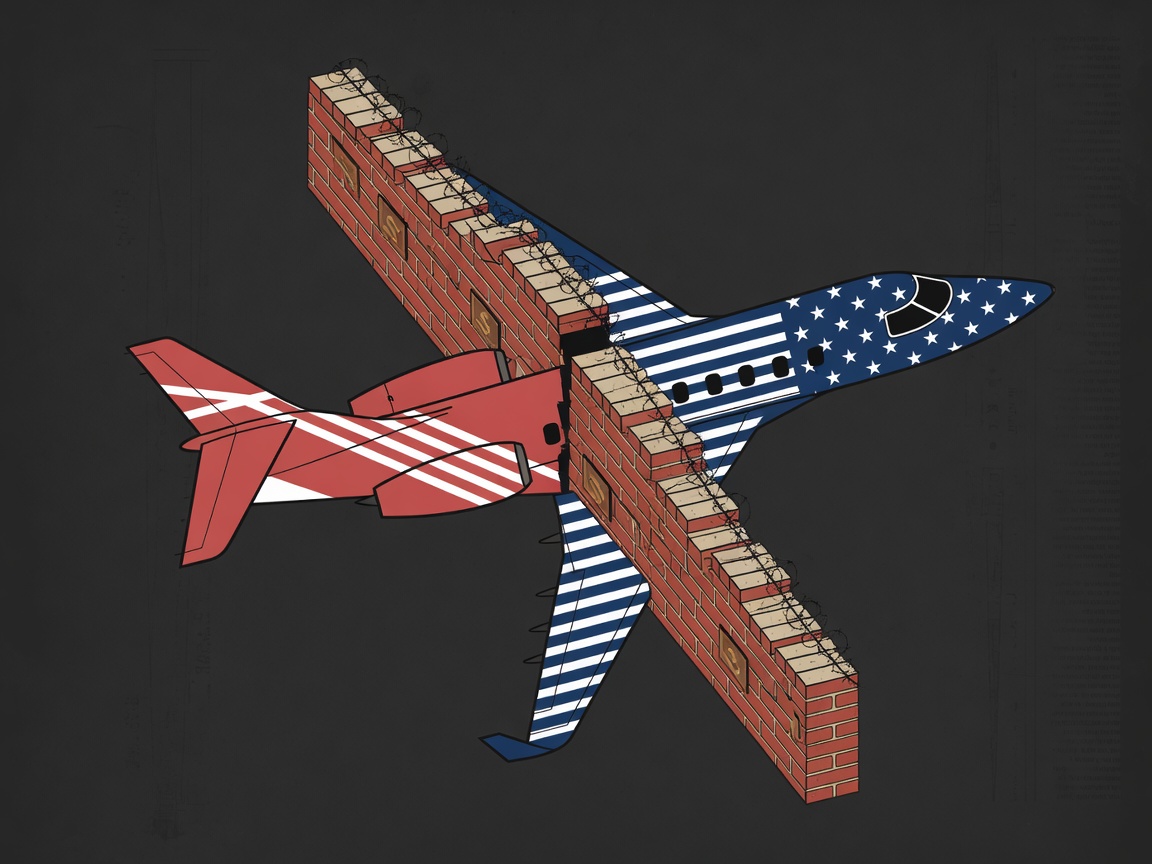
President Donald Trump warned the Canadian aircraft manufacturer Bombardier on Monday that it can no longer sell its jets in the United States unless it moves manufacturing there. The threat escalates a trade war that has collapsed negotiations between the two countries and triggered retaliatory tariffs on billions of dollars of American goods.
“NO MORE SELLING BOMBARDIER IN THE UNITED STATES!” Trump wrote on Truth Social. “If they want our Market, they must build here, and stop treating America like a ‘piggybank.’”
The warning landed hours before Canadian retaliatory tariffs were scheduled to take effect early on Tuesday. Ottawa announced roughly $20 billion in countermeasures on Aug. 25, targeting more than 700 U.S. goods and applying to products covering C$27.6 billion in imports from the United States. The tariffs range from 15% to 50%. They target sectors including steel, dairy, appliances, agricultural equipment, pulp and paper, and electronics. The Canadian government said the measures come “as a result of the United States’ decision to impose a 50% tariff on $27.6bn of Canadian goods effective August 22.” Goods already in transit to Canada on the day the tariffs take effect are exempt.
It is unclear how Trump intends to block Bombardier from doing business in the U.S. The Montreal-based company already operates a factory in Kansas. It builds special mission military planes there and employs 3,500 American workers. About half of its fleet of 5,100 aircraft is operated by customers based in the U.S. Bombardier did not immediately respond to a request for comment from CNBC. The BBC contacted Prime Minister Mark Carney’s office and Bombardier for comment.
A company at the center of the dispute
Bombardier’s jets are built at facilities in Canada, the U.S., and Mexico, according to the company’s website. They comply with the North American free trade agreement signed by Trump during his first term, known as CUSMA in Canada and USMCA in the U.S. The company is one of Canada’s largest. It contributed C$7.4 billion, equivalent to $5.4 billion, to the country’s GDP in 2024, according to a report commissioned by Bombardier. It is also one of the largest employers in Quebec’s manufacturing sector.
Quebec Premier Christine Fréchette called the company “a source of pride” for her province and “a flagship of our economy.” She said she had reached out to Bombardier CEO Éric Martel and offered her government’s full support. On Trump’s threat, she wrote on X: “I will not respond to provocation with provocation.” She added: “Quebec will not allow anyone to dictate where our companies must produce in order to access a market.”
How the trade fight unraveled
Trade talks between Canada and the U.S. collapsed late last month. Canada walked away from the negotiating table. The U.S. then imposed new 50% tariffs on a range of Canadian goods, including wine, cement, and hockey sticks. Prime Minister Mark Carney accused the Trump administration of presenting last-minute terms that were “unfair” and “uneconomic.” U.S. officials accused him of refusing to sign a deal for political reasons because of Trump’s unpopularity in Canada, an accusation Carney denied. Carney last week urged the Trump administration to “start being serious” as the dispute spilled into broader diplomatic tensions. Trump and senior U.S. officials have repeatedly criticized Canada and its leadership.
Commerce Secretary Howard Lutnick told CNBC’s “Squawk Box” that the Canadians “blew up” a nearly complete trade deal “for political reasons only.”
Tensions have spilled beyond trade. Trump signed an executive order renaming Lake Ontario “Lake America,” which Canadians rejected. Vice President JD Vance reportedly mocked Carney, apparently saying the Canadian prime minister “comes in and puffs his chest out and says: ‘I’m going to, like, out-tough Donald Trump.’” Trump has also accused Canada of “ripping off” the U.S. “for years,” adding: “We don’t need Canada, they need us!”
French-language protections have become a sticking point in the talks. Carney said last month that Canada would not accept a deal that weakened those protections, saying American negotiators viewed the measures as an “irritant,” while “in Quebec, these are rights.” Quebec has long maintained laws aimed at protecting French and preserving its distinct cultural identity. American negotiators have raised concerns about rules they say can disadvantage U.S. businesses.
Carney has set one condition for returning to the table. Canada would resume trade talks, he said, “when the Americans are ready.”
Sources & methods
- BBC report on Trump's Truth Social threat against Bombardier, the company's U.S. operations, and the collapse of Canada-U.S. trade talks Archived Sep 8, 2026
- Guardian report on Canada's retaliatory tariffs taking effect, the breakdown in negotiations, French-language protections, and Trump's symbolic actions against Canada Archived Sep 8, 2026
- CNBC report on Trump's Bombardier ultimatum, Ottawa's countermeasures, and Commerce Secretary Lutnick's comments on the collapsed trade deal Archived Sep 8, 2026
This article was compiled from reporting by the BBC, The Guardian, and CNBC, with direct quotes drawn from each outlet’s published coverage of the trade dispute.