U.S. imposes Section 301 tariffs on 14 trading partners with China facing the steepest rates
The duties follow a Supreme Court ruling that struck down Trump’s earlier tariffs and a fresh round of White House investigations into foreign trade practices deemed unfair to American commerce.
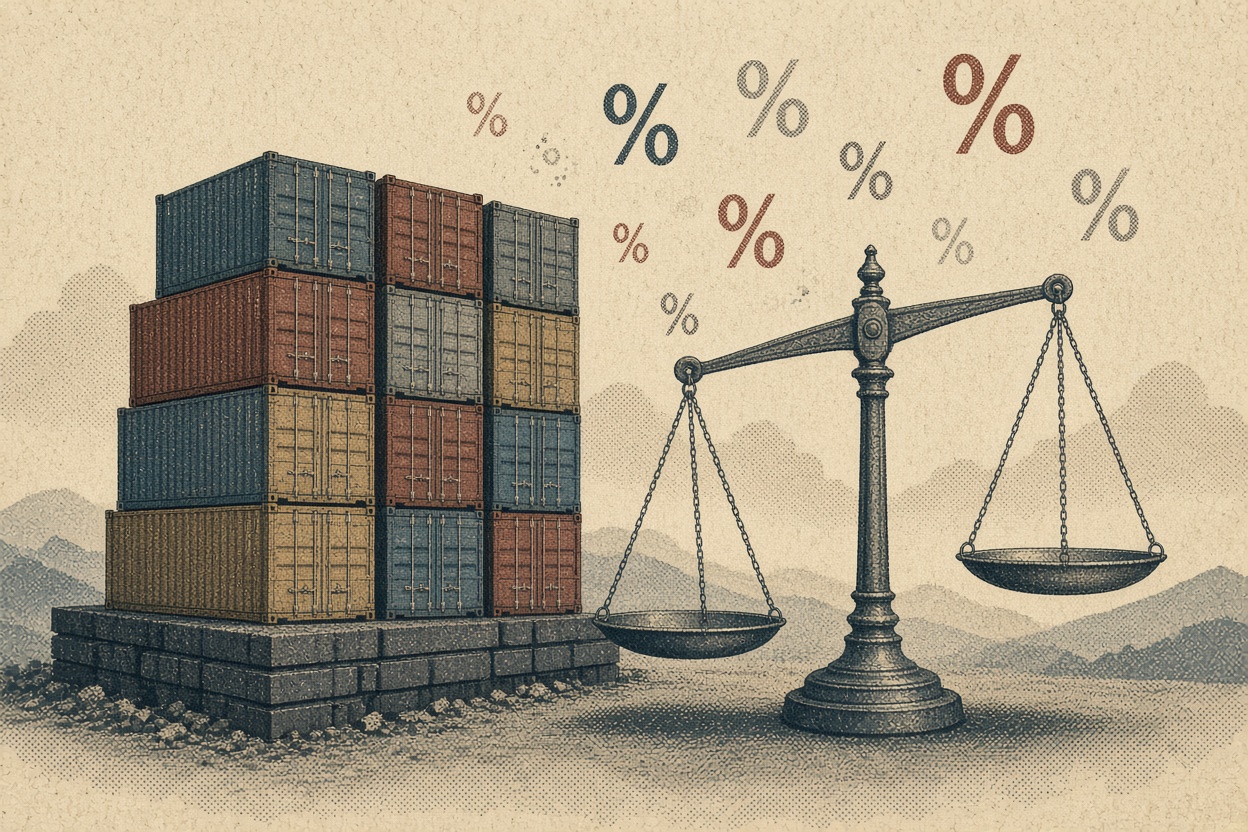
The United States announced new tariffs targeting 14 trading partners, including China and the European Union, imposed under Section 301 of the Trade Act of 1974. China faces up to 40% in new duties, the steepest rate among the targeted partners.
Trump is pursuing tariffs as a signature trade policy, doubling down on levies even after the Supreme Court previously struck down his earlier duties and forced a reset of his administration’s trade agenda. The tariffs follow White House investigations into foreign trade practices deemed unfair or burdensome to U.S. commerce, probes that examine whether foreign governments’ behavior and policies unfairly affect American businesses, workers, and consumers.
Country-specific rates, China hit hardest
CNBC earlier reported the new tariffs would be “country specific” rather than a blanket rate, citing a source familiar with the matter, a detail that distinguishes the current levies from the across-the-board duties Trump had previously attempted. The 14 targeted jurisdictions include China, the European Union, Singapore, Switzerland, Indonesia, Malaysia, Cambodia, Thailand, Korea, Vietnam, Taiwan, Bangladesh, Japan, and India. Not all rates are equal. Vietnam faces duties of up to 35%, while other targeted jurisdictions face either 20% or 25%. The new tariffs will not stack on top of existing duties, except for China, which faces a 20% tariff on top of the 25% imposed in 2018 over forced technology transfers. Some rates will be effectively reduced because of caps Trump has agreed to. The 14 partners have been notified of these actions, with no country’s tariffs exceeding rates announced as part of framework deals on reciprocal trade, a senior U.S. official said.
China’s new Section 301 component could rise to that ceiling if Beijing does not uphold its end of a trade truce agreed in Busan, South Korea, in Oct. 2025. After the Busan truce, total tariffs on Chinese exports to the U.S. were slashed to 47%, a level that includes the existing 25% duty from 2018. If the truce collapses, the Section 301 portion alone could reach the maximum rate, pushing the combined total above the current 47%.
A legal reset and a new investigative path
The path has not been linear. The legal landscape shifted in February. The Supreme Court struck down tariffs Trump had enacted under the International Emergency Economic Powers Act, dealing a significant blow to his initial trade strategy and forcing the administration to seek alternative legal authority. Trump used Section 122 of the Trade Act of 1974 to impose a 10% global tariff after the court’s decision, before replacing them with levies of up to 12.5% on 60 economies under Section 301, alleging forced labor practices. Separately, Trump had unveiled sweeping “Liberation Day” duties in April 2025 before pausing them after a sour reaction from bond markets. The White House then launched investigations into trade practices of other countries in March after the Supreme Court ruling, setting the stage for the current round of country-specific levies under Section 301 that now targets 14 economies.
Overcapacity dispute
The administration defines “overcapacity” as excess industrial production, often supported by government subsidies, that allows cheaper goods to flood global markets and undercut U.S. producers. A senior U.S. official said the targeted economies create, sustain, or contribute to structural excess capacity and production in manufacturing sectors which burden or restrict American commerce. The dispute over overcapacity goes to the heart of the administration’s case for the levies. Beijing sees it differently. “The so-called ‘overcapacity’ does not really exist,” China’s foreign ministry said, according to Reuters, pushing back on the core rationale the administration has used to justify the duties. Economists have warned import taxes can fuel inflation, push prices up for consumers, and dampen global trade. Trump argues the tariff policy will boost American manufacturing and create jobs.
Sources & methods
- BBC News, reporting on the U.S. tariff announcement and country-specific rates Archived Nov 25, 2026
- CNBC, reporting on the proposed Section 301 tariffs, administration rationale, and legal timeline Archived Nov 25, 2026
Compiled from BBC and CNBC reporting on the U.S. tariff announcement, with key facts corroborated across both sources.