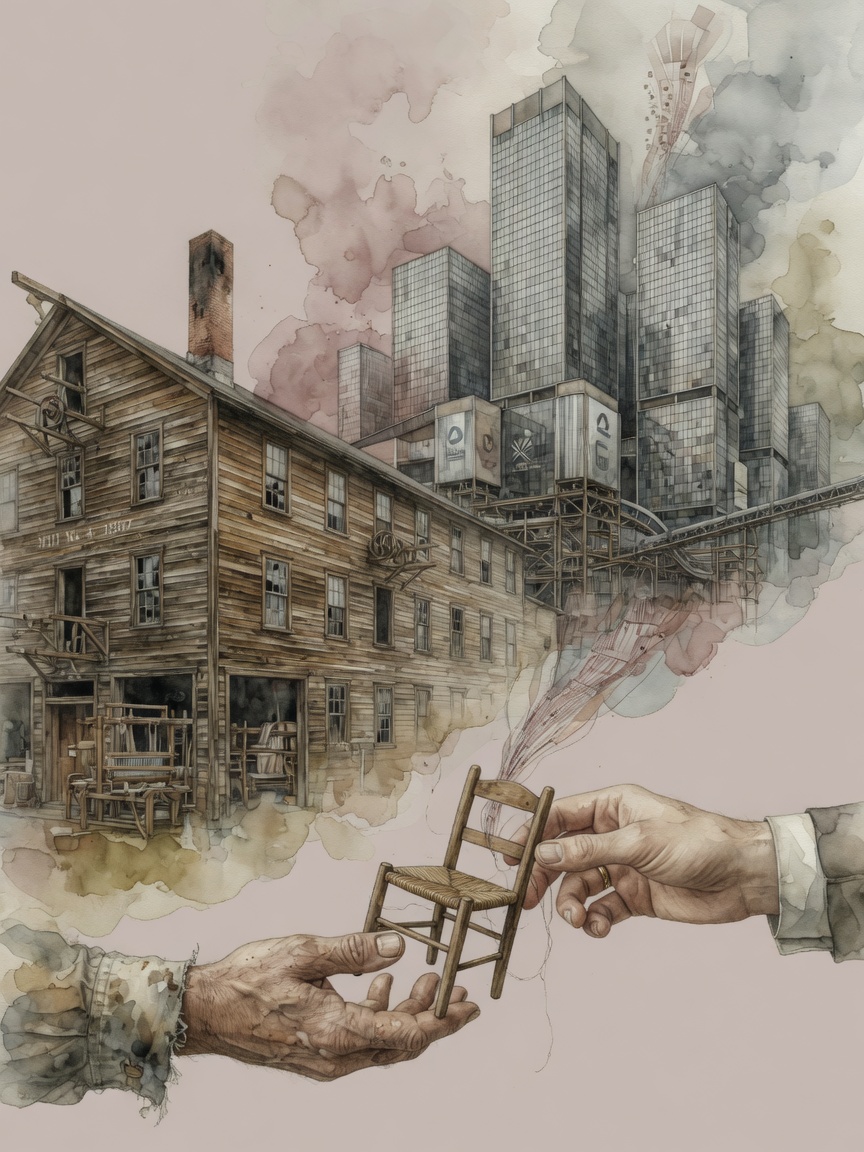
Warren Buffett has stepped down as chairman of Berkshire Hathaway, ending a tenure that began in 1965 and transformed a failing New England textile mill into a $1 trillion global conglomerate.
The 96-year-old investor announced the move in a letter to shareholders on Friday, writing that “Father Time always wins.” He will become chairman emeritus, effective immediately, while remaining a director on the board. His son Howard Buffett, 71, will replace him as non-executive chairman, a transition dictated by a succession plan the company has held for years.
The handover comes a little more than nine months after Greg Abel took over as chief executive. Buffett had first announced his exit as CEO at Berkshire’s annual meeting in May 2025, shocking a crowd of thousands despite his advanced age. He retained the chairmanship until now.
Buffett framed the decision as a natural conclusion. “He has, however, been generous with me,” he wrote of Father Time. “He has given me the opportunity to see Berkshire reach a point where I am more confident than ever about what lies ahead.” He noted that he had recently celebrated his 96th birthday alongside family, including a great-grandchild who had just turned one and is “moving a bit faster” than he is.
A company rebuilt from a textile mill
Known as the “Oracle of Omaha,” Buffett took control of Berkshire Hathaway in 1965, when it was a struggling textile manufacturer. He was 34. Over the next six decades he turned it into a financial and industrial juggernaut with $44.5 billion in operating earnings last year and nearly 400,000 employees, according to CNBC. The company posted a 19.7 percent compounded annual return to shareholders over his tenure, nearly double the return of the S&P 500.
Today Berkshire owns a wide range of well-known businesses, including GEICO car insurance, Dairy Queen, and the BNSF railway system. It also holds large stakes in companies such as Apple, Coca-Cola, American Express, Nvidia, Amazon, Alphabet, and Meta. Buffett made his mark through value investing, a strategy focused on finding companies with solid fundamentals, buying them at fair prices, and holding them for decades. His annual letters and festival-like shareholder meetings turned him into a leading mentor across the financial world. The Guardian, citing Bloomberg, places his net worth at $145 billion, making him the 10th richest person in the world.
The change is considered an orderly passing of the baton rather than a sudden shock. Howard Buffett, known as “Howie,” is Warren’s second of three children and has served on the Berkshire board since 1993. A former farmer, philanthropist, and sheriff, he brings more than three decades of board experience to the role. Warren Buffett told the Wall Street Journal in January 2025 that his son was getting the position “because he’s my son” and that he was “very, very, very lucky” to trust all three of his children.
The division of duties is deliberate. Greg Abel runs the company and manages corporate strategy and capital decisions. Howard Buffett’s main responsibility as chairman will be guarding the firm’s culture and values. “Greg runs the company; Howard will guard its culture and values, both worth more than anything on our balance sheet,” Buffett wrote. “Think of Howard as a policy the shareholders own and hope never to claim against.”
Abel, in a company release, said Buffett’s impact on the company “is without parallel in the history of American business.” He added that the culture Warren built and the values he championed will remain at the heart of Berkshire, with Howard as their guardian. Reached for comment by CNBC, Abel said Buffett had given him “the best job in American business” and the latitude to lead in a manner consistent with Berkshire’s culture and values. Susan Decker will continue as lead independent director.
Berkshire faces a tougher market
Berkshire shares have struggled in 2026, and Buffett’s exit raises the stakes for Abel. The stock is up just 1 percent this year while the S&P 500 has rallied more than 11 percent, CNBC reported. Rising oil prices and investors’ preference for higher-growth parts of the market are partly to blame. Shareholders are also waiting to see whether the new CEO can deploy the firm’s capital as effectively as Buffett did.
Berkshire holds $365.5 billion in cash. Abel has begun stepping up share repurchases, buying back $4.5 billion in the second quarter. Buffett praised his successor in the Friday letter, saying his expectations for Abel were sky high from the start and that he had exceeded them. “The company is in excellent hands, and I look forward to remaining a shareholder alongside you,” Buffett wrote in closing. He acknowledged that serving as chairman had been the “privilege of a lifetime.”
Buffett had remained active as chairman this year. Abel told CNBC in March that Buffett was still coming into the Omaha office every day and that the CEO frequently consulted with him. In July, Buffett revealed he was the driving force behind Berkshire’s recent $10 billion private stock purchase of Alphabet, now the company’s third-biggest stock holding. He also noted in that interview that he had broken his leg a few weeks earlier but was recovering. In a Thanksgiving letter to shareholders last year, he wrote that he generally felt good, though he moved slowly and read with increasing difficulty, and was at the office five days a week. The company has assured investors that day-to-day operations will remain steady.