Warsh sharpens inflation warning at Jackson Hole, putting markets on notice for a rate hike
The Federal Reserve chair used his first Jackson Hole keynote to recommit to the 2% inflation target and warn that rates could rise if price pressures persist, a hawkish posture that puts him at odds with President Donald Trump.
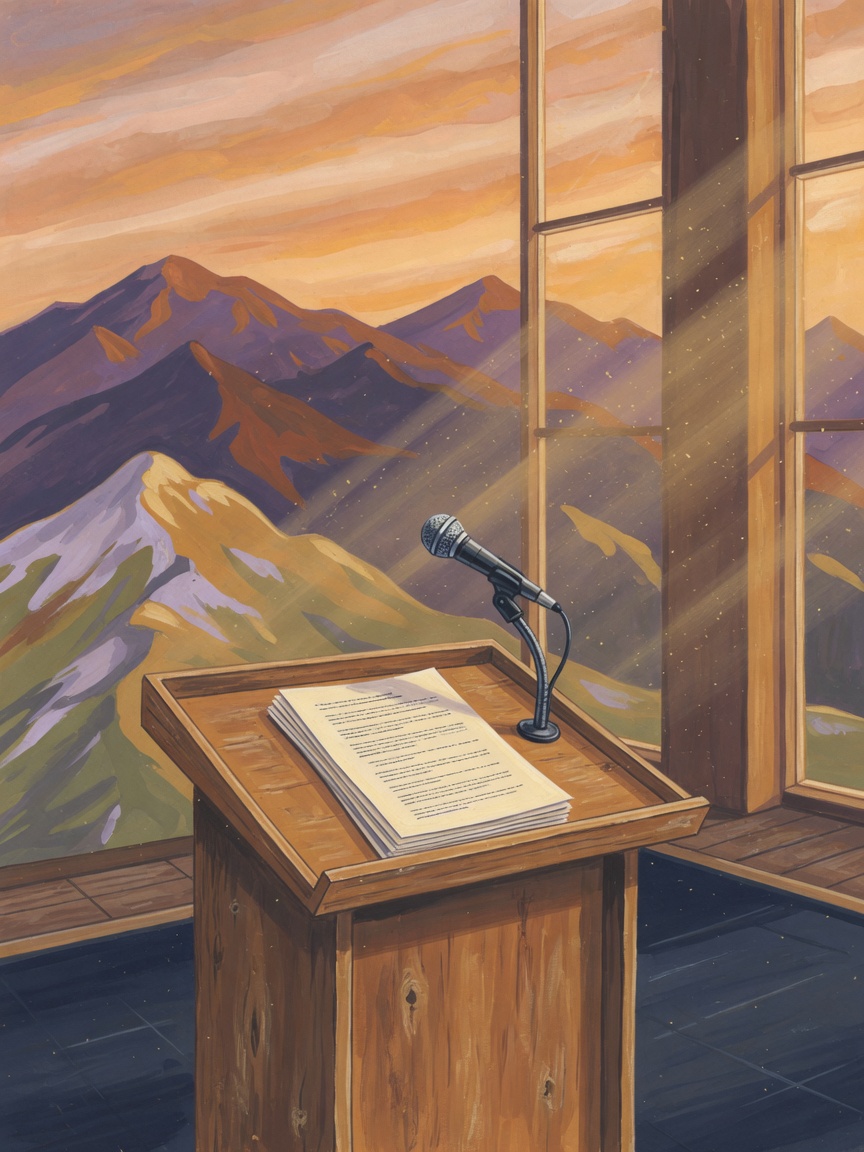
Federal Reserve Chairman Kevin Warsh used his first Jackson Hole keynote on Friday to deliver his clearest warning yet that stubborn inflation could push the central bank toward raising interest rates, a hawkish shift that sent short-term Treasury yields spiking.
Warsh told an audience of central bankers, government officials, and academics at the annual Jackson Hole Economic Policy Symposium in Wyoming that the Fed’s predominant focus should be on prices. Prices rose 3.4% in the year to July according to the consumer price index, well above the central bank’s 2% target. Personal consumption expenditures inflation, the Fed’s preferred gauge, was 3.7% for July. The speech mattered because it signaled a sharper hawkish posture than Warsh had conveyed at his July press conference, and because it put him on a collision course with President Donald Trump, who has aggressively demanded rate cuts.
“Here is my standard: We must be confident that underlying inflation is moving to our objective, clearly and at sufficient speed. Otherwise, we have work to do,” Warsh said. He described progress on inflation as modest. He said summer price readings, while better than expected, did not indicate that underlying trends had meaningfully improved.
The remarks landed hard. The 2-year Treasury yield, which is sensitive to policy expectations, jumped more than six basis points to 4.298%. The 30-year bond yield edged two basis points lower to 5.168%, and the benchmark 10-year yield was little changed at 4.676%. According to the CME FedWatch Tool, the probability of a rate hike at the Fed’s September meeting rose to 45.7%, up from 35.4% one day earlier.
A rejection of forward guidance
Warsh used the platform to declare an end to the practice of forward guidance, the tradition of signaling future rate decisions to markets, which the Fed adopted in the wake of the 2008 financial crisis. The practice had overstayed its welcome. “Oversharing policy deliberations and overcommitting to future decisions can lead markets, businesses, and households astray,” Warsh said, adding that it also denied the Fed the freedom to make the right calls when the time came to decide. The stance marks a departure from the approach of his predecessor, Jerome Powell, who foreshadowed rate cuts in his Jackson Hole address last year. Warsh rejected the forward guidance label.
Warsh also moved to dispel concerns raised after his July press conference. He recommitted to the 2% PCE inflation target, calling it a firm, fixed target, after some economists had interpreted his earlier answers as suggesting he wanted to change the goal. He described financial conditions as not broadly restrictive, a shift from July when he called them uneven. He was unambiguous that short-term interest rates are the predominant tool to achieve the Fed’s dual mandate.
To illustrate his concern, Warsh cited granular inflation data. He said 54% of PCE components had been above 3% annualized inflation in the past 12 months, while 49% were above 3% in the past six months. He described those figures as lower than pandemic-era inflation but still above the long-term trend. “None of these measures are perfect, but they all tell a similar story: Inflation is running above our 2 percent target,” he said.
Political pressure and internal dissent
Trump appointed Warsh in May and has repeatedly criticized the Fed for not cutting rates, saying rate hikes keep the country down. The president has continued to insist the Fed should lower interest rates, despite economists who warn that doing so would exacerbate inflation. Warsh did not address Trump directly. His reading of the economy as showing elevated price concerns puts him clearly at odds with the White House.
At the central bank’s July meeting, three of 12 voting members wanted to raise rates by a quarter percentage point, the first time in a decade that many board members shared dissent over a policy position. A majority voted to hold rates steady at a range of 3.5% to 3.75%, where they have sat for the fifth time in a row. Warsh said a good majority of his colleagues and he thought the wiser course was to await new information between meetings.
Analysts at Capital Economics said the speech delivered a far clearer and hawkish message and left the door open to a hike earlier than previously expected. Vail Hartman, a BMO U.S. rates strategist, wrote that it was a deliberately hawkish speech that would put to rest concerns about the Fed’s willingness to raise rates to restore price stability. The central bank’s next interest rate decision will be made on 15-16 September.
Warsh also addressed artificial intelligence, saying a Fed task force examining AI use and economic impact was encouraging but had no bearing on current decisions.
The broader backdrop includes a US gross national debt that topped $40 trillion for the first time, and bond yields in the UK, Germany, France, and Japan that have all hit their highest levels in decades.
Sources & methods
- BBC article on Warsh's Jackson Hole speech, inflation figures, Trump's demands, forward guidance rejection, and national debt Archived Aug 28, 2026
- Guardian article on Warsh's first major speech, forward guidance rejection, board dissent, bond market reaction, and foreign yields Archived Aug 28, 2026
- CNBC analysis of Warsh's hawkish shift, PCE data, inflation component breakdown, AI task force, and political dynamics with Trump Archived Aug 28, 2026
- CNBC article on Treasury yield movements, CME FedWatch odds, and BMO strategist quote following Warsh's speech Archived Aug 28, 2026
This article was assembled from four published reports covering Warsh’s Jackson Hole keynote, cross-referencing inflation data, market reactions, and political context across the sources.