Ambassador says Trump asked Xi whether China would buy American weapons, as analysts warn the summit produced too little to hold the U.S.-China truce
David Perdue’s disclosure, swiftly contradicted by the White House and State Department, frames a summit that analysts say yielded too little to sustain the fragile detente.
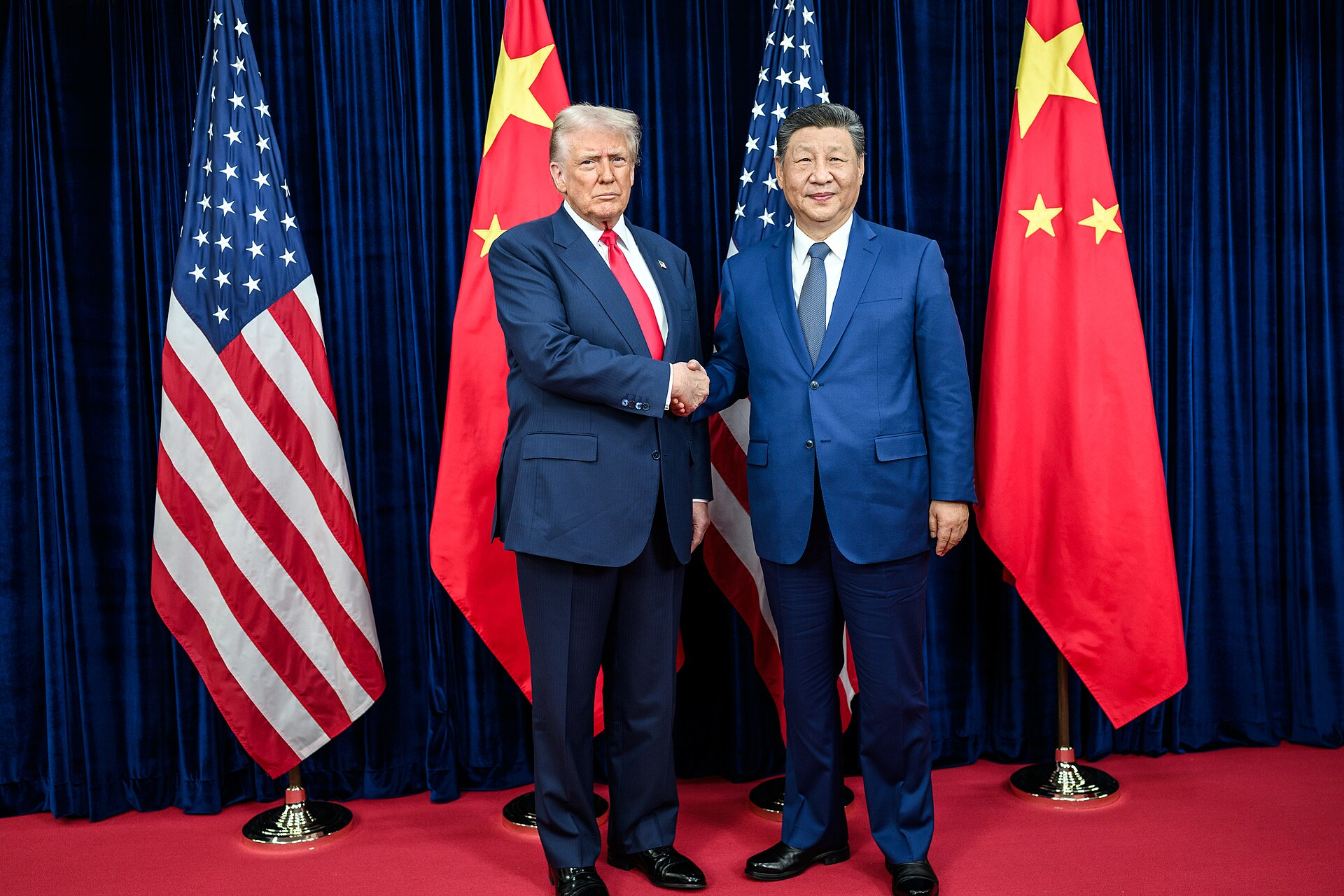
U.S. Ambassador to China David Perdue told Fox News on Sunday that President Donald Trump asked Xi Jinping whether China would like to buy American weapons. The disclosure came at the end of a summit that analysts say produced too little to sustain the fragile U.S.-China detente.
The claim drew an immediate contradiction from Trump’s own government. The White House told the New York Times that the U.S. had no plans to sell arms to China. The State Department said U.S. law prohibits arms sales to China and there is no offer or plan to sell arms to China. Whether any offer was made remains disputed. “President Trump continues to say, hey, we sell arms to other people around the world,” Perdue said. “He actually asked President Xi, would he like to buy some at one point.”
The weapons question surfaced against a backdrop of unresolved Taiwan arms sales. Taiwan has been waiting for months for Trump to approve a $14bn arms sales package. At a meeting with Xi in Beijing in May, Trump called the package a “very good negotiating chip” and kept it in abeyance. A record multi-billion dollar Taiwan arms deal was unveiled in December last year. During the summit, Xi urged Trump to oppose “Taiwan independence,” according to a readout from Xinhua. Perdue said Friday there had been no change in Taiwan policy, including on arms sales. Trump said Saturday that Xi understands his position on Taiwan. Taiwanese deputy foreign minister Chen Ming-chi said Taiwan faces a severe situation in the Taiwan Strait, noting that China continues investing in military capacity despite a declining economy.
A summit of limited deliverables
Trump hosted Xi in Washington last week for a summit, the Chinese leader’s second state visit to the U.S. since 2015. Trump personally greeted Xi at the airport, a rare gesture. More than 100 people attended a state dinner for Xi. The summit produced a shorter-than-expected two-month trade truce extension. The two sides issued separate statements rather than a joint one.
Both countries agreed to reduce tariffs on $30 billion worth of goods. China’s Commerce Ministry said the figure includes Chinese coal imports, with plans for purchases in 2027 and 2028. The U.S. readout said each year would see at least 10 million metric tons of coal. The two sides agreed to hold an AI dialogue in the next two months and establish a communication channel for AI incidents, though the U.S. readout used the term “Super Intelligence” while China’s readout referred to AI. They agreed to establish a working group on agricultural trade, with talks before the end of 2026. Both presidents signaled alignment on limiting Iran’s nuclear capabilities and agreed no country can impose tolls on international waterways. China’s Commerce Ministry also referenced plans to increase flights between the two countries and open the financial sector to businesses from all countries. Scott Kennedy of the Center for Strategic and International Studies said the deliverables on trade, rare earths, refined oil, investment, and AI were limited and tentative, and that Taiwan did not appear in either readout.
Analysts warn the truce may not hold
“I’m concerned that this kind of diplomacy and this fragile detente is really unsustainable — if it doesn’t result in more tangible outcomes or in addressing in some way the strategic challenges that are clearly manifest across the entire relationship, from the strategic relationship to economics,” Daniel Kritenbrink, a partner at The Asia Group, said Monday on CNBC’s Squawk Box Asia. Peter Alexander of Z-ben Advisors said the separate statements indicate the two sides are locked in a battle over escalation dominance. Alexander said he had expected Xi would not travel to the U.S. unless a joint statement had been agreed in advance. Both readouts referenced the U.S. and China being allies during World War II, fighting side by side. Trump referenced the Flying Tigers. Xi’s dinner toast recalled standing shoulder to shoulder against Japanese militarist aggressors over 80 years ago. The Chairman Rabbit social media account, seen as having insight into Beijing’s thinking, said the biggest loser of the summit was the Sanae Takaichi government in Japan. Takaichi drew Beijing’s ire nearly a year ago by indicating an attempt to seize Taiwan by force could prompt Japan’s Self-Defense Forces to intervene.
Trump and Xi both intend to attend the APEC meeting in Shenzhen in November and the G20 summit in Miami in December. Zoo Atlanta announced two giant pandas arrived from China on Sunday, days after Xi said Beijing was sending the bears, according to CNBC.
Sources & methods
- The Guardian, reporting on Ambassador David Perdue's Fox News interview, White House and State Department responses, and Taiwan arms sales context. Archived Sep 28, 2026
- CNBC, reporting on the Trump-Xi summit deliverables, official readouts from both governments, analyst commentary from The Asia Group, Z-ben Advisors, and Scott Kennedy of the Center for Strategic and International Studies, and Zoo Atlanta's announcement of two giant pandas arriving from China. Archived Sep 28, 2026
This article draws on reporting from The Guardian and CNBC, including official government readouts, statements from the White House and State Department, on-the-record commentary from analysts at The Asia Group, Z-ben Advisors, and the Center for Strategic and International Studies, and Zoo Atlanta’s announcement of two giant pandas arriving from China, as published in those outlets.