Senate Banking unveils a 309-page crypto bill, drawing the line the SEC has refused to draw
Chairman Tim Scott released the text of the Clarity Act on Tuesday, two days before a committee markup expected to send the most consequential crypto market-structure bill in a decade toward the Senate floor. The text decides which agency regulates which token, and which investors get the protections that come with that label.
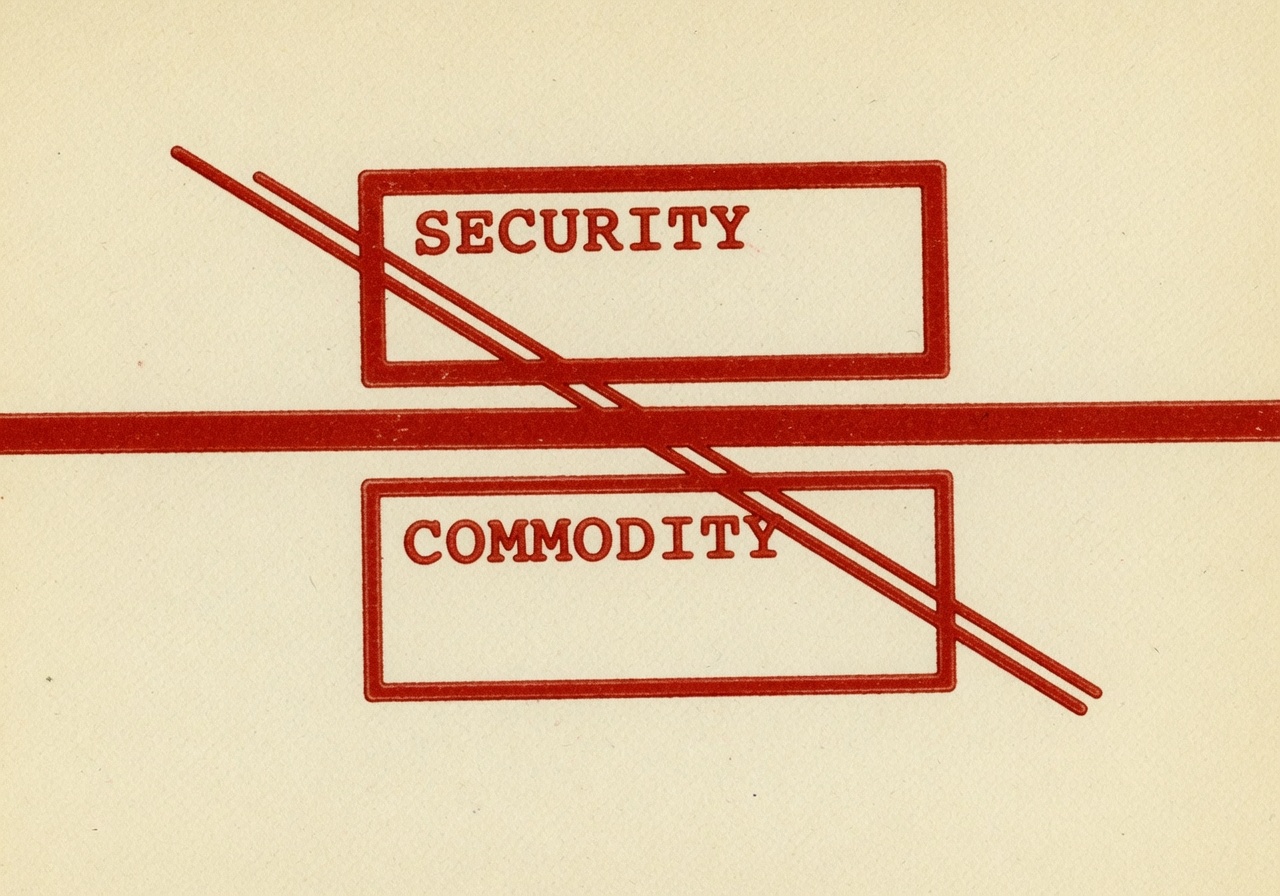
The Senate Banking Committee released the text of the Clarity Act early Tuesday morning, a 309-page bill that would, for the first time, write into federal statute the line between a digital asset that is a security and a digital asset that is a commodity. Chairman Tim Scott of South Carolina, joined by Senators Cynthia Lummis of Wyoming and Thom Tillis of North Carolina, posted the bill alongside a section-by-section summary; the committee is scheduled to mark it up on Thursday. A staff list of more than 100 filed amendments is circulating among members.
The architecture is the news. The bill divides digital assets into three buckets — digital commodities, investment-contract assets, and permitted payment stablecoins — and assigns each to a different regulator on a different rule book. Digital commodities go to the Commodity Futures Trading Commission, which gains spot-market authority it has long sought and rarely had. Investment-contract assets stay with the Securities and Exchange Commission, but under a new exemption the bill calls Regulation Crypto, which lets issuers raise from retail investors without the full disclosure regime that applies to public-company stock. Payment stablecoins are left to the framework Congress set last year in the GENIUS Act.
What the bill actually does
For three years the question of whether a token is a security has been litigated case by case, often by enforcement action, under a 1946 Supreme Court test designed for orange-grove investment contracts. The Clarity Act replaces that test, for digital assets, with a statutory definition keyed to whether the network underlying the token is functionally decentralized. The committee’s section-by-section summary describes the test as turning on whether profits accrue from “the entrepreneurial or managerial efforts of others” in an ongoing, identifiable way. If they do, the token is a security; if the network has matured past that point, the token is a commodity.
The Regulation Crypto exemption is the other load-bearing piece. Under current law, a company that sells tokens to U.S. investors typically has to register the offering with the SEC, the same way a company selling stock does, and produce the disclosures public companies produce. Regulation Crypto carves out a digital-asset-specific path: companies can sell to retail without that registration if they meet a thinner set of disclosure and conduct requirements set by rule. Supporters call it tailored; critics call it a side door.
A third set of provisions exempts a defined slice of decentralized-finance activity, including running validators, providing user interfaces, and writing wallet software, from both SEC and CFTC oversight altogether. Sections 309 and 409 of the bill draw that line; whether a given DeFi protocol falls inside it will depend on findings of fact that the agencies, and ultimately the courts, will spend years working out.
Who benefits, who pays
The biggest direct beneficiaries are the major U.S. crypto exchanges and the token issuers behind the largest non-stablecoin assets. Spot-market oversight at the CFTC is the regime they have asked for since at least 2022, and a statutory commodity designation for an asset like Ether removes a category of enforcement risk that has hung over their business model. The exchanges spent a reported nine figures on the 2024 cycle to elect a Congress that would write a bill on these lines; they got one.
We’re spending our time working on a bill written by the crypto industry, for the crypto industry. — Senator Elizabeth Warren, ranking Democrat, Senate Banking Committee, May 12, 2026
The costs land on retail investors, on state securities regulators, and on the SEC. Retail investors in tokens that fall on the commodity side of the line lose the disclosure regime that applies to securities — annual filings, audited financials, insider-trading prohibitions, civil liability for misstatements — and trade instead under the lighter CFTC anti-fraud authority. State securities regulators, who have brought a long series of actions against crypto firms under their own blue-sky laws, are preempted in important respects under the bill text as drafted; the North American Securities Administrators Association has previewed an opposing position. And the SEC loses the discretion it used through three administrations to bring cases under the Howey test.
The argument from sponsors is that the existing regime has produced neither protection nor clarity, and that a digital-asset-specific statutory framework will deliver more of both. Chairman Scott, in the committee’s announcement of the text, said the bill “reflects serious, good-faith work across the Committee and delivers the certainty, safeguards, and accountability Americans deserve.” Senator Lummis said the text represents “nearly a year of bipartisan work” and called the bill the hardest legislation she has worked on. Senator Tillis called it “a bipartisan compromise that will provide regulatory certainty” after months of stakeholder negotiations.
Senator Elizabeth Warren of Massachusetts, the committee’s ranking Democrat, released opposing remarks the same day. Warren said the draft “blows a hole” in the federal securities laws that have protected investors since 1929, preempts state anti-fraud rules, and allows banks to take on volatile crypto exposure with thin capital. She also raised an ethics objection that has no parallel in prior crypto legislation: the bill is moving through Congress while the president and his family hold, by Warren’s accounting drawn from public disclosures, more than a billion dollars in personal crypto positions. The bill, she said, “stunningly includes zero provisions to prevent that.”
How we got here
The Clarity Act began life in the House as H.R. 3633 in the 119th Congress and passed there in July 2025 with bipartisan support. The Senate Banking Committee’s version is a substitute, not a Senate companion: it preserves the House framework but rewrites the stablecoin interaction (the House bill predated the GENIUS Act; the Senate text accommodates it), tightens the DeFi carve-out, and adds the Regulation Crypto exemption that does not appear in the House text. A Congressional Research Service overview of the House bill, published as IN12583, lays out the differences between the two chambers.
The GENIUS Act, enacted in 2025, did for stablecoins what Clarity proposes to do for the rest of the asset class: drew the regulator, set the reserve rule (one-to-one against high-quality liquid assets), and pre-empted the patchwork of state money-transmitter regimes that had governed dollar-backed tokens. The American Bankers Association has urged senators to close what it calls a residual loophole in the GENIUS framework, the ability of crypto firms to pay yield on stablecoin holdings in ways banks cannot match on deposits, and treats the Clarity markup as the venue to do it. The current bill text contains compromise language; the ABA position is that the language does not go far enough.
What changes for a reader
If the bill passes in roughly its current form, three things change for a person who is not a senator or an exchange lobbyist. First, the disclosures that come with a token sale will look different depending on which side of the new statutory line the token sits on; a buyer who today receives the equivalent of a stock prospectus may receive a thinner Regulation Crypto disclosure instead. Second, if something goes wrong, the agency a retail buyer can complain to may change: the CFTC, not the SEC, for commodity-side tokens, and neither, for some DeFi activity. Third, the state securities regulator the buyer would normally call may have less authority to act, depending on how the preemption sections are finally drafted.
The committee’s markup is scheduled for Thursday, May 14. With more than 100 amendments filed, the committee is unlikely to vote on each individually; the practice in recent markups has been to dispose of most by manager’s amendment or by deferral to the floor. Senator Mark Warner of Virginia has indicated publicly that he wants to see Lummis-led amendments debated in committee, not pushed to a manager’s package. Whether they are, and which survive, is the next data point worth watching.
Sources & methods
- Senate Banking Committee · Chairman Scott, Senators Lummis and Tillis release Clarity Act text ahead of markup, May 12, 2026. Archived May 16, 2026
- Senate Banking Committee · Clarity Act section-by-section summary, posted May 12, 2026 (PDF). Archived May 16, 2026
- CoinDesk · Clarity Act, in the flesh, unveiled by U.S. Senate Banking Committee before hearing. Archived May 16, 2026
- ABA Banking Journal · Senate Banking Committee releases text of crypto bill ahead of vote; American Bankers Association position on stablecoin yield.
- The Hill · Clarity Act clears Senate hurdle with bipartisan support.
- Congress.gov · H.R. 3633, the Digital Asset Market Clarity Act of 2025, full text (House-passed version). Archived May 16, 2026
- Congressional Research Service · An overview of H.R. 3633, the CLARITY Act (IN12583). Archived May 16, 2026
- The Block · More than 100 amendments filed targeting stablecoins, ethics and DeFi ahead of the Senate Banking Committee Clarity Act vote.
- CNBC · Crypto industry scores win as Clarity Act regulation bill clears Senate hurdle (committee vote coverage). Archived May 16, 2026
Reporting draws on the Senate Banking Committee majority’s May 12 release of the Clarity Act text and the section-by-section summary published the same day; on-the-record statements from Chairman Tim Scott, Senator Cynthia Lummis, Senator Thom Tillis, and Senator Elizabeth Warren as reported by CoinDesk, The Hill, CNBC, and the committee’s own minority and majority newsrooms; the Congressional Research Service overview of H.R. 3633 (IN12583); the full text of H.R. 3633 as posted on Congress.gov; the American Bankers Association’s position as conveyed in the ABA Banking Journal’s reporting on the markup; and The Block’s amendment list. All quotations are from on-the-record statements; no anonymous sources were used. The committee press office was reached for confirmation of the markup schedule; the publicly posted hearing notice was not disputed.