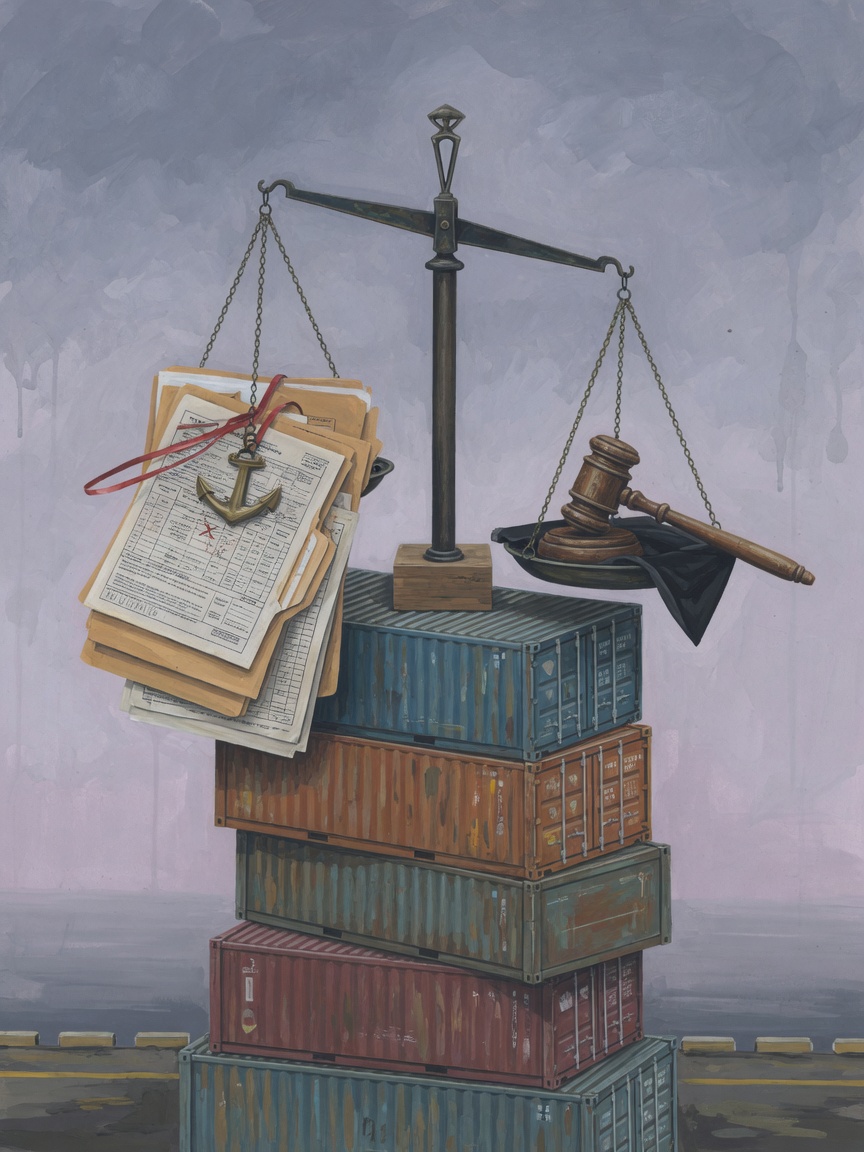
A coalition of 25 Democratic-led states sued the Trump administration on Monday, asking the U.S. Court of International Trade to halt new tariffs on goods from 60 trading partners and order refunds of duties already paid. The complaint challenges duties of 10% or 12.5% imposed on most goods from the affected economies, which together account for 99.4% of U.S. imports. The states argue President Donald Trump exceeded his authority by using a federal forced-labor statute as a pretext to recreate sweeping tariffs that courts have twice rejected.
The lawsuit, led by New York Attorney General Letitia James, marks the latest legal battle over Trump’s tariff regime. The Supreme Court ruled in February that the International Emergency Economic Powers Act did not authorize Trump’s earlier “Liberation Day” tariffs. A trade court later rejected the administration’s use of Section 122 of the Trade Act, though that ruling is paused during an appeal. The new tariffs took effect in July.
“After losing at the Supreme Court, the administration is once again trying to illegally raise taxes on families and businesses with a new round of tariffs,” James said in a statement.
Section 301 under scrutiny
The administration imposed the latest tariffs under Section 301 of the Trade Act of 1974, a law meant to target countries that use forced labor. The states argue the statute permits trade action only after an investigation of a specific country’s unfair practices and requires any resulting tariffs to be tailored toward ending that conduct. Instead, they allege, U.S. Trade Representative Jamieson Greer rushed investigations into 60 economies in about two and a half months, bypassed required country-specific consultations, and failed to explain why nearly uniform tariff rates were appropriate for economies with widely different policies.
The complaint said there is no rational fit between the purported problem of forced labor in international supply chains and the blanket global tariffs the USTR imposed. Trade officials grouped the economies into four tariff categories, with only 2.5 percentage points separating the two main rates. The complaint alleges the USTR identified no link between the rates and the prevalence of forced-labor-tainted goods in each economy, and did not establish benchmarks countries could meet to have the duties lifted.
The filing points to exemptions the states say undermine the administration’s rationale. USTR cited frozen beef from Brazil as one of three examples of goods connected to forced labor. Yet it was exempted.
Administration defends its authority
The White House rejected the states’ argument. “The United States is using its lawful authority to obtain the elimination of unreasonable acts, policies, and practices that burden U.S. commerce,” White House spokesperson Kush Desai said in a statement. “A foreign country’s failure to impose and effectively enforce a prohibition on the importation of goods produced with forced labor is unreasonable and burdens U.S. commerce, including American workers, and must be addressed.”
“Section 301 tariffs have proven to be a legally durable tool since the president’s first term, and they remain so now,” Desai added.
The states cite administration statements as evidence that the Section 301 outcome was predetermined. After the Supreme Court ruling, Greer said officials would use alternative trade authorities on an accelerated schedule to “ensure continuity.” Treasury Secretary Scott Bessent later said tariff rates would return to “exactly where they were,” according to the complaint. USTR announced the tariffs on July 23, one day before temporary duties imposed under Section 122 expired, allowing the tariff regime to continue without interruption.
New York Governor Kathy Hochul said the tariffs would drive up costs for residents. “President Trump’s illegal tariffs are nothing more than a tax on hardworking families, driving up the cost of groceries, household essentials, building materials, and countless everyday goods that New Yorkers rely on,” Hochul said. “The Supreme Court has made it clear that this administration cannot ignore the law to impose sweeping tariffs.”
The states joining the action include Arizona, California, Colorado, Connecticut, Delaware, Hawaii, Illinois, Massachusetts, Maryland, Maine, Michigan, Minnesota, Nevada, New Jersey, New Mexico, North Carolina, Oregon, Rhode Island, Virginia, Vermont, Washington, and Wisconsin, along with the governors of Kentucky and Pennsylvania. The case is at least the second legal challenge to the new duties. A group of small businesses previously sued through the Liberty Justice Center, arguing that Trump cannot use a new legal authority to recreate tariffs invalidated by the Supreme Court.