The Homeland Security shutdown ends with no money for ICE; the next fight moves to a 50-vote track
President Trump signed the Department of Homeland Security funding bill on Thursday evening, ending a 76-day shutdown without a dollar for Immigration and Customs Enforcement or Border Patrol. Senate Republicans now have until June 1 to deliver the same funding through reconciliation, where 50 votes is enough.
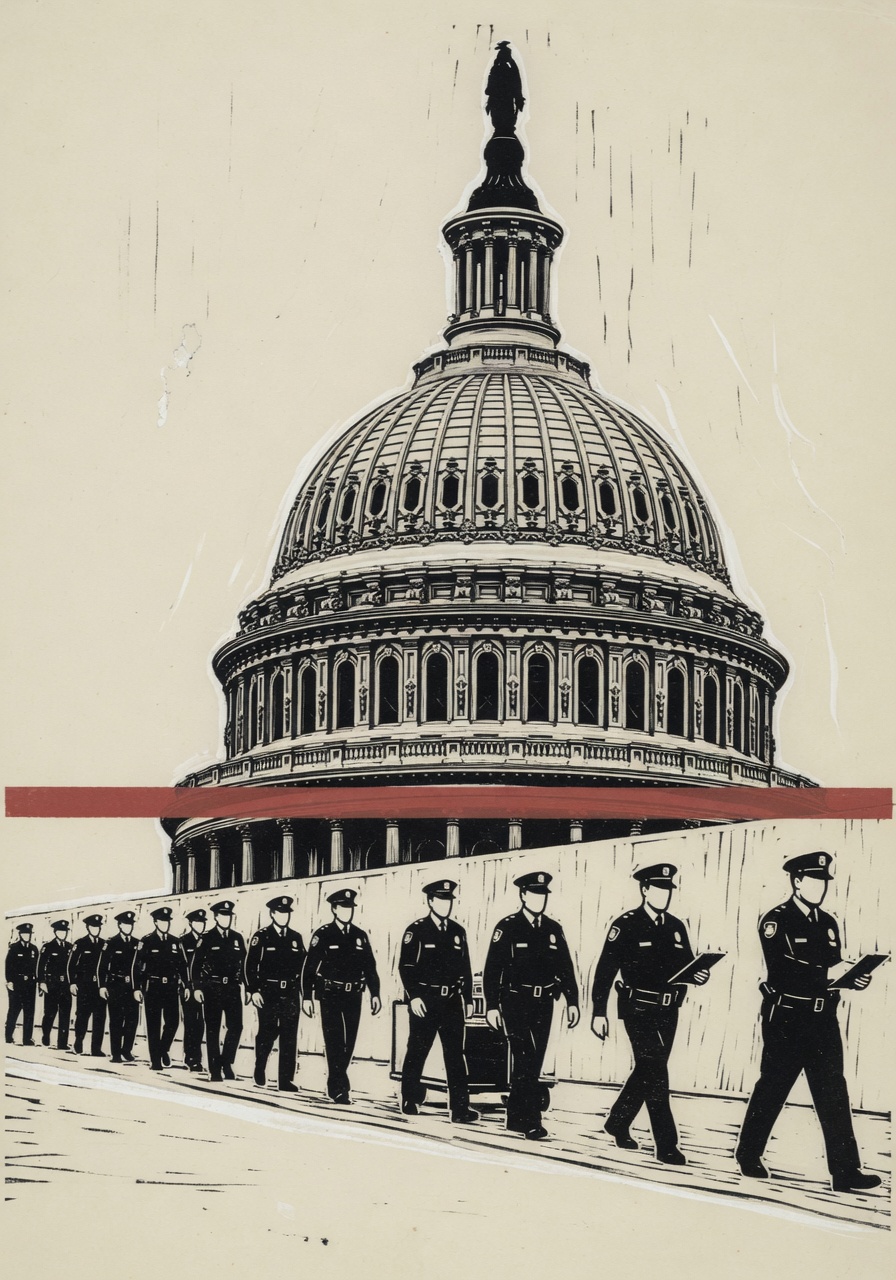
The Department of Homeland Security reopens on Friday after the longest single-agency shutdown in federal history. The bill President Trump signed Thursday evening funds the Transportation Security Administration, the Coast Guard, the Federal Emergency Management Agency, and the Cybersecurity and Infrastructure Security Agency through September 30. It does not fund Immigration and Customs Enforcement. It does not fund Border Patrol. That gap is the entire point of what happens next.
House Speaker Mike Johnson brought the Senate version of the package to the floor on Thursday afternoon and passed it by voice vote, after weeks of insisting any DHS bill must include immigration enforcement money. The reversal was not a change of mind on the policy. It was a change of venue. The Senate had already voted 50-48 on April 23 to adopt a budget resolution that opens the reconciliation process for ICE and CBP funding, and Majority Leader John Thune and the Speaker agreed, in a joint statement released earlier in April, to fund most of DHS through ordinary appropriations and to fund immigration enforcement through reconciliation. Thursday delivered the first half of that deal. The second half is now on a clock.
Reconciliation is a procedure created by the Congressional Budget Act of 1974 that allows the Senate to pass certain budget legislation with a simple majority instead of the 60 votes ordinarily required to overcome a filibuster. A budget resolution sets the instructions; the relevant committees write the legislation; the Senate parliamentarian rules on what survives the Byrd Rule, which bars provisions whose budgetary effects are merely incidental. The procedural payoff is that 50 senators, plus the vice president, can write spending policy without a single vote from the minority.
What the 76 days bought
The shutdown began February 14 over a dispute that did not look procedural at the start. After federal officers fatally shot two American citizens in Minneapolis in early January, Democrats refused to advance a DHS appropriations bill that included ICE funding without accountability provisions Republicans would not accept. The funding lapse ran for two and a half months. TSA officers worked without pay for most of March before President Trump ordered the department to draw on roughly $10 billion in emergency funds appropriated through last summer’s reconciliation bill. Homeland Security Secretary Markwayne Mullin told the Senate Appropriations Committee on April 22 that those emergency funds, at a payroll of $1.6 billion every two weeks, would be exhausted by the beginning of May.
More than 1,000 TSA officers resigned during the shutdown, according to a department statement issued April 28. Wait times at the eight largest hub airports ran two to three times normal during the final week. By the time the House voted Thursday, the operational pressure on the agency was a stronger argument for moving than the political pressure on either party.
What Democrats got from holding the line for 76 days is a DHS appropriations bill without ICE or CBP funding, and a public record of the cost of refusing it. What they did not get is a structural change to immigration enforcement. The funding will arrive on a different track within weeks.
We are going to fully fund the men and women on the border. We are going to do it without Chuck Schumer’s permission, and we are going to do it before June 1. — Senate Majority Leader John Thune, R-S.D., floor remarks, April 23
What the reconciliation bill is expected to do
The budget resolution the Senate adopted April 23 instructs the Judiciary and Homeland Security committees to produce legislation delivering roughly $70 billion in additional funding to ICE and CBP. The funding window is 3.5 years, which lines up with the remainder of the Trump administration. Republican Senators Lisa Murkowski of Alaska and Rand Paul of Kentucky voted against the resolution. Every other Republican voted yes; every Democrat voted no.
Trump set a June 1 deadline for the reconciliation bill to reach his desk. The relevant Senate committees are expected to release draft text in the first week of May. The Byrd Rule fight will turn on whether any of the policy riders Republicans want to attach (changes to asylum adjudication, expansions of expedited removal, restrictions on parole authority) qualify as budgetary. If they do not, the parliamentarian can strip them out, and the resulting bill is narrower than the floor speeches suggest.
Senator Lisa Murkowski’s statement after the April 23 vote is the operative one for any senator considering a no vote on the final package. She cited the lack of an oversight framework for the new enforcement funding and the absence of any provision requiring DHS to report on use-of-force incidents. Her vote on the final bill, and Rand Paul’s, are the only two Republican votes in play. The bill passes with 50 if both vote no and Vice President JD Vance breaks the tie. It fails if a third Republican joins them.
Who pays, who decides, who is left out
The most immediate beneficiaries of Thursday’s bill are the DHS workforce that was furloughed or working without pay since February. Back pay is statutorily required under the Government Employee Fair Treatment Act of 2019 and will be processed in the next pay cycle. The longer-term winners and losers depend on whether the reconciliation bill passes and what it contains.
If the bill passes near $70 billion, ICE and CBP receive funding through the end of the Trump administration that no future Congress can revoke without affirmative legislation. That stability is the central political prize. It also moves the locus of accountability away from annual appropriations, where the minority retains real procedural power, and into authorization and oversight, where its power is weaker. House and Senate Democrats lose the recurring pressure point they used during the 76-day fight. The shutdown was the choke point. Reconciliation removes it.
For people interacting with the immigration system, the change runs through capacity. Detention bed counts, removal flight contracts, and Border Patrol staffing at the southwest border all scale with funding. A $38 billion ICE allocation, the figure circulating in committee discussions, would fund a roughly doubled detention footprint and a comparable expansion in deportation operations through 2029. The asylum-system policy fight, which has been litigated at the Supreme Court for most of the past year, runs on a parallel track; reconciliation cannot change the substantive law, only the resources behind enforcing it.
For the federal workforce that was not at DHS, the precedent set by the 76-day standoff is the durable cost. The shutdown demonstrated that a single agency can be held in funding limbo while the rest of the government runs, provided the majority is willing to absorb the operational consequences. That tool is now part of the appropriations playbook for both parties. The next time a department-specific dispute escalates, the floor is February 2026, not the older record of 35 days.
The Senate Judiciary and Homeland Security committees are expected to mark up the reconciliation text in the second week of May. Floor action follows, on the Senate’s usual reconciliation timetable, with vote-a-rama as the final stage. The story on June 2 will turn on whether the final number is closer to $70 billion or to the lower figure a parliamentarian ruling could produce. The story on Friday is that 240,000 DHS employees go back to work, and the political fight that kept them out of work has moved to a room with a lower threshold.
Sources & methods
- Congress.gov · 119th Congress, House action on DHS appropriations and related fiscal year 2026 measures.
- CNN Politics · Congress votes to reopen key parts of DHS without ICE funding, April 30, 2026. Archived May 16, 2026
- CBS News · Trump signs bill funding DHS, ending record-breaking 76-day shutdown. Archived May 16, 2026
- CNBC · Trump signs DHS funding bill, ending shutdown for most of agency, including TSA. Archived May 16, 2026
- NPR · Congress ends record shutdown at DHS; House passes the Senate package by voice vote. Archived May 16, 2026
- NPR · Senate votes to kickstart partisan funding process for ICE; explainer on reconciliation procedure. Archived May 16, 2026
- CBS News · Senate Republicans advance budget resolution, kickstarting reconciliation for ICE/CBP, 50-48 with Murkowski and Paul opposed. Archived May 16, 2026
- Federal News Network · Secretary Mullin testimony: DHS emergency funds exhausted by early May at $1.6B biweekly payroll. Archived May 16, 2026
- TIME · The DHS shutdown is over, but its impact on TSA and air travel may persist; resignation count and wait-time data. Archived May 16, 2026
- Government Executive · DHS funding bill heads to Trump; back-pay timeline for furloughed employees. Archived May 16, 2026
- Congress.gov · Government Employee Fair Treatment Act of 2019 (P.L. 116-1), statutory back-pay requirement.
- Congress.gov · 119th Congress budget resolution materials, the procedural vehicle for the ICE/CBP reconciliation instruction.
Reporting draws on the publicly recorded April 30 House action signing the DHS appropriations measure into law, on the April 23 Senate budget-resolution roll call (50-48, with Murkowski and Paul the two Republican no votes), on Secretary Markwayne Mullin’s April 22 Senate Appropriations testimony regarding the emergency-funds drawdown, on the joint statement issued by Senate Majority Leader John Thune and Speaker Mike Johnson outlining the two-track funding plan, and on contemporaneous coverage of operational consequences at the Transportation Security Administration. Statutory references are to the Congressional Budget Act of 1974 and the Government Employee Fair Treatment Act of 2019. The Department of Homeland Security press office and Senator Murkowski’s communications director were contacted for comment on the next-phase reconciliation timeline; both pointed to existing on-the-record statements. All quotations are from on-the-record floor remarks or public statements; no anonymous sourcing was used.