Disney-owned ABC sues the FCC, alleging political retaliation over broadcast licenses
The lawsuit asks a federal court to halt early license renewal proceedings for eight ABC stations, calling the review a retaliatory campaign tied to the network’s coverage of President Trump.
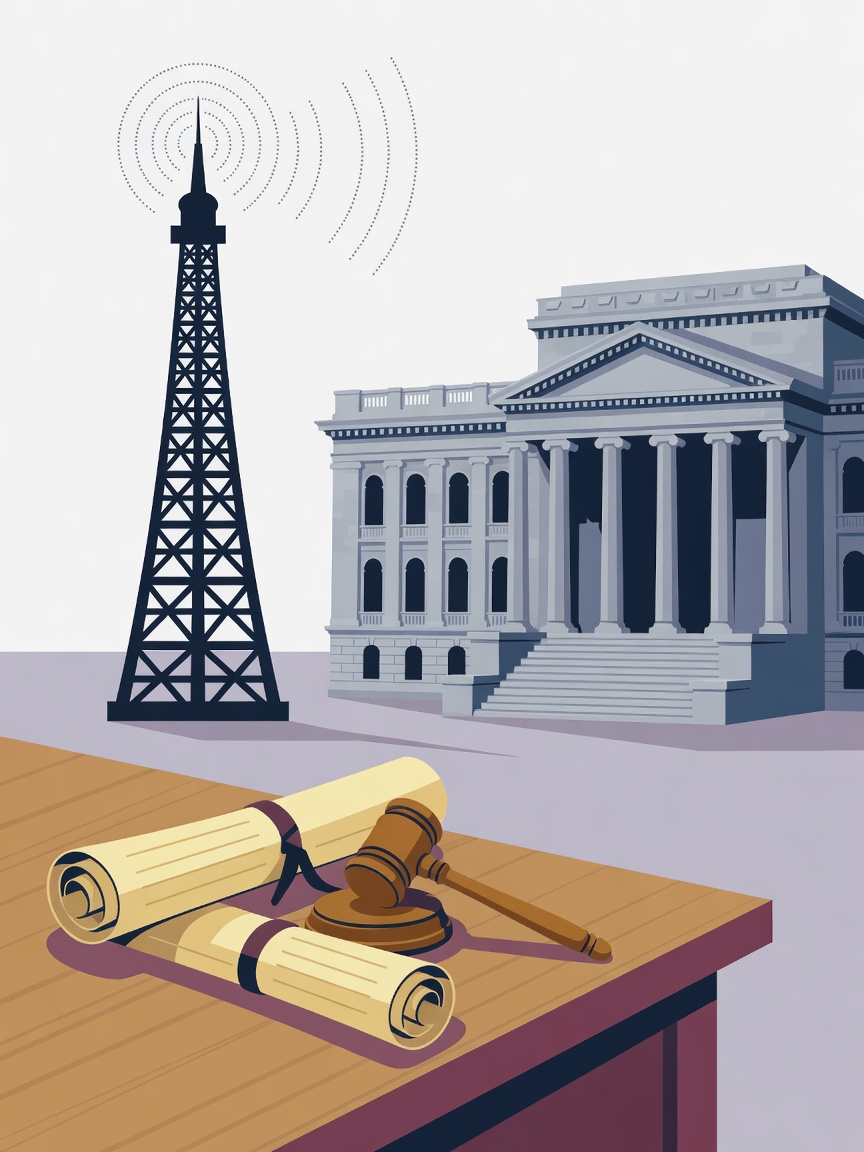
Disney’s ABC network filed a First Amendment lawsuit against the Federal Communications Commission on Tuesday, accusing the agency of waging a “retaliatory campaign” against the broadcaster by ordering early license renewals for eight of its owned and operated stations. The 46-page complaint, filed in federal court in Washington, D.C., asks a judge to halt the proceedings and grant a temporary restraining order, escalating a months-long dispute between the network and the Trump administration over press freedom and political coverage.
The stakes extend beyond one network. ABC’s lawsuit warns that if the administration succeeds, every media company in the country would receive the unmistakable message to tell only stories the administration deems favorable or face the coercive machinery of the federal government. The complaint adds that in such a world, the press could in no way be described as free. The case tests how far an independent regulator can go in pressuring broadcasters whose programming displeases the sitting president.
The FCC ordered the early renewal in April. For six of the eight stations, the current license term is not even half finished. The station with the nearest deadline, WTVD in Durham, North Carolina, does not face renewal until December 2028. The network’s affiliates in New York and Los Angeles are among those affected. ABC called the move part of a political “retaliatory campaign” and requested a “speedy hearing” in the complaint.
The FCC’s stated rationale
The FCC said the early review stemmed from diversity, equity, and inclusion practices at Disney, ABC’s parent company, and from an investigation into the daytime talk show “The View.” The commission opened its investigation into “The View” in February over airtime given to political candidates and began examining Disney’s stations last year for possible violations of the Communications Act of 1934 and FCC rules prohibiting unlawful discrimination. Carr told CNBC at the time that the agency’s focus was on Disney’s DEI practices and that the early license renewal was not tied to First Amendment matters.
An FCC spokesperson said in a statement Tuesday that the government entity was working in the public interest. “Disney is obviously very concerned about the FCC’s proceeding, as evidenced by their ongoing campaign of disinformation as well as their decision to ask a court to stop the FCC from further pursuing matters,” the statement said. “The FCC will continue to follow the facts and law wherever they lead.”
A pattern of threats
ABC’s complaint presents a series of Truth Social posts Trump made in 2025, including one stating that the network “should lose their Licences for their unfair coverage of Republicans and/or Conservatives.” In March, Carr threatened that stations airing “fake news” could lose their licenses amid Trump’s frustration with coverage of the U.S.-Israel war on Iran. Trump also demanded that ABC fire late-night host Jimmy Kimmel over comments Kimmel made before the White House correspondents dinner, calling first lady Melania Trump an “expectant widow.” Trump characterized the comments as “a call to violence” after a shooting at the event.
The lawsuit alleges the administration has “steadily increased the pressure” on ABC’s networks over the past several months. “Again and again, the Administration has attacked ABC’s speech — the stories its journalists report and the viewpoints its network programs air,” the complaint said. “Over time, those attacks have escalated into express demands that ABC be stripped of its broadcast licenses because of its speech.” ABC also declined to broadcast a Trump speech on its linear channels, instead streaming it on ABC News Live. Bloomberg reported in July that the FCC could take action against ABC and Disney as soon as August, according to The Verge.
ABC pushed back in May. The network said in filings it was submitting license applications “under protest in response to an unlawful, arbitrary, and unconstitutional order” from the FCC. ABC said it “continues to face irreparable harm” from the administration, which “has been acting” through the FCC.
Free speech advocates praised the lawsuit. Seth Stern, director of advocacy at the Freedom of the Press Foundation, told Al Jazeera it was “about time for someone to take Brendan Carr and his FCC to court over their endless campaign of intimidation and retaliation against journalism that displeases Carr’s thin-skinned boss.” Stern said Carr’s “modus operandi is clear: to serve as Trump’s censorship tsar and abuse his office to repeatedly and exclusively target Trump’s perceived adversaries in the media, whether through sham proceedings or threatening letters and X posts.”
FCC Commissioner Anna Gomez, the sole Democrat on the commission and a consistent opponent of the actions against ABC, issued a statement supporting the lawsuit. “For months, the FCC has waged a campaign of censorship and control against Disney’s ABC stations, using the threat of broadcast license revocations to punish a company for speech this administration doesn’t like,” Gomez said. “I have long called on companies to push back against this kind of government intimidation, and I’m glad Disney has shown courage and stepped up.”
Disney CEO Josh D’Amaro, who took over from Bob Iger in March, defended the company’s stance in a CNBC interview last week. “I think you saw in our FCC filings our position on this is clear,” D’Amaro told CNBC’s Julia Boorstin. “We’re very principled on this. We’re going to stand up to what we believe is journalistic and integrity, and we’re not going to be told how to run that side of our business.” News of the lawsuit sent Disney’s stock surging 1.1 percent in morning trading.
Sources & methods
- Al Jazeera coverage of the Disney lawsuit against the FCC, including details from the 46-page complaint, Truth Social posts by Trump, Carr's threats against broadcasters, the Kimmel controversy, a quote from the Freedom of the Press Foundation's Seth Stern, and the stock market reaction. Archived Aug 18, 2026
- CNBC report on ABC's First Amendment lawsuit, including the FCC's investigation into DEI practices and "The View," Carr's statements to CNBC, the FCC spokesperson's response, ABC's May filings under protest, D'Amaro's CNBC interview, and Commissioner Anna Gomez's statement. Archived Aug 18, 2026
- The Verge report on the lawsuit, including the timeline of the FCC's investigation into "The View" and early license renewal order, ABC's decision not to broadcast a Trump speech on linear channels, the Bloomberg report on potential August FCC action, and quotes from ABC's complaint about the broader consequences for press freedom. Archived Aug 18, 2026
This piece was assembled from three published accounts of the lawsuit filed on August 18, 2026, cross-referencing details from Al Jazeera, CNBC, and The Verge to verify facts, quotes, and timeline events.