FAA lifts nationwide ground stop after telecommunications outage grounds US flights
Overloaded routers brought down multiple air traffic control centres in only the third nationwide stoppage since September 11, 2001, and officials warned cancellations would last into the weekend.
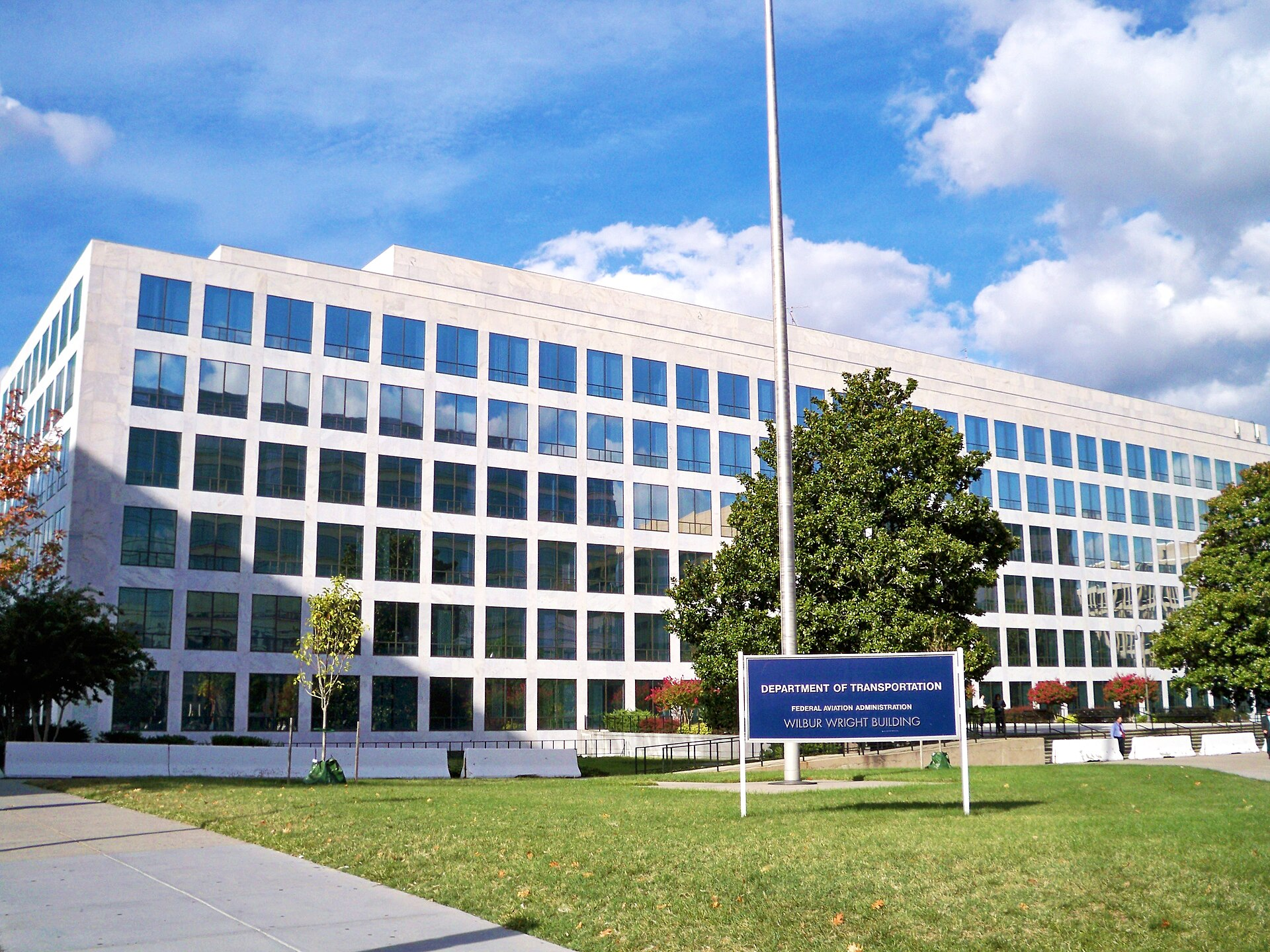
The Federal Aviation Administration lifted a nationwide ground stop at 8:15pm ET on Friday after the order had halted all departing US flights for more than four hours. Transportation Secretary Sean Duffy warned that flights would not resume immediately. The recovery would be slow, he said, urging passengers to check with their airlines.
Duffy said telecommunications routers and switches became overloaded with data and went down, affecting multiple air route traffic control centres that guide aircraft at high altitudes along their routes. Homeland Security Secretary Markwayne Mullin said there was no cyberattack linked to the ground stop. The public was never in danger. He later told reporters at a press conference that it “appears this was mechanically driven.” The FAA said it halted flights out of an “abundance of caution,” citing extraordinary circumstances and reasons for safety. The stoppage was only the third nationwide grounding of all departures since the September 11, 2001 attacks.
Scope of the disruption
According to the aviation analytics firm Cirium, 11,000 flights carrying 1.5 million passengers were scheduled to depart US airports after 4pm ET on Friday. The flight-tracking service FlightRadar24 recorded more than 4,700 cancellations and 10,000 delays on Friday, with another 700 flights already cancelled for Saturday. By 7:05pm ET, Cirium reported at least 827 flights had been diverted, 670 of which returned to their departure airports while 157 were sent elsewhere. JetBlue Airways told staff in a memo seen by CNBC that it would cancel the remainder of the day’s flights aside from European routes, as well as Saturday flights, so that crews and planes would be in place to resume operations.
At Los Angeles International Airport, passenger Nicholas Erdodi described the frustration of stranded travellers who had been forced to leave their plane after hours of waiting. “The challenge is you cannot ask anyone here what to do,” he said. “Lack of information is what bothers me, I mean, and not to mention find the hotel for the night, not to mention all the cost.” Erdodi, who had been travelling for 16 to 18 hours from New Zealand, said he worked in tech and understood what could be going on, but added that someone needed to tell passengers. Aviation analysts and officials warned that delays and cancellations would stretch into the weekend or longer as airlines struggled to restore schedules and reposition aircraft.
How the outage unfolded
Jon Ostrower of The Air Current reported that the outage began with the Chicago air traffic control center, followed by Boston, Washington, New York, and Minneapolis, with additional facilities reporting problems as the FAA issued a ground stop for eastbound aircraft. There are 21 air route traffic control centres across the US, one in Alaska and 20 in the lower 48, according to aviation safety expert Todd Curtis, chief executive of AirSafe.com. These centres handle aircraft transiting from one part of the country to another and rely on multiple handoffs between controllers. Ostrower reported that the problems disrupted both radar and radio frequencies used by controllers and pilots. Aircraft already in the air were allowed to continue to their destinations. International flights were handled on a case-by-case basis. Some had started taking off from coastal hubs before 6pm ET.
A system under strain
Duffy called for $50bn in upgrades to the nation’s air traffic control system, telling reporters that without investment the aging infrastructure will keep breaking down. “It’s going to continue to fail,” he said. The last prior nationwide ground stop was in January 2023, when the FAA halted flights for about 90 minutes because of a problem with the NOTAM pilot alert system. Technical failures have repeatedly snarled US air traffic in recent years. In September, hundreds of flights into Newark and Philadelphia were cancelled, delayed, or diverted after a Verizon fiber cable was accidentally cut during construction in New Jersey, severing a backup feed of key data for air traffic controllers. In 2025, air traffic controllers lost contact with aircraft heading to and from Newark Liberty International Airport due to equipment failure, leading to massive flight delays.
Duffy said he expected operations to be back up and operational for Thanksgiving travel, which begins in less than two weeks and is typically one of the busiest periods for US air travel. Ron Bartsch, a professor of international aviation law at the University of the South Pacific, said the apparent failure of backup systems was troubling. “The whole aviation community is based on redundancy,” he said. “So the fact that a redundant system hasn’t kicked in immediately just raises more questions than what we’ve seen answers to at this stage.” FAA technicians were investigating. CBS News reported that an update to the air traffic control system’s private communications network, operated by L3Harris, may have caused a system reboot, but this was not confirmed. Air Space Intelligence, which designed the SMART system, denied any connection, tweeting that the ground stop was not based on or a result of the SMART system.
Sources & methods
- Al Jazeera, reporting on FAA ground stop and passenger accounts, November 14, 2026 Archived Nov 14, 2026
- CNBC, reporting on FAA ground stop and airline operational decisions, November 13, 2026 Archived Nov 14, 2026
- The Verge, reporting on FAA ground stop and system failures, November 13, 2026 Archived Nov 14, 2026
This article draws on reporting from Al Jazeera, CNBC, and The Verge, with flight data attributed to Cirium, FlightRadar24, and FlightAware as cited. Quotes are verbatim from the sources indicated.