Hungary’s parliament votes to remove President Tamás Sulyok from office
The vote marks the most dramatic step yet in Prime Minister Péter Magyar’s campaign to dismantle the political order built by Viktor Orbán over 16 years in power.
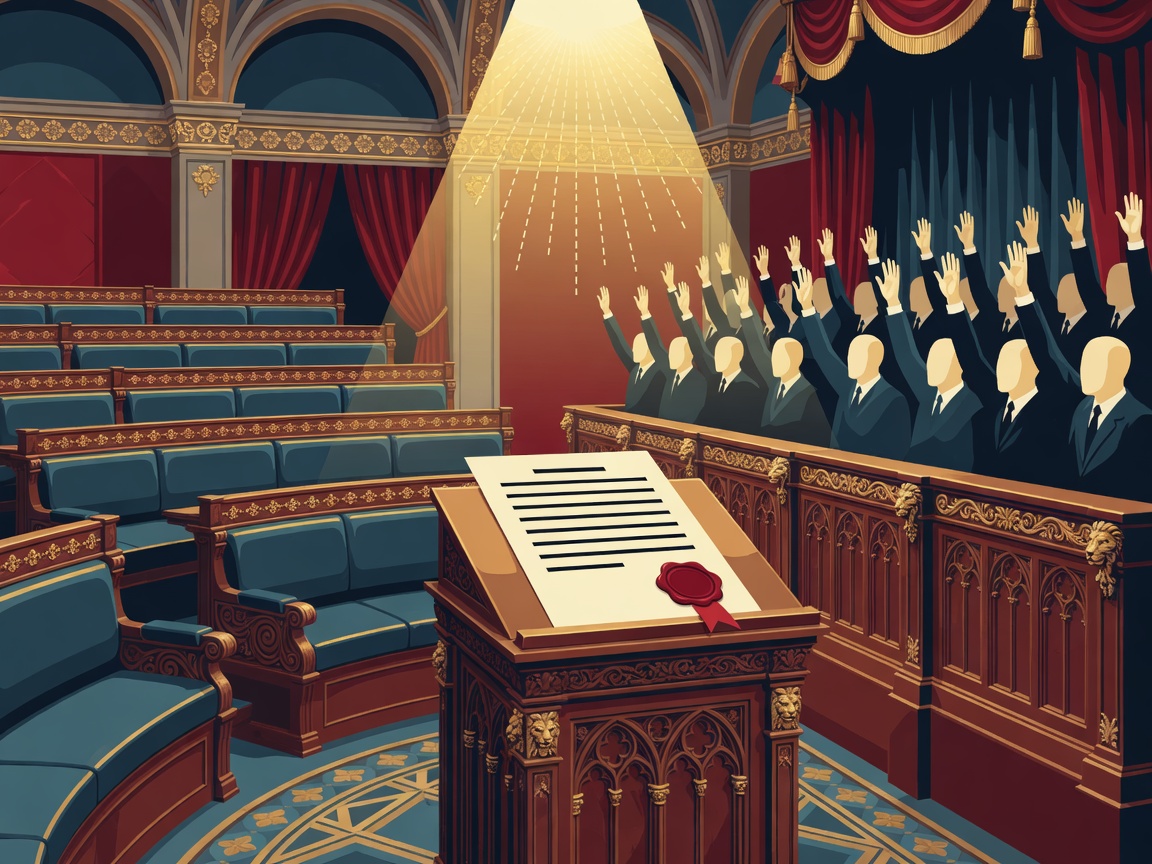
BUDAPEST — Hungary’s parliament voted on Monday to remove President Tamás Sulyok from office, passing the 17th amendment to the constitution and advancing the dismantling of the political order that former prime minister Viktor Orbán built over 16 years.
The amendment, approved with 139 votes in favour and six opposing, according to Al Jazeera, brings an immediate end to Sulyok’s term and also removes the head of the Constitutional Court, Péter Polt. The BBC reported that 141 Tisza deputies gave a standing ovation as the results were announced. The vote came after Magyar’s Tisza party won a surprise landslide against Fidesz on 12 April, ending Orbán’s rule and giving Tisza a two-thirds parliamentary super-majority.
It was the most dramatic day in parliament since the new government took office in early May. Sulyok faces a choice. He has five days to sign the amendment, his own political death warrant, or refer it to the Constitutional Court for review. If he refers it to the court, Magyar has said he will launch impeachment proceedings, which would suspend Sulyok from office automatically. The new government has also urged him to simply resign to avoid a constitutional crisis in the interest of the country.
Deputies from the now-opposition Fidesz party walked out of parliament and boycotted Monday’s session before the vote, accusing the Tisza party of building a tyranny.
“The great irony of the situation is that Fidesz have fallen foul of their own concept of power,” Péter Rona, a former opposition presidential candidate, told the BBC. The 2011 constitution, written by Orbán’s government, enshrined the principle that “the winner takes all.” From 2010 until 2026, Fidesz reshaped the Hungarian state to its own will and filled supposedly independent positions with party loyalists, using its own two-thirds majority.
András Baka, former head of the Supreme Court, told the BBC that Hungary was governed by the rule of law from 1989 to 2010, after which Fidesz captured state institutions and created an authoritarian state. “It is now very difficult to break up a sophisticated authoritarian regime... which was designed to survive even after electoral defeat,” Baka said. He agreed with the removal. He disagreed with one provision.
The amendment also removes Constitutional Court judges over the age of 70 and forbids deputies who have served three terms in parliament from standing again, a restriction that applies to more than half the current Fidesz deputies. “This limits the right of the public to vote for whom they wish,” Baka argued. The 17th amendment is in fact a package of many laws, intended to guide the country until a new constitution can be adopted in two or three years.
Sweeping reforms
According to Al Jazeera, the amendment introduces judicial reforms, creates a body to investigate alleged financial abuses under the previous government, and imposes a 12-year term limit on lawmakers. Magyar has sought to erode Fidesz’s power since his victory, including by removing the current president.
Sulyok was elected by parliament in February 2024 to replace Katalin Novak, who resigned after pardoning a man convicted of covering up child sexual abuse. Days after Tisza won its two-thirds super-majority in April, Magyar declared Sulyok “unworthy to embody the unity of the Hungarian nation” and demanded that he leave office once the new government was formed.
In June, after the deadline to resign had passed, Magyar branded the president a “puppet” of Orbán and promised to strip him and other holdovers from office by constitutional means. Weeks later, he unveiled a reform programme called “Operation Cleansing Fire,” which seeks to install a new constitution, purge state institutions, and establish an anticorruption office. While the presidency is largely symbolic, it is empowered to approve laws and can refer them to the Constitutional Court for review, raising fears that Sulyok could use his presidential powers to stymie Tisza’s ambitious reform agenda.
A party in free fall
Orbán has been absent. He has hardly been seen in public since the April defeat, and refused to take his seat in parliament. On Monday, he left Hungary to watch the finals of the football World Cup in the United States. Gergely Gulyás, the party’s number two, resigned as head of the Fidesz parliamentary group on Monday, adding to the party’s turmoil.
There is growing anger with Orbán within what remains of Fidesz. Many feel bewildered by his absence. Since the election, the party has been in free fall, reeling from the shock defeat.
Sources & methods
- BBC report on the Hungarian parliament's vote to remove President Sulyok, including quotes from Péter Rona and András Baka, details of the 17th amendment, and context on Fidesz's decline. Archived Jul 14, 2026
- Al Jazeera report on the constitutional amendment to oust President Sulyok, including the vote tally, judicial reforms, term limits, and background on Magyar's "Operation Cleansing Fire" programme. Archived Jul 14, 2026
This article was compiled from two wire reports covering the Hungarian parliamentary vote, cross-referenced for vote counts, amendment details, and direct quotes from named sources.