SNAP enrollment fell by 3.6 million between July and January, the steepest six-month drop in the program’s modern history
The first month of USDA data after the megabill took effect showed average monthly participation at 38.5 million in January, down from a fiscal-year 2024 average of 42.1 million. The unemployment rate barely moved over the same window.
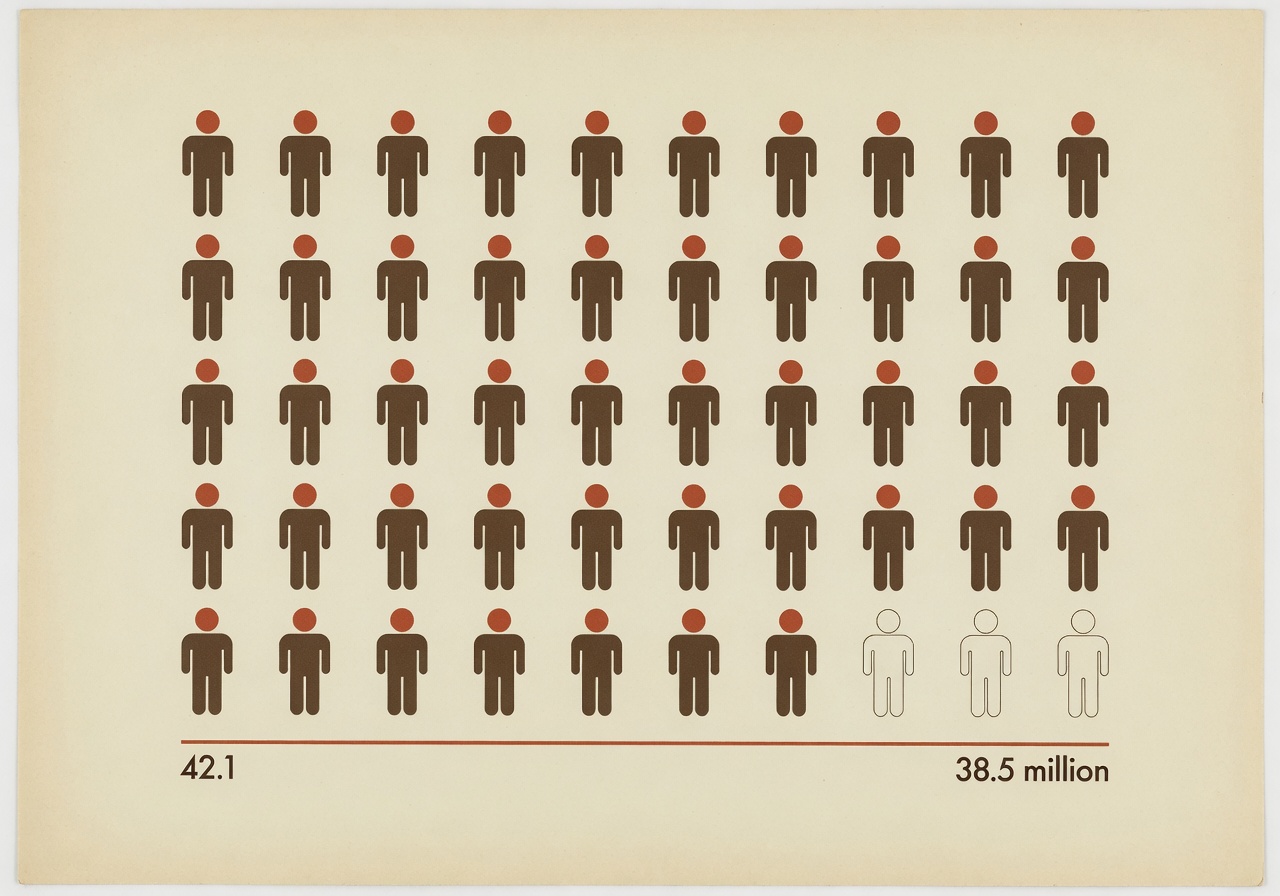
The U.S. Department of Agriculture posted its January 2026 Supplemental Nutrition Assistance Program tables on the Food and Nutrition Service data page this month, and the headline number is the lowest the program has recorded since the spring of 2020. Average monthly participation in January was 38.5 million people, down from a fiscal-year 2024 average of 42.1 million and from roughly 42 million as recently as July 2025. The six-month change is a decline of about 3.6 million enrollees, or 8.5 percent of the pre-megabill caseload. Stack the monthly figures since fiscal year 1976, when the modern program began, and no six-month interval outside a deliberate eligibility purge has fallen that fast.
The proximate cause is policy. President Trump signed H.R. 1, the budget reconciliation package now widely called the “One Big Beautiful Bill Act,” on 4 July 2025. Section 10102 of that law raised the upper age for the SNAP able-bodied adults without dependents work requirement from 54 to 64, narrowed the dependent-child exemption to apply only when the youngest child is under 14, and limited the conditions under which states can waive the three-month time limit in areas with high unemployment. The Food and Nutrition Service issued its ABAWD waiver implementation memorandum in the second half of 2025, and states began applying the new rules across the fall. The January 2026 data is the first full month after the bulk of those changes were in effect.
How the comparison is built
Three numbers carry the lead. The first is the fiscal-year 2024 average of 42.1 million people per month, which the USDA Economic Research Service SNAP Data System publishes as the standard pre-megabill baseline. The second is the July 2025 reading of approximately 42 million, the last full month before the new work-requirement and waiver rules began to bite. The third is the January 2026 reading of 38.5 million, from the Food and Nutrition Service monthly persons table released this May. Each is a national average for the month, not a point-in-time count, and each is reported with a roughly three-to-four-month lag because state agencies submit administrative data on a rolling schedule. The window chosen, July 2025 through January 2026, corresponds to the period after the law was signed and before the next round of state recertifications could partially correct over-denial errors; comparisons that extend further back across the 2023 emergency-allotment unwind would conflate two distinct policy shocks.
The percentage figure is straightforward arithmetic. The drop from 42.1 million to 38.5 million is 3.6 million people. Expressed as a share of the 42.1 million baseline, that is 8.55 percent. The Center on Budget and Policy Priorities, which has been maintaining a public SNAP tracker since shortly after the law was signed, cites the figure as “more than 3 million” and “8 percent,” using the lower bound of the July baseline; the rounding choice does not change the direction or the order of magnitude.
What the unemployment data does and does not say
A 3.6 million-person decline in food assistance over six months would be the natural result of a hiring boom, if there had been one. There has not. The Bureau of Labor Statistics reported a national unemployment rate of 4.3 percent in March 2026, against 4.2 percent in July 2025, a one-tenth-of-a-point move in the direction of slightly more, not less, unemployment. The Job Openings and Labor Turnover Survey for March, released on 5 May, showed 6.9 million openings, the same as February and below the 7.4 million reading from July 2025. The labor market through which a former SNAP recipient would have to walk to no longer need benefits is, in aggregate, modestly tighter than it was on the day the bill was signed. The data does not support a story in which 3.6 million people found jobs that lifted them above the SNAP gross-income limit of 130 percent of the federal poverty line.
Arizona’s caseload has fallen by more than half in six months. The state’s unemployment rate over the same period rose from 4.0 to 4.7 percent. — Center on Budget and Policy Priorities SNAP tracker, May 2026
Where the decline concentrates
The state-by-state geometry of the drop is not even. CBPP’s tracker, which is built from the same FNS monthly tables, shows declines in every state except Alaska, Hawaii, and Kentucky. Arizona is the steepest case: the state recorded roughly 509,700 SNAP participants in January 2026, against more than 1.05 million as recently as July 2025, a fall of more than 51 percent in six months. Georgia is next, down about 26 percent year-over-year from 1.94 million in January 2025 to 1.43 million in January 2026. Florida, North Carolina, Tennessee, and Virginia all sit in the 10 to 20 percent range for the same window. Together, Arizona, Florida, and Georgia account for nearly a third of the national decline.
The Arizona figure deserves a brief detour. The state’s own Department of Economic Security has acknowledged that part of the decline reflects administrative tightening, namely payment-error-rate reduction efforts that the megabill created a strong fiscal incentive to pursue. The law penalizes states with high payment-error rates by requiring them to assume a larger share of program costs. A state that closes cases aggressively in response to the work requirement, the new waiver rules, and the payment-error pressure can record a participation drop that is larger than the policy-eligible drop would predict on its own. The CBPP analysis describes the Arizona situation in those terms; the state’s independent center for economic progress, an analytical group at the state capitol, has flagged the same point. The household data does not yet let an outside analyst separate the share of the Arizona decline that is eligibility-driven from the share that is procedural; that will take another two or three quarters of caseload data and the next round of state-reported quality-control samples.
What the chart would show
The visualization built into this article is an isotype-pictogram grid, a Vienna-Method device that Otto Neurath’s team designed for exactly the problem of communicating large counts of people to readers who would otherwise read past a seven-digit number. Forty stylized human figures stand for the 42.1 million pre-megabill SNAP participants, one figure per million, rounded for legibility. Three figures, drawn in faint outline at the lower-right corner of the grid, stand for the 3.6 million people no longer in the program in January. The arithmetic of the rest of this story sits inside that subtraction. A reader who looks at the grid for a second has the right picture; a reader who looks for ten seconds has the question.
What the data does not capture
The FNS monthly tables count people who received a benefit in a given month. They do not count people who lost benefits but remained food-insecure, people whose applications were denied at intake rather than removed from an active caseload, or people whose household composition shifted in response to the new rules in ways that changed reported eligibility without changing actual need. The USDA Economic Research Service’s annual Household Food Security report will be the first instrument to register those changes; the 2025 release, due in September, will cover the calendar-year 2025 reference period, which only partially overlaps with the post-megabill window. The Census Bureau’s Household Pulse Survey, which carries a food-sufficiency question on every bimonthly wave, will be the earlier read. Neither will let us answer, this summer, the question that matters most: of the 3.6 million people who are no longer on SNAP, how many are now eating less than they did in June 2025. That is the chart a future release will let us draw.
Sources & methods
- U.S. Department of Agriculture · Food and Nutrition Service SNAP Data Tables, with monthly Persons, Households, and Benefits tables in PDF and Excel. January 2026 is the most recent month available; January data is reported to FNS in May Archived May 16, 2026
- USDA Economic Research Service · SNAP Data System, source of the fiscal-year 2024 monthly-average participation baseline of 42.1 million and the historical monthly series going back to fiscal year 1976 Archived May 16, 2026
- Center on Budget and Policy Priorities · SNAP Tracker: People Are Losing Food Assistance as the Republican Megabill Is Implemented (state-by-state monthly tracker maintained since H.R. 1 was signed)
- Center on Budget and Policy Priorities · Post-Megabill Drop in SNAP Participation Is Steepest in Decades, blog summary placing the July 2025 to January 2026 fall in historical context
- Center on Budget and Policy Priorities · Arizona’s SNAP Participation Is Plummeting — Far More Than Anticipated — as It Implements Megabill, the analysis underlying the 51-percent state-level figure
- Congress.gov · H.R. 1, 119th Congress, the budget reconciliation act signed 4 July 2025, including Section 10102 (work and community engagement) and the SNAP cost-share provisions
- USDA Food and Nutrition Service · SNAP Provisions of the One Big Beautiful Bill Act of 2025: ABAWD Waivers Implementation Memorandum Archived May 16, 2026
- U.S. Bureau of Labor Statistics · Job Openings and Labor Turnover Survey News Release, March 2026 (released 5 May 2026), source for the 6.9 million openings figure and labor-market context
- U.S. Bureau of Labor Statistics · State Employment and Unemployment, March 2026, source for the Arizona unemployment rate of 4.7 percent and the national rate of 4.3 percent
The headline statistic is a derived figure. The numerator is the difference between the fiscal-year 2024 monthly-average SNAP participation of 42.1 million (USDA Economic Research Service SNAP Data System) and the January 2026 monthly average of 38.5 million (USDA Food and Nutrition Service SNAP Data Tables, January 2026 release), expressed in millions of persons: 42.1 − 38.5 = 3.6 million. The denominator for the 8.55 percent decline figure is the 42.1 million baseline; using the alternative July 2025 reading of approximately 42.0 million yields 8.33 percent, which is what CBPP rounds to “8 percent.” Both bases are disclosed; the article uses the FY2024 average as the more conservative comparator. Time window: the choice of July 2025 to January 2026 corresponds to the interval between the signing of H.R. 1 on 4 July 2025 and the most recent month of FNS administrative data available at publication. A longer window would conflate the megabill effect with the unwind of 2023 emergency allotments and with the COVID-era public-health-emergency unwind, both of which produced their own caseload movements. State figures are drawn from the same FNS monthly tables; the Arizona “more than 51 percent” figure is from CBPP’s May 2026 tracker update, the Georgia year-over-year figure is computed from the FNS Persons table as (1.94 − 1.43) / 1.94 = 26.3 percent. Unemployment context is from the BLS Employment Situation release for March 2026 (national 4.3 percent) and the State Employment and Unemployment release for the same month (Arizona 4.7 percent); the July 2025 readings of 4.2 percent and 4.0 percent respectively are taken from the historical LAUS series. The article does not claim that H.R. 1 is the sole cause of the participation decline; it identifies the law as the proximate policy event, names administrative-tightening behavior in Arizona as a documented secondary mechanism, and lists three forthcoming releases (the Census Bureau’s next Household Pulse wave, the ERS Household Food Security report due in September, and the next FNS SNAP table covering February 2026) that will help separate eligibility-driven exits from procedural exits. Chart referenced in the body: an isotype-pictogram grid, ten figures across by four down, each figure representing one million SNAP participants in the FY2024 baseline. Three figures at the lower-right are rendered in faint outline to indicate the 3.6 million person decline by January 2026. The grid carries no axis; the unit is one figure equals one million persons, and the time comparison is FY2024 average versus January 2026. Limitations: FNS data is administrative — it counts benefit issuances, not need, and a participation decline is not a measurement of food security. The September 2026 ERS Household Food Security report will be the first instrument capable of separating the two. No anonymous sources were used; all cited datasets are public.