Tennessee redraws its congressional map in three days; the NAACP sues before the ink is dry
Governor Bill Lee signed a new U.S. House map into law Thursday evening, eight days after the Supreme Court loosened the Voting Rights Act in Louisiana v. Callais. The map splits the state’s only majority-Black district into three. The NAACP filed in Davidson County Chancery Court within hours.
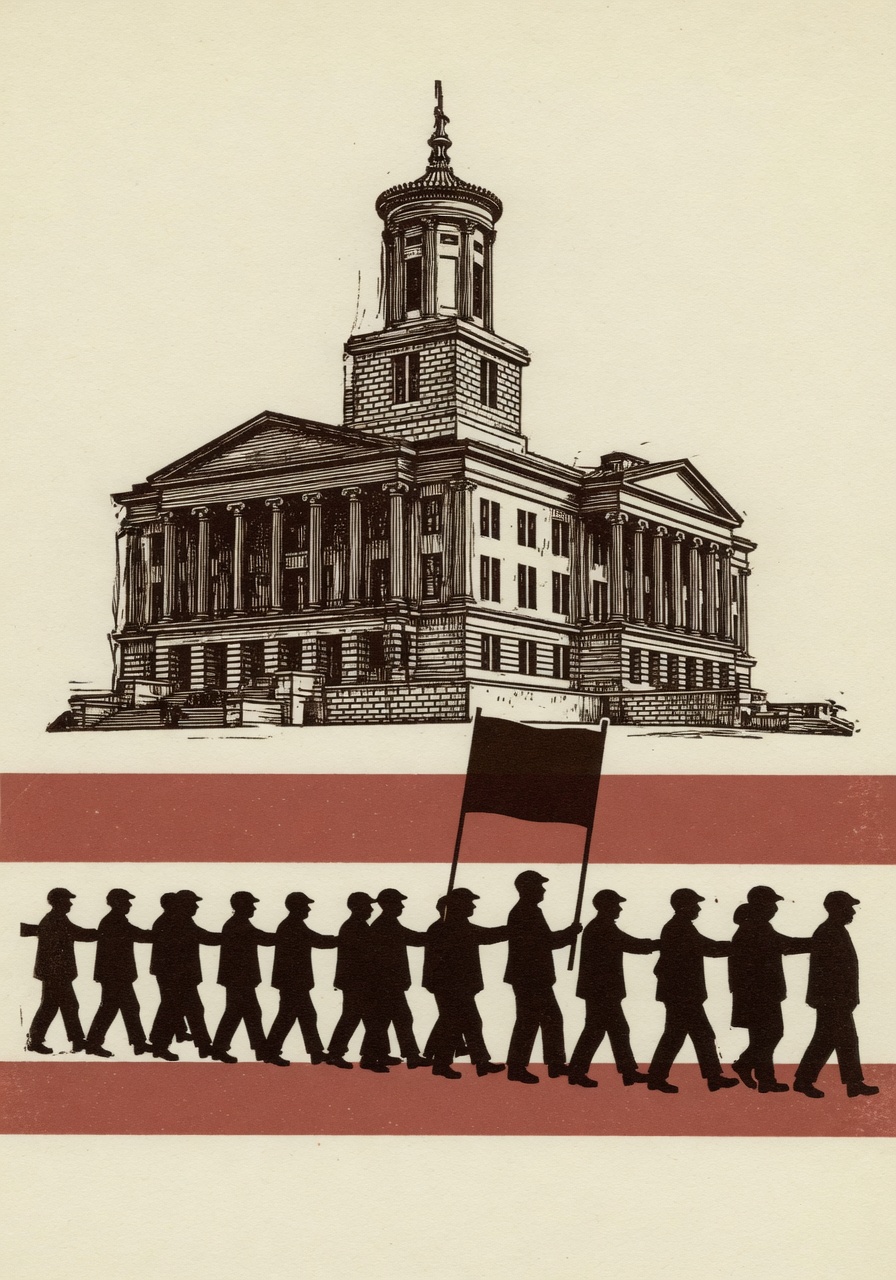
The Tennessee General Assembly passed a new congressional map on Thursday afternoon, and Governor Bill Lee signed it into law the same evening. Three days earlier, the legislature did not have the authority to do this. A 1972 provision of Tennessee law had barred congressional redistricting between apportionments; the same special session that produced the map repealed the prohibition first. Eight days earlier, the Supreme Court had loosened Section 2 of the Voting Rights Act of 1965 in Louisiana v. Callais. Tennessee is the first state to draw a new map under the new rule.
The map dismantles Tennessee’s 9th Congressional District, the Memphis-anchored seat that has elected a Black-supported Democrat in every election since 1974. Under the new lines, the 9th is split across three districts that each reach east into rural Republican counties; the closest of them runs roughly two hundred miles before reaching the Nashville suburbs. The legislature’s own projections describe a 9-0 Republican delegation as the most likely 2026 outcome. The current delegation is 8-1.
Representative Steve Cohen, who has held the 9th since 2007, said in a written statement Thursday that the map was “shameful” and that the “next stop is the courts.” Within three hours of Lee’s signature, NAACP Tennessee State Conference president Gloria Sweet-Love had filed an emergency petition in Davidson County Chancery Court. The national NAACP followed with a federal complaint citing the Fourteenth and Fifteenth Amendments, asking for an order preventing any 2026 election under the new lines and reinstating the prior decade’s map.
How the legislature got the authority
Tennessee Code Annotated section 2-16-103, on the books since 1972, instructed that congressional districts “may not be changed between apportionments.” House Speaker Cameron Sexton filed the repeal as a separate bill on May 4. The repeal cleared both chambers on May 7, on the same calendar as the map itself, with Lee signing both before the close of business. The sequencing matters because the map cannot stand without it: any litigant arguing the General Assembly acted ultra vires has to clear the repeal first.
The NAACP’s state petition does not concede that argument. Sweet-Love’s filing contends Tennessee Republicans “had no legal authority to redraw congressional districts in the first place,” and asks the chancery court to treat the repeal and the map as a single, severable package. The state has named Lee and the General Assembly as defendants and replied through Attorney General Jonathan Skrmetti’s office that both enjoy sovereign immunity and that elections are conducted by county election commissions, not by the governor or the legislature. The Tennessee Supreme Court named a three-judge panel — Chancellor Anne Martin, Chancellor Tony Childress, and Judge James Gass — to hear the case.
What Callais changed
In Louisiana v. Callais, decided April 29, the Supreme Court ruled that the most recent Louisiana congressional map was an unconstitutional racial gerrymander under the Fifteenth Amendment and partially overturned Section 2 of the Voting Rights Act of 1965 as a basis for race-conscious redistricting. The narrow practical effect is that map-drawers no longer face the same federal preclearance-style scrutiny when they reduce the number of majority-minority districts. Sexton, in a post on X immediately after the Tennessee vote, said the Court’s opinion “indicated states can redistrict based off partisan politics” and that “Tennessee joins other red and blue states in redrawing their congressional maps.”
Tennessee lawmakers made a deliberate choice to silence Black voters by dismantling a district that has long ensured representation. — Derrick Johnson, president and CEO, NAACP, May 7, 2026
The legal question Callais leaves open is whether intent-based discrimination claims survive. The NAACP’s federal complaint argues they do, and frames the Tennessee map as racial discrimination dressed in partisan clothing. NAACP general counsel Kristen Clarke, in a statement accompanying the filing, said “the evidence is clear: Tennessee’s map dismantled the state’s only majority Black district and was enacted with discriminatory intent.” The state’s position, in the Skrmetti filing, treats the map as a permissible partisan act and the racial composition of the result as incidental.
Who pays
The proximate political incentive is straightforward. Republicans hold a five-seat House majority entering the 2026 midterms. Internal forecasts and public race-rating shops both have Democrats narrowly favored to retake the chamber on the current map. A 9-0 Tennessee delegation is worth one seat against that forecast. Florida and Virginia have moved on parallel tracks since Callais; Republicans’ probability of holding the House, as priced by the public race-rating model maintained by Race to the WH, rose from 18.9 percent on May 7 to 27.2 percent by week’s end.
The cost falls in two places. The first is on the roughly 178,000 Black voters of Shelby County who, under the new lines, are folded into three districts in which they are a minority of each electorate. The legal question is whether that dilution is actionable; the political question, separate from the legal one, is whether a candidate with a Memphis base can win any of the three. The redrawn 9th now extends to within fifty miles of Knoxville, and the legislature’s own demographer puts the Black share of the voting-age population in the new district at under twenty percent. The other two successor seats are below ten.
The second cost is institutional and bipartisan. Tennessee’s 1972 statute existed because legislatures of both parties recognized that the ability to redraw districts after an unfavorable election creates an incentive to never stop redrawing them. California Democrats have a redistricting fight of their own pending; New York has an open question on a 2024 map that benefited the state party. The norm against mid-decade redistricting has held — unevenly — for half a century not because the federal constitution requires it but because most states’ codes did, or because most parties calculated that suspending it would invite the other side to do the same. Thursday’s vote in Tennessee changes that calculation in real time. Texas, Missouri, and Indiana legislatures have all opened informal discussions on similar bills, according to public statements by their respective leadership offices over the past week.
A federal judge has set a May 20 hearing on the NAACP’s request for preliminary relief. The candidate filing deadline for Tennessee’s August primary is May 28. The question on the chancery court’s desk is whether the map governs the August ballot; the question on the federal court’s desk is whether it governs anything at all. The question on every other state legislature’s desk is whether Tennessee’s eight days, from Callais to a signed map, becomes the new floor.
Sources & methods
- CNN Politics · Tennessee Republicans approve map carving up majority-Black U.S. House district (May 7, 2026). Archived May 16, 2026
- NBC News · Tennessee Republicans pass map dividing up state’s lone majority-Black district (May 7, 2026). Archived May 16, 2026
- NPR · Tennessee Republicans pass a map to break up the state’s lone Democratic House seat. Archived May 16, 2026
- Tennessee Lookout · Passage of the new 9-0 GOP map eight days after the Court narrowed Section 2 of the Voting Rights Act. Archived May 16, 2026
- Tennessee Lookout · NAACP Tennessee files state-court emergency petition hours after the governor signed the map. Archived May 16, 2026
- NAACP · Federal complaint alleging Fourteenth and Fifteenth Amendment violations; statements from Derrick Johnson and Kristen Clarke. Archived May 16, 2026
- Al Jazeera · Same-day reporting on the special session, the vote, and Lee’s signature. Archived May 16, 2026
- Democracy Docket · Analysis of Louisiana v. Callais and its effect on Section 2 of the Voting Rights Act. Archived May 16, 2026
- Tennessee Secretary of State · Official 2026 congressional redistricting announcement page. Archived May 16, 2026
- Office of Rep. Steve Cohen · Constituent newsletter on the redistricting and the litigation track. Archived May 16, 2026
Reporting draws on same-day coverage from CNN, NBC News, NPR, The Washington Post, Al Jazeera, and Tennessee Lookout; the Tennessee Secretary of State’s official redistricting page; the on-the-record statements released by the NAACP national office and the office of Representative Steve Cohen; the public posts of Speaker Cameron Sexton; and Democracy Docket’s contemporaneous summary of Louisiana v. Callais. The Tennessee Attorney General’s office and the Office of the Governor were reached by email for comment on the timing of the repeal of Tennessee Code Annotated section 2-16-103; neither office responded before deadline. All quotations are from on-the-record statements, public filings, or signed press releases. No anonymous sourcing was used.