Trump threatens to halt trade with deficit countries unless Federal Reserve cuts rates
The president’s ultimatum on Truth Social escalates his pressure campaign on the central bank weeks before a critical interest rate decision and two months before the midterm elections.
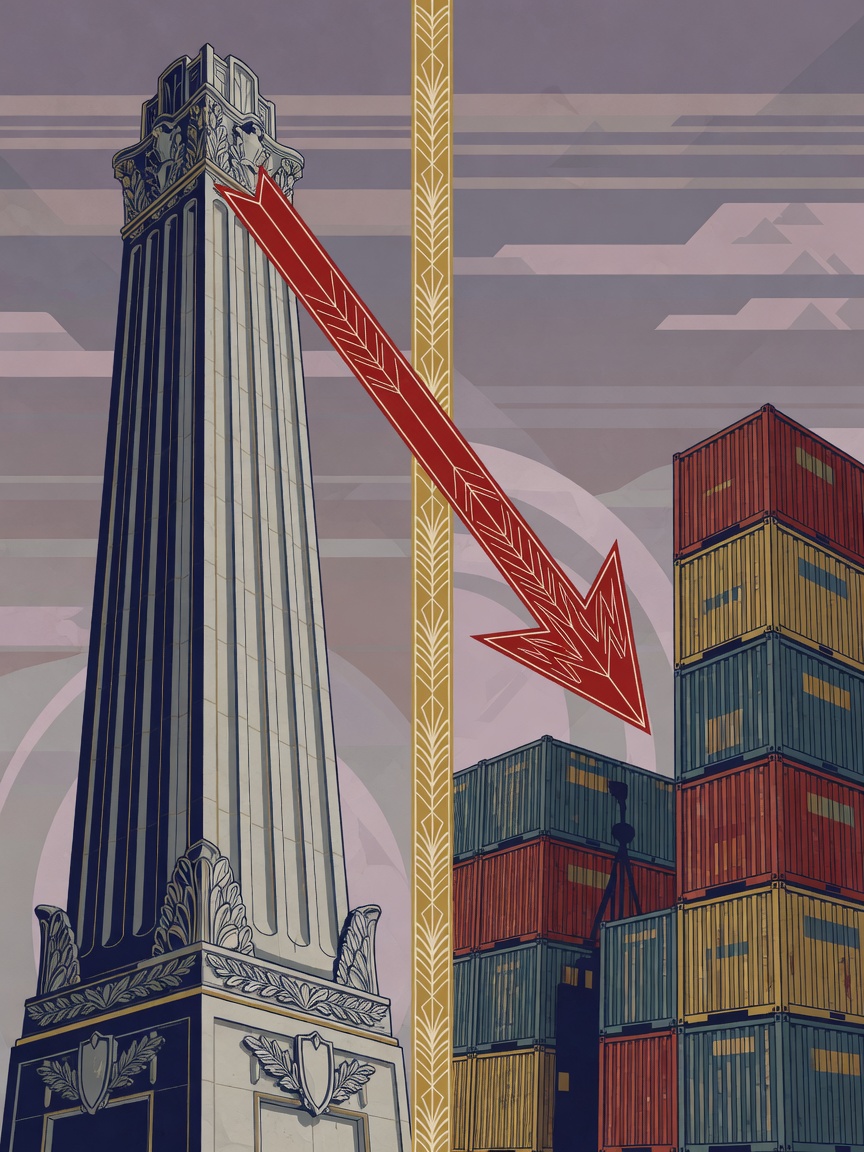
President Donald Trump on Friday demanded that the Federal Reserve slash interest rates or face a halt to U.S. trade with countries running surpluses against America, issuing the ultimatum in a social media post that reignited his pressure campaign on the central bank two months before midterm elections.
The threat followed a strong August jobs report. Employers added 162,000 jobs, nearly triple the 56,000 analysts had forecast, driven by hiring in restaurants, bars, and local government education. The unemployment rate held at 4.1%, with seven million Americans out of work. Average hourly earnings rose to $37.75, up 3.1%. Weaker job figures from earlier in the summer were revised upward by the Bureau of Labor Statistics, which found that 44,000 jobs were created in July rather than the 23,000 previously reported as shed. Trump called the figures justification for immediate rate cuts, posting on Truth Social that the United States should have the lowest rate of any country in the world. He argued that a strong country means a lower interest rate, calling it a matter of better credit.
“LOWER THE RATE OR I’LL STOP TRADING WITH COUNTRIES WITH WHICH WE HAVE A DEFICIT,” Trump wrote, aiming the appeal at his handpicked Federal Reserve chairman, Kevin Warsh. He referenced a Supreme Court tariff decision, claiming it acknowledged the president’s absolute right to stop trade. He told the Fed board to “get smart” and “be patriots for a change.” The Fed declined to comment.
The threat is sweeping. The United States runs trade deficits with dozens of countries, including its closest trading partners, among them Mexico, Canada, and China. The White House did not immediately respond to CNBC’s request for additional information on the post. Trump also claimed that without the United States agreeing to allow other countries their big surpluses, those nations would no longer be considered financially elite, and that he could stop that immediately.
Warsh signals possible hikes, not cuts
Trump’s demand runs counter to what his own appointee has signaled. Warsh, who succeeded Jerome Powell as Fed chair, suggested in a speech at a summit in Jackson Hole, Wyoming, late last week that rate hikes could be on the table if policymakers were not confident that price increases were easing. He said he is committed to bringing inflation back down to the central bank’s 2% target, noting that short-term interest rates are the predominant tool to achieve the dual mandate.
Inflation remains well above that target. Prices rose 3.4% over the past 12 months, according to the latest data. The Federal Open Market Committee left rates unchanged between 3.5% and 3.75% in July for the fifth time in a row, but concerns over inflation persist, fueled by the ongoing U.S.-Iran conflict that has driven a surge in global oil prices. On Friday, U.S. diesel prices hit an all-time high of $5.85 a gallon on average, compared with $3.71 a year earlier. Despite rising costs, wages are also climbing.
The jobs report that Trump celebrated has strengthened the case for a hike. Stephen Brown, chief North America economist at Capital Economics, said that even the most committed dove would struggle to find anything in the August employment report to justify keeping rates unchanged. He added that the strength in the jobs market meant that the latest inflation figures, due next week, would only need to be moderately above the Fed’s target to fuel expectations of a September hike. Neil Birrell, chief investment officer at Premier Miton, said a hike in rates had become a bit more likely. Nearly 60% of traders were betting on a rate increase in September, according to CME Group’s FedWatch data.
Political pressure mounts before midterms
Trump is not alone in pressing for cuts. Vice President JD Vance called for lower rates on Thursday, arguing that a reduction would be the proper and responsible response to recent U.S. inflation data. National Economic Council Director Kevin Hassett struck a different tone on CNBC on Friday, saying the Fed would do what it wants to do and that the administration respects its independence. He added that the argument for holding steady would be pretty strong.
The pressure campaign resumed after a period of relative quiet. Trump’s push against the Fed had eased since the appointment of Warsh as his handpicked successor to Jerome Powell, according to CNBC. The latest post comes as Americans’ unhappiness with persistent high inflation has been a dominant theme heading into the midterm elections. Trump has long sought lower interest rates and frequently complains about U.S. deficits with other countries.
Stock market indexes traded down on Friday in response to the stronger jobs figures raising expectations of a rate hike. Trump called the response “crazy.” He argued that the market should go up because the country’s credit and economy are better, complaining that for the past 25 years, the stock market goes down when things are good because of a fear of inflation. The next interest rate decision will be made on 15-16 September, when the Fed committee will announce whether it will hike, maintain, or lower the current rate.
Sources & methods
- The Guardian live blog covering Trump's Truth Social post, the trade deficit threat, Fed chairman Warsh's Jackson Hole remarks, and the 15-16 September rate decision timeline. Archived Sep 4, 2026
- BBC News report on Trump's call for rate cuts, August jobs figures, inflation data, trader betting patterns, wage growth, and stock market reaction. Archived Sep 4, 2026
- CNBC report including Trump's full Truth Social post, the Fed's declination to comment, Warsh's commitment to the 2% inflation target, and remarks from Vice President Vance and NEC Director Hassett. Archived Sep 4, 2026
This article was assembled from three contemporaneous news reports published on September 4, 2026, cross-referencing Trump’s social media post, Federal Reserve signals, jobs data, and market reactions. Direct quotes were drawn verbatim from the source texts.