Trump and Xi hold White House summit extending trade truce but yielding few concrete deliverables
The leaders covered trade, AI, Taiwan, Iran, and Ukraine, with cooperative rhetoric but only a confirmed two-month truce extension to January 10.
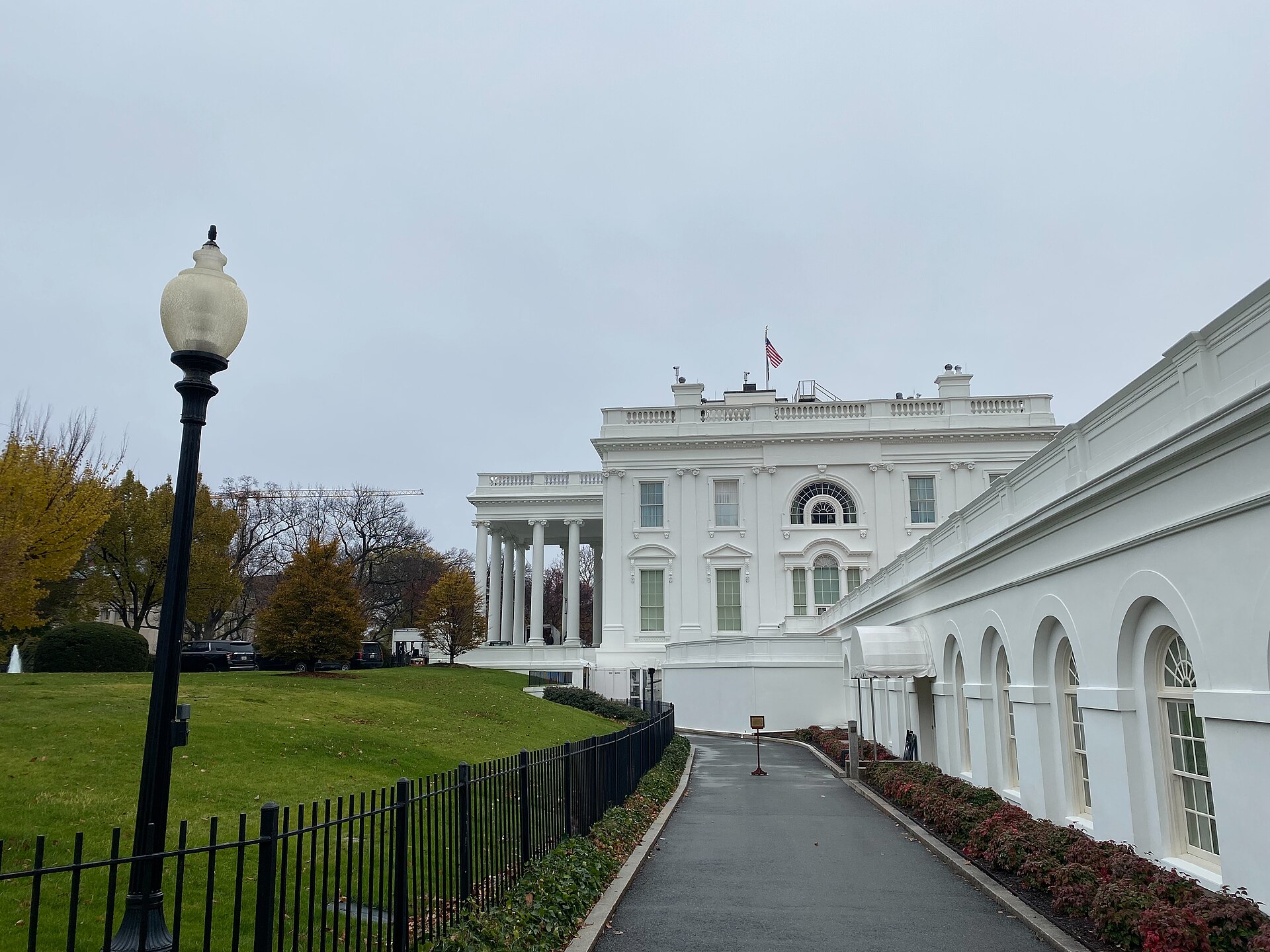
Trump and Xi Jinping met Thursday. The White House summit covered trade, AI, security, and technology. Treasury Secretary Scott Bessent said the temporary trade truce has been extended by two months to Jan. 10.
The agenda includes the trade-war truce, Taiwan, AI, and China’s support for Iran and Russia’s war in Ukraine. Xi said China and the US stand to gain from cooperation and will both lose in confrontation. “We do not need to avoid mentioning competition, but our competition should be a healthy one and should be kept within bounds,” Xi said. “It should be a race of catching up with one another, not a wrestle in which one either wins or loses.” Trump said the two countries are working toward a more balanced trade relationship.
Trade truce extended, but scope of any new deal disputed
The truce lowered US tariffs and suspended Beijing’s controls on exports of rare earths and critical minerals, per CNBC. The Guardian, citing Xinhua, reported that Xi said Chinese and US economic and trade teams have reached a new joint agreement, which he called good news for the global economy. CNBC reports only the truce extension. Analysts predict few major deliverables. Xi called for Chinese companies to be treated fairly in the United States. The two readings remain unreconciled.
AI rebranded as ‘Super Intelligence,’ with a gap on regulation
Trump used the term Super Intelligence (SI) to rebrand AI and said neither the US nor China want to change how the sector is handled, per CNBC. Trump said the US guardrail on AI is the Department of Justice. Xi said AI development must always be under human control and serve the well-being of the people. Xi said the US and China have both the capability and responsibility to develop and manage AI for good. The emphasis in their remarks differed.
Iran sanctions and a disputed satellite report
The US last month launched Operation Economic Outcast, targeting Iran’s financial enablers with secondary sanctions, CNBC reported. The Trump administration has said no country is exempt from potential sanctions but has not directly targeted Beijing. Trump, asked about a Wall Street Journal report that Chinese entities supplied Tehran with satellite imagery used in attacks on US troops in Jordan in July, said, “They basically do what we do,” CNBC reported. The Guardian, citing Xinhua, reported that Xi and Trump exchanged views on the Middle East, Ukraine, and the Korean Peninsula.
Red carpet, flyover, and pandas
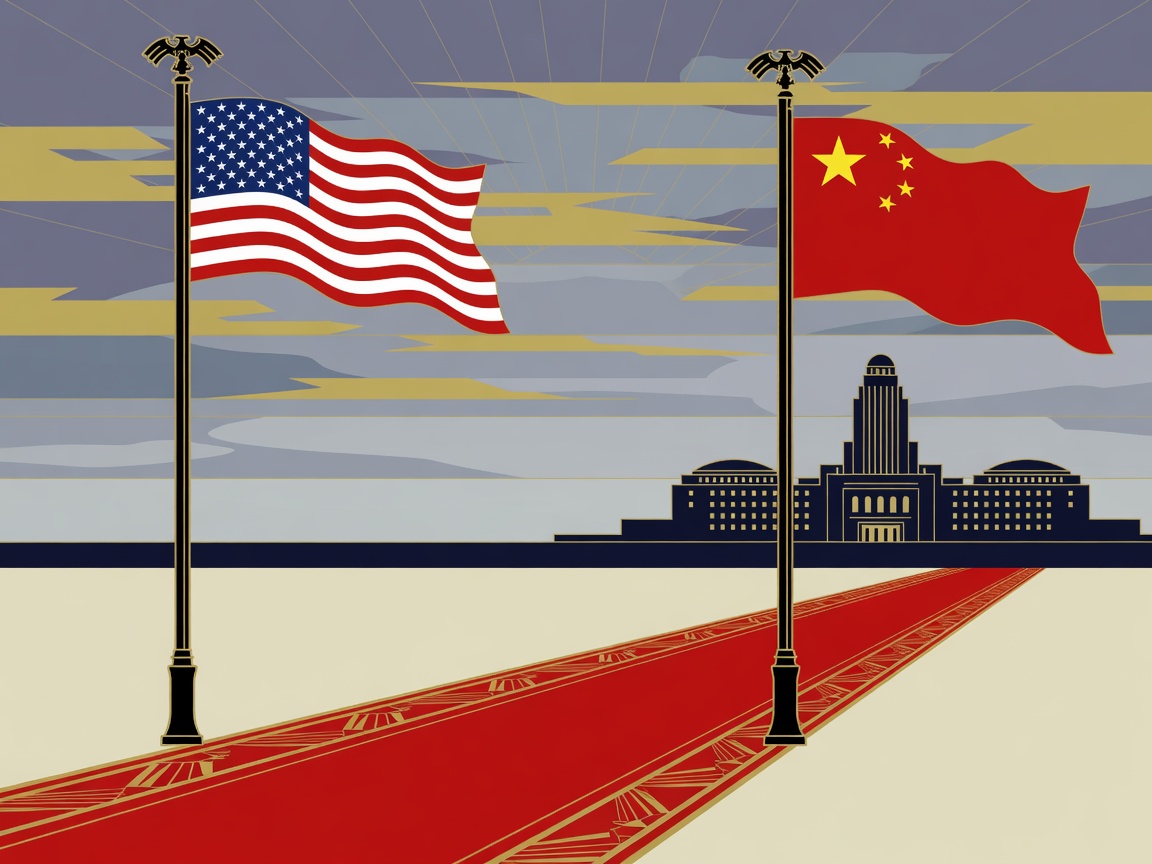
Trump greeted Xi at Joint Base Andrews on Wednesday evening. The gesture was unusual for a foreign leader. Xi was treated to a military flyover of two B-1 bombers before leaving the Andrews tarmac, CNBC reported. The last president to greet a foreign leader at Andrews was Obama, who greeted Pope Francis 11 years ago this week, per CNBC. Trump and Melania welcomed Xi and Peng Liyuan at the White House on Thursday morning for an arrival ceremony. A state dinner is being hosted in the East Room. Xi announced two pandas will be coming to Zoo Atlanta in the coming days, per CNBC. Chuck Schumer criticized Trump’s red-carpet treatment of Xi on X, the Guardian reported. White House spokeswoman Anna Kelly said Trump is reciprocating hospitality after Xi hosted Trump in China for a summit this summer, per CNBC. On Friday, the presidents and first ladies will hold a private tea and tour the National Archives before Xi’s departure, CNBC reported. This is Xi’s first visit to Washington since September 2015.
Press access fight and a flight proposal
Trump banned CNN, MS Now, and Politico from the White House; a court order issued before dawn required their passes be restored, the Guardian reported. ABC, CBS, NBC, and Fox News refused to provide pool video of White House events in solidarity with CNN, the Guardian reported. China ranks 178th in Reporters Without Borders’ press freedom index; the US is 64th, the Guardian reported. Xi proposed increasing direct flights between the two countries to facilitate travel and trade. The US and China currently each operate about 50 round-trip flights per week. Chris Sununu of Airlines for America said US carriers oppose adding more direct flights from China because Chinese counterparts can overfly Russia on eight flights, creating a cost disadvantage.
Sources & methods
- The Guardian live coverage of Trump-Xi White House summit, Sept. 24, 2026 Archived Sep 24, 2026
- CNBC reporting on Trump-Xi meeting and state dinner, Sept. 24, 2026 Archived Sep 24, 2026
Two sources were used: the Guardian and CNBC. The Guardian cited Xinhua in its reporting, and CNBC cited the Wall Street Journal; those secondary citations are attributed accordingly. Facts appearing in both sources are treated as corroborated and presented without individual attribution. Claims drawn from a single outlet are attributed to that source by name. Where the two sources diverge, both readings are presented side by side and neither is treated as settled, as in the dispute over whether a new trade agreement was reached or merely the existing truce extended.