US-Canada trade talks collapse at the deadline, triggering 50% tariffs and a dollar-for-dollar Canadian response
Negotiations fell apart minutes before midnight on Friday after last-minute changes to the US terms. Canada’s prime minister suspended the talks and pledged to match the new levies.
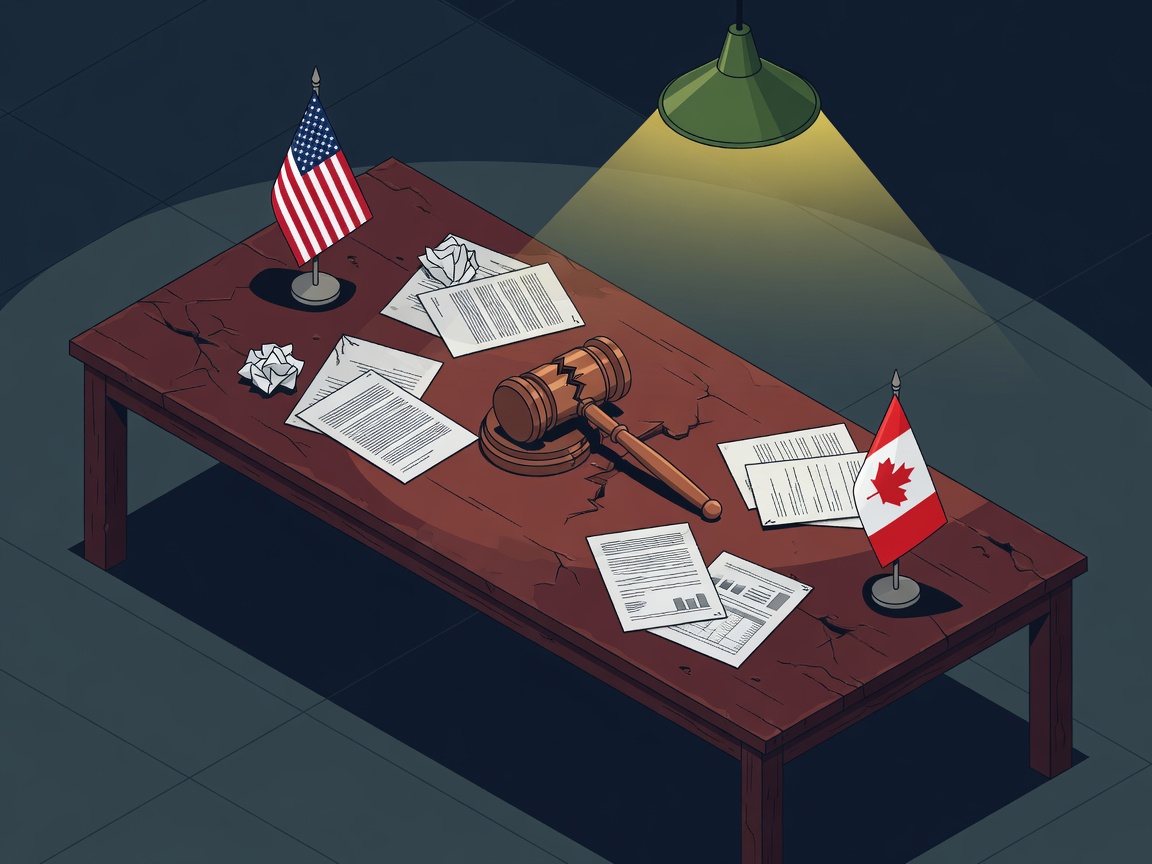
Trade negotiations between the United States and Canada collapsed minutes before a midnight Friday deadline, triggering 50% tariffs on roughly $20 billion worth of Canadian imports and an immediate pledge from Ottawa to match the levies dollar for dollar.
Canadian Prime Minister Mark Carney announced the suspension of negotiations shortly before the deadline, saying that while important progress had been made, it was not enough to meet Canada’s objectives. He directed negotiators to return to Ottawa. The decision came after what Carney described as last-minute changes in the US proposed terms that he called unfair, uneconomic, and damaging to the reliability of any agreement.
“Canada will match those tariffs dollar for dollar to protect our workers and businesses,” Carney said in a statement. He added that Canada’s goal throughout the negotiations had been to secure the best possible agreement, never a deal at any price or on any deadline.
The tariffs took effect on Saturday. They apply to a range of goods including wine, dairy, cement, clothing, hockey equipment, hockey sticks, and tongue depressors, hitting about five percent of what Canada ships to the US each year. President Donald Trump imposed the levies using the Tariff Act of 1930, a Depression-era law. The new tariffs are in addition to existing duties already placed on Canadian steel, aluminum, autos, and lumber.
How the talks fell apart
Negotiators had been engaged in intense talks since July, after Trump threatened to impose a 50% levy on nearly $20 billion of Canadian imports by 19 August. Trump had temporarily paused the tariffs earlier in the week, saying the two sides were close to signing a trade deal that was very good for both countries. The tariffs were initially supposed to kick in at 12.01am Wednesday, but Trump extended the deadline by three days to allow talks to continue. No further talks have been planned.
The deal under discussion would have reduced US tariffs on Canadian steel and aluminum from 50% to 25%, and on Canadian autos from 25% to 15%. In exchange, Carney had asked Canadian provinces to restore US alcohol to store shelves. The US had also sought concessions including the removal of Canada’s remaining retaliatory tariffs on American autos, adjustments to Canadian dairy quotas to allow greater access for US cheese producers, and an end to the ban on US alcohol sales imposed last year by most Canadian provinces.
US Trade Representative Jamieson Greer said Canada declined to finalise the trade deal under the terms agreed earlier in the week. He said new demands and walk backs of other commitments by Canada had upended the careful balance reached in the preceding days. Greer called the breakdown a missed opportunity for Canada and said the US offer was forward-looking, including what he described as a historic economic and national security partnership.
Greer added that the United States had agreed to provide even better treatment to Canada, offering significant tariff reductions on steel, aluminum, autos, and lumber. The offer, he said, would have led to supply chain coordination on aerospace, complementary actions to address unfair trade practices, critical minerals cooperation, increased enforcement against imports produced with forced labor, and the announcement of formal US-Mexico-Canada Agreement negotiations.
Reactions on both sides of the border
Ontario Premier Doug Ford expressed full support for Carney’s response. He said Team Canada needs to stand together more united than ever before and that everything needs to be on the table as Canada fights to protect its sovereignty and economic security. Ford, whose province is Canada’s largest, called for a strong response of tariff for tariff, dollar for dollar.
Business groups on both sides warned of the consequences. The US Chamber of Commerce said earlier in the week that higher tariffs would damage both economies, drive up costs for US families, further disrupt critical supply chains, and risk the 13 million American jobs that depend on trade under the US-Mexico-Canada Trade Agreement. Candace Laing, president and CEO of the Canadian Chamber of Commerce, called the tariffs a body blow to North American competitiveness, warning they would raise costs for Americans while threatening Canadian customers, investment, and small businesses.
The political impact of the breakdown will likely be even bigger than the economic fallout. The two countries sold each other $880 billion worth of goods and services last year. According to BBC News, a recent poll by Canadian firm Abacus Data suggested that around 36% of Canadians would support retaliating to US tariffs, while another 30% would want the government to continue negotiating. Greer told reporters last week that the US is not going to tolerate counter-tariffs and warned that the administration would take action.
Carney said his government would announce additional support for Canadian workers and businesses in the coming days. The escalation calls into question the future of the North American trade pact among the US, Canada, and Mexico that is crucial to industry in all three countries. Tensions between the two trading partners have simmered since Trump returned to office in January last year and unleashed a wide-ranging global programme of tariffs, upending decades of free trade between Canada and the United States.
Sources & methods
- BBC News report on the breakdown of US-Canada trade talks and Canada's pledge to match tariffs dollar for dollar, including the Abacus Data poll and Greer's warning on counter-tariffs Archived Aug 22, 2026
- The Guardian report on Carney's promise to match US tariffs and the reactions from officials and business groups Archived Aug 22, 2026
- NPR report on the collapse of trade negotiations minutes before the midnight deadline and the statements from both sides Archived Aug 22, 2026
This article was assembled from three wire-service reports covering the same Friday-night breakdown in US-Canada trade negotiations, cross-referenced for consistent facts and direct quotes attributed to officials on both sides.