Dengue cases in the United States ran 359 percent above the 10-year average in 2024. The surveillance was the easy part
The CDC’s Dengue Branch reports 3,798 U.S. cases for 2024 in the Morbidity and Mortality Weekly Report, a 359 percent jump above the 10-year average and the highest annual total in the surveillance record. Travel-associated infections account for 97.2 percent of those cases; the 105 locally acquired cases, in Florida, California, and Texas, are the smaller number and the leading indicator.
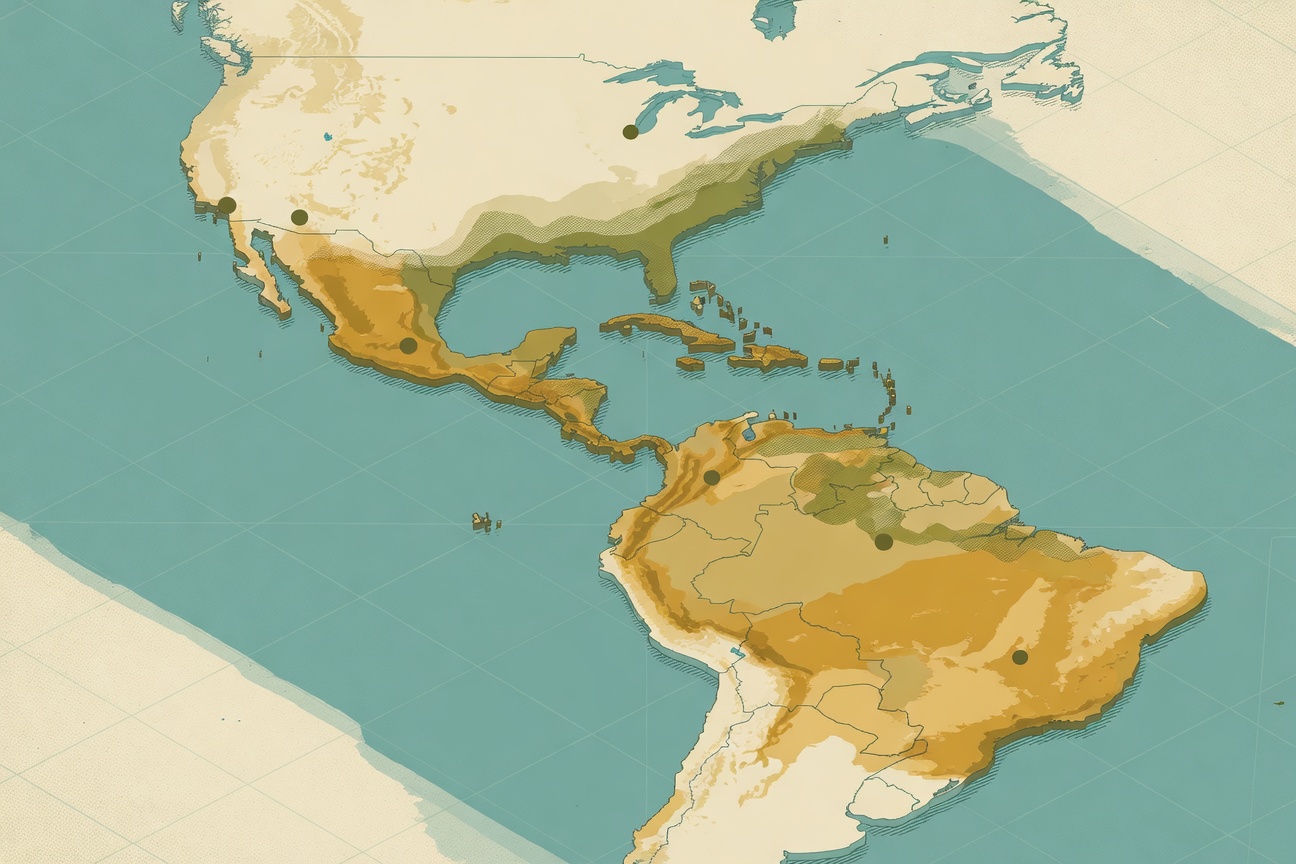
The Centers for Disease Control and Prevention’s Dengue Branch, working out of San Juan, reported on May 14 that 3,798 dengue cases were identified in the U.S. states and the District of Columbia during 2024, a 359 percent increase over the 2010–2023 annual average of 828 cases. The figures, published in the Morbidity and Mortality Weekly Report by Sandra J. Kiplagat and colleagues (MMWR, Vol. 75, No. 18, pages 227–233), are surveillance data, not modeling: each case is a laboratory-confirmed or probable infection reported through the national arboviral surveillance system, ArboNET. Of the 3,798 cases, 3,693 (97.2 percent) were travel-associated and 105 (2.8 percent) were locally acquired. Six patients died, all of them returning travelers with severe dengue, for a case-fatality rate of 0.2 percent. Hospitalization was reported for 36.1 percent of cases.
The 2024 total is the highest U.S. count in the 14 years the dataset covers, and the trajectory tracks the regional one. The Pan American Health Organization’s end-of-year situation report for the Americas, covering epidemiological weeks 1 through 52 of 2024 and published January 16, 2025, recorded 13,063,434 dengue cases and 8,431 deaths across the region — the highest annual figure since PAHO began collecting dengue data in 1980 and roughly three times the 2023 regional total. Brazil alone accounted for 10,266,017 of those cases, with Argentina, Mexico, and Colombia next in volume. The four dengue serotypes (DENV-1 through DENV-4) circulated simultaneously across at least nine countries in the region during the year.
Where the U.S. cases came from, and who they were
The MMWR analysis breaks down the 3,693 travel-associated cases by country of likely exposure. The three leading sources named in the Discussion were Mexico (892 cases, 25.4 percent), Cuba (633 cases, 18.1 percent), and India (225 cases, 6.4 percent). Locally acquired cases were reported from three states only: Florida (85 cases across 10 counties), California (18 cases across three counties), and Texas (two cases in two counties). Puerto Rico is reported separately under the U.S. territories surveillance line and is not included in the 3,798 figure; the territory’s own 2024 dengue numbers are tracked by the Puerto Rico Department of Health in coordination with the CDC Dengue Branch.
The demographic breakdown carries the usual caveats of surveillance data, but two figures are worth naming. About 21.8 percent of cases occurred in adults aged 50–59, the largest single age group, with the next-largest cohorts in adults aged 40–49 and 60–69. And 57.5 percent of all cases were among Hispanic or Latino persons; among the 105 locally acquired cases, the share rose to 66.7 percent. The MMWR authors note that this distribution reflects, in part, travel patterns between the United States and dengue-endemic countries in the Caribbean and Latin America, where travel by U.S. residents with family or community ties to those regions is concentrated. The surveillance data do not, on their own, support a claim about underlying susceptibility differences between groups.
The Los Angeles County cluster, as the closest look at local transmission
The most detailed published account of a 2024 U.S. locally acquired cluster appeared in CDC’s Emerging Infectious Diseases journal in May 2026 (Vol. 32, No. 5), by Aisling M. Vaughan and colleagues at the Los Angeles County Department of Public Health. Between August and November 2024, the county identified 14 locally acquired dengue cases across six neighborhoods (designated A through F) in the broader Los Angeles area. Eight of the 14 cases sat in a single neighborhood in the central San Gabriel Valley, and six of those eight occurred within a one-mile radius over a seven-week period; the investigators characterized that sub-cluster as consistent with an outbreak involving ongoing local transmission. The remaining six cases were spread across five additional neighborhoods, with neighborhood B roughly 37 miles from neighborhood A at the maximum span, and were treated by investigators as multiple independent introductions from returning travelers rather than a single seeded chain. Serotype information was available for 11 of the 14 patients: DENV-3 in eight, DENV-1 in one, and indeterminate as either DENV-1 or DENV-3 in two. Aedes aegypti mosquitoes were collected near case residences, but no DENV-positive mosquitoes were detected in the surveillance trapping that followed. The vector was present; the virus, in the trapped samples, was not.
During 2024, a record 3,798 dengue cases were reported, representing a 359% increase above the 2010–2023 annual average. — Sandra J. Kiplagat and colleagues, CDC Dengue Branch, MMWR 75(18):227–233, May 14, 2026
What the data say, and where the inference has to stop
Three drivers are commonly cited for the regional dengue increase: warmer and wetter conditions that expand the seasonal range and breeding window of Aedes aegypti and Aedes albopictus, the post-2020 rebound in international travel volume between the United States and Latin America and the Caribbean, and concurrent large outbreaks in source countries that raise the probability any given traveler is infected. The MMWR surveillance summary documents the U.S. case totals and the country-of-exposure distribution. It does not attempt to attribute the increase to any single driver, and the present reporting does not either: the 2024 dataset can characterize who got sick and where they were exposed, but the relative weight of climate, travel volume, and source-country epidemic intensity in producing the 359 percent jump is a separate analytical question, and one the MMWR authors do not answer.
What the surveillance data do support is a narrower point about the U.S. response posture. Locally acquired transmission requires a competent local vector, an infectious imported case in the right place at the right time, and a window in which the mosquito can bite and pass the virus. The 105 locally acquired cases in 2024 were concentrated in three states where Aedes aegypti is established and where vector-surveillance and mosquito-control programs sit at the county and mosquito-control-district level — Miami-Dade, Hillsborough, and Manatee counties in Florida; Los Angeles, San Diego, and Long Beach jurisdictions in California; the lower Rio Grande Valley in Texas. CDC’s dengue surveillance page (accessed May 18, 2026) describes routine state-level surveillance as the primary mechanism for detecting and responding to local transmission. The capacity for that detection varies by jurisdiction, and the Los Angeles County investigation, which ran multi-agency entomological and clinical surveillance for four months, is an instance of what a well-resourced response looks like.
What to track
Three specifics are worth following in named sources. The CDC Dengue Branch’s ArboNET-derived weekly case counts for 2026, posted to the agency’s dengue surveillance pages, are the running U.S. total and will be the first place a sustained shift above the 2024 trajectory shows up. PAHO’s weekly dengue situation reports for the Americas (the most recent at this writing covers epidemiological week 14, 2026) carry the regional comparator. And the next MMWR cycle on 2025 U.S. surveillance, expected in the second quarter of 2026, will indicate whether the 2024 figure was a single-year peak driven by the regional outbreak or the new operating baseline. The locally acquired column is the one to watch in either case. It is the smaller number now, and the leading indicator if it changes.
Sources & methods
- Centers for Disease Control and Prevention · Kiplagat SJ, Rodriguez DM, Rivera A, Paz-Bailey G, Wong JM, Adams LE. “Increase in Travel-Associated and Locally Acquired Dengue Cases — United States, 2024.” MMWR Morb Mortal Wkly Rep 2026;75(18):227–233 (published May 14, 2026). Primary source for the 3,798 case total, the 359 percent increase over the 2010–2023 average, the travel-associated vs. locally acquired breakdown, demographic distribution, and country-of-exposure data. Archived May 18, 2026
- CDC · MMWR Vol. 75 No. 18 full-issue PDF (May 14, 2026) — the archival typeset version of the dengue surveillance summary, used to cross-check the figures in the HTML version. Archived May 18, 2026
- CDC Emerging Infectious Diseases · Vaughan AM, Park C, Ngo VP, et al. “Investigation of and Response to Autochthonous Dengue, Los Angeles County, California, USA, August–November 2024.” Emerg Infect Dis 2026;32(5) (published April 6, 2026). Source for the 14-case Los Angeles County cluster, the DENV-3 predominance, the six-neighborhood geographic spread, and the trapping-without-virus-detection finding. Archived May 18, 2026
- CDC · Dengue program landing page (accessed May 18, 2026) — used for context on the U.S. surveillance baseline, the role of state-level reporting, and the standing description of dengue transmission patterns in the 49 continental states. Archived May 18, 2026
- Pan American Health Organization · “Report on the epidemiological situation of dengue in the Americas,” epidemiological week 52, dated January 16, 2025. Source for the 13,063,434 regional cases and 8,431 deaths in 2024, the country distribution led by Brazil, and the simultaneous-serotype-circulation finding. Archived May 18, 2026
- PAHO · Dengue topic landing page (accessed May 18, 2026) — used to confirm the canonical situation-report pathway and to locate the 2024 EW52 sitrep. Archived May 18, 2026
- World Health Organization · Dengue and severe dengue fact sheet (dated August 21, 2025) — used for the disease baseline (an estimated 100–400 million annual infections globally and 5.6 billion people in at-risk areas). The fact sheet’s 2024 figure of more than 14.6 million reported cases is noted in methods but not used in the article body; the MMWR Discussion’s 14.1 million figure is cited there for internal consistency. Archived May 18, 2026
Reporting was built on three primary documents: the May 14, 2026 MMWR surveillance summary by Kiplagat and colleagues at the CDC Dengue Branch in San Juan; the May 2026 Emerging Infectious Diseases article by Vaughan and colleagues at the Los Angeles County Department of Public Health describing the August–November 2024 autochthonous cluster; and the PAHO end-of-year regional situation report covering 2024 epidemiological weeks 1–52, dated January 16, 2025. Every figure attributed in this article to those documents was read directly from the published source; the MMWR HTML version was cross-checked against the full-issue PDF. The global 2024 figure (14.1 million reported cases worldwide) is the one cited in the MMWR Discussion and is used here for internal consistency with the U.S. surveillance summary. The WHO dengue fact sheet (August 21, 2025) gives the disease baseline (an estimated 100–400 million infections annually and 5.6 billion people in at-risk areas) and was used for that context only; its higher 2024 figure of more than 14.6 million reflects WHO updates after the MMWR cutoff. Limitations: ArboNET surveillance data depend on state and territorial reporting and undercount asymptomatic and mild infections, a constraint the MMWR authors name. The MMWR analysis covers U.S. states and the District of Columbia only. Puerto Rico, the U.S. Virgin Islands, American Samoa, and Guam are reported on the separate U.S. territories surveillance line and are not part of the 3,798 figure. The PAHO regional totals are reported provisional figures aggregated from national health-ministry submissions and are subject to retrospective revision. The article does not attempt to apportion the 359 percent increase between climate, travel volume, and source-country epidemic intensity, because the MMWR summary does not do so and a defensible attribution would require a separate modeling study. No anonymous sources were used.