Iran strikes five countries as US bombs Iranian infrastructure for sixth straight night
The Strait of Hormuz remains shut, disrupting roughly a fifth of global oil traffic, as oil prices post their strongest week since late April.
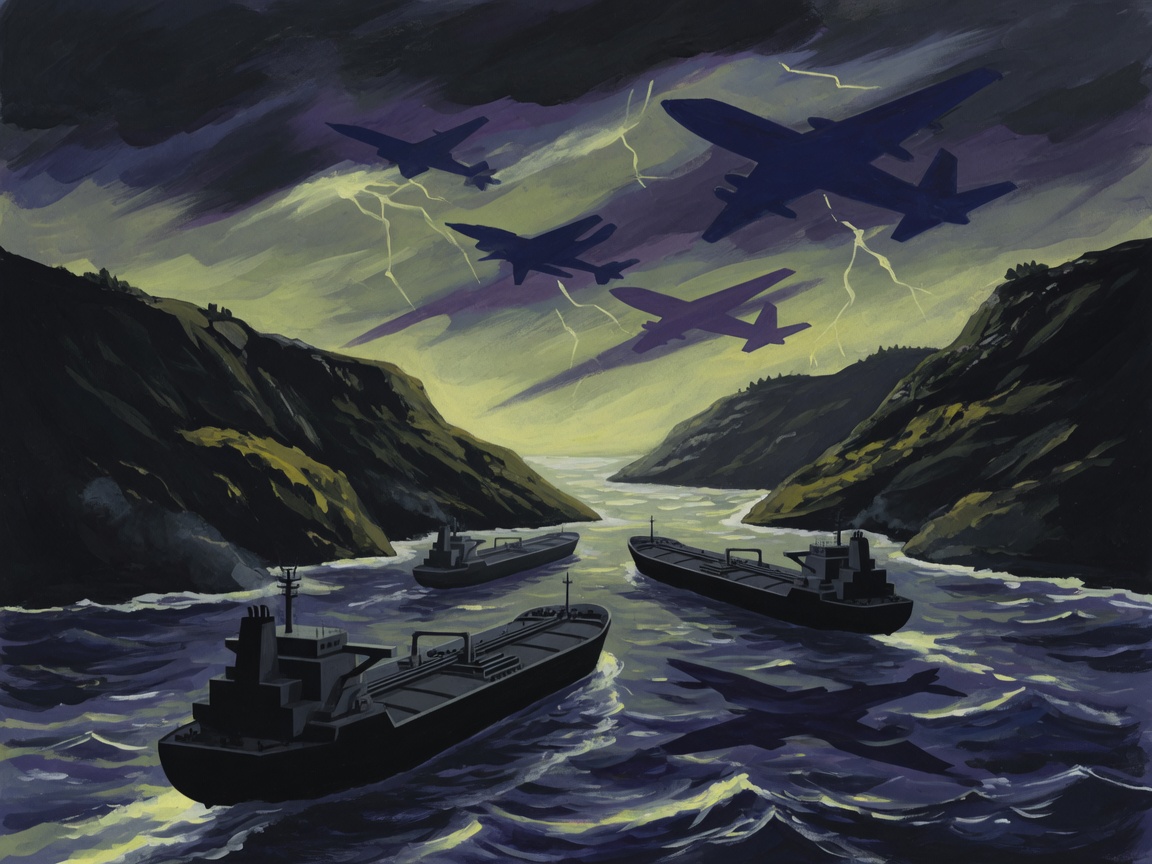
Iran struck Bahrain, Qatar, Oman, Jordan, and Syria on Friday in retaliation for a sixth consecutive night of US attacks on Iranian infrastructure, as the closure of the Strait of Hormuz sent oil prices surging and raised alarm over global energy supplies.
The crisis matters because it chokes off a waterway carrying roughly a fifth of the world’s oil. Brent crude futures advanced 0.9 percent to $85.01 per barrel on Friday. West Texas Intermediate gained 1.1 percent to $79.78. Both contracts are up more than 11 percent this week, on track for their best weekly performance since late April.
US Central Command said it completed its latest wave of attacks at 01:40 GMT on Friday, hitting what it described as dozens of Iranian military targets, including coastal surveillance and air defense sites, military logistics infrastructure, and maritime capabilities. Centcom did not mention bridges or civilian sites in its list of targets. Iranian state media told a different story.
State media reported that US forces struck at least six bridges in the southern province of Hormozgan, a railway station in the port city of Bandar Khamir, and Iranshahr Airport in southeastern Iran. The BBC verified an attack on one bridge west of Bandar Abbas. Iran’s Ministry of Energy said the strikes damaged power lines, causing outages across southern Iran. Seven people were killed in the overnight strikes, according to state news agency IRNA. At least 38 people have been killed and more than 400 injured in Iran since fighting resumed, the health ministry said.
Iran hits back across the region
The IRGC said it destroyed a US air control radar in Oman’s Ghanim region and a maritime control radar in the Strait of Hormuz. It also claimed strikes on a US military base in Kuwait, hitting a missile defense radar, weapons depots, and two HIMARS surface-to-surface missile launchers, according to Iran’s Mehr news agency. Neither Syria nor the US has commented on the IRGC’s claim of attacking the al-Tanf base in Syria.
Air raid sirens sounded in Bahrain. Qatar issued two separate alerts about an hour apart after Iranian projectiles, including at least one missile, targeted the country. Qatar’s Ministry of Defence said all projectiles were intercepted, though one child was injured by falling shrapnel over Doha and was receiving medical treatment.
Jordan’s military shot down three Iranian missiles with no casualties reported. The IRGC also said it attacked a US special operations command center at the al-Tanf base in Syria, near the Jordanian border, in retaliation for the killing of Iranian soldiers in Iranshahr. In Iraqi Kurdistan, eight people were killed and several injured in Sulaymaniyah, according to Kurdish news agency Rudaw and Agence France-Presse. Kurdish forces blamed Iran. Eight drones were shot down over Erbil with no casualties.
The strait and the stakes
The Strait of Hormuz has remained shut since Tehran blocked it in response to earlier US-Israeli strikes. Fatih Birol, head of the International Energy Agency, said Thursday night that he was worried about global energy supplies. He said the world should be worried if the situation does not improve in the coming weeks. Iranian military spokesperson Ebrahim Zolfaghari said the strait would never return to what it was before the 40-day war, accusing the US of destabilizing the waterway.
Iran’s top negotiator, Mohammad Bagher Ghalibaf, said Wednesday that Tehran had no reason to abide by any agreement that did not benefit the country, adding that Iran’s national security depended on maintaining what he called Iranian arrangements in the strait. The renewed US blockade of Iranian ports, which began Tuesday night, has added another layer of pressure. Centcom said Marines boarded an oil tanker in the Gulf of Oman and redirected three commercial vessels trying to run the blockade. Under its previous blockade, US forces disabled nine ships and redirected more than 140.
The fragile truce reached last month has fractured. The two sides met in Switzerland on June 22 for talks aimed at ending the war through a 60-day negotiation period. White House press secretary Karoline Leavitt said Thursday that Trump remained open to talks, adding that Iran had expressed it still wants to make a deal with the US. She said the president would not allow Iran to fire on ships in the strait without consequence.
Trump had threatened earlier in the week to strike Iran’s bridges and power plants if the country did not return to talks. In April, after Trump said the US would bomb civilian infrastructure, UN human rights chief Volker Türk said deliberately attacking civilians and civilian infrastructure is a war crime. The Chinese and Pakistani foreign ministers called Friday for both sides to stop fighting and resume negotiations. Meanwhile, Iran has asked Yemen’s Houthis to be ready to close the Red Sea oil route if the US targets Iranian power infrastructure, Reuters reported Thursday, citing three unnamed sources. CNBC could not independently verify the report.
Sources & methods
- BBC News report on US strikes against Iran, Iranian retaliation across Gulf states, civilian infrastructure damage, Strait of Hormuz closure, and diplomatic developments Archived Jul 17, 2026
- Al Jazeera report on Iranian strikes against Bahrain, Qatar, Oman, Jordan, and Syria, details of US attacks on southern Iran, and statements from Iranian and US officials Archived Jul 17, 2026
- CNBC report on oil price movements amid US-Iran hostilities, Strait of Hormuz disruption, and threats to regional energy infrastructure Archived Jul 17, 2026
This piece was assembled from three source articles covering military statements from US Central Command and Iran’s IRGC, Iranian state media reports, verified BBC findings, oil market data, and diplomatic statements attributed to named officials.