Netanyahu offers Eisenkot the premiership first, but gaps over coalition composition threaten another Israeli election
After October 27 elections left neither bloc with a majority in the 120-seat Knesset, the two leaders met for businesslike talks at military headquarters in Tel Aviv, but serious differences over personnel and timing remain with Eisenkot’s December 6 deadline approaching.
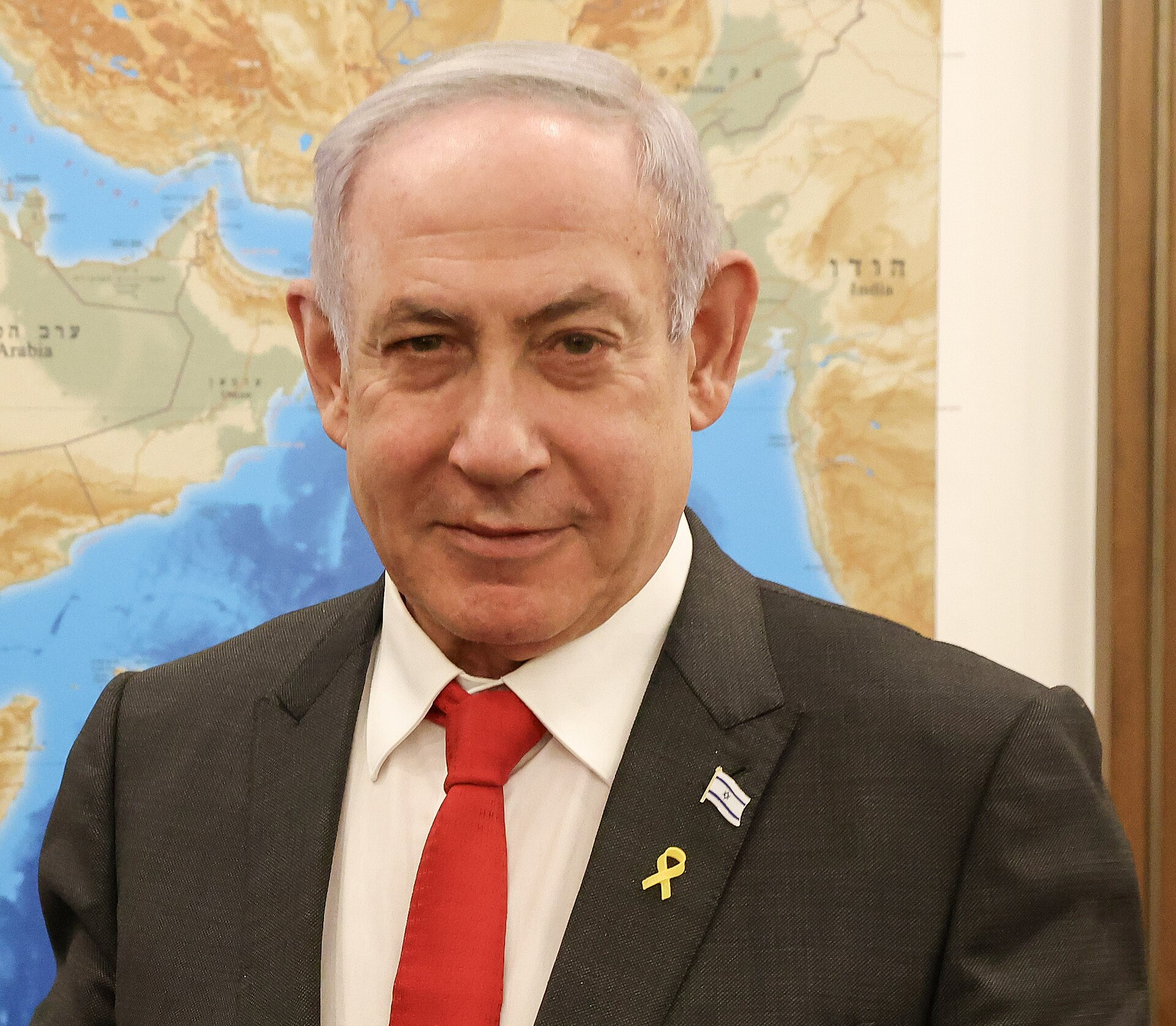
Caretaker Prime Minister Benjamin Netanyahu and opposition leader Gadi Eisenkot held talks at Israeli military headquarters in Tel Aviv on Sunday, as both men explored the possibility of a national unity government. A joint statement from Likud and Yashar called the discussion businesslike and said both sides sought to bridge substantial differences between them.
The meeting followed October 27 parliamentary elections that left neither political bloc with a majority in the 120-seat Knesset. President Isaac Herzog tasked Eisenkot, a former army chief, with forming a government, and he has until December 6 to secure a parliamentary majority. Eisenkot’s Yashar party leads a bloc of four parties that finished behind Netanyahu’s alliance but remains in contention to assemble a coalition.
Netanyahu’s offer
On Saturday, Netanyahu took to social media to propose a unity government with a rotating premiership, offering to let Eisenkot serve as prime minister first while he would serve as alternate prime minister at the beginning of the term. Netanyahu said Likud, as the largest party, should ordinarily lead such a government, but he was willing to set aside that principle because of security threats facing Israel. “My responsibility as a leader obligates me to put everything aside, including the principle of the largest party,” he wrote. He has not publicly specified when the proposed handover would take place, leaving a central question unanswered. Eisenkot welcomed the possibility of negotiations but questioned Netanyahu’s willingness to compromise, inviting him to genuine and accelerated talks while accusing Likud of stalling or prolonging coalition negotiations to trigger new elections that would allow Netanyahu to remain caretaker prime minister. Eisenkot said he was prepared to assess Likud’s seriousness over the next 24 hours if the party was ready for genuine unity. He added that negotiations would be based on a detailed proposal sent to Netanyahu the previous Sunday, to which Yashar had so far received no response.
The seat arithmetic
Netanyahu’s bloc won 53 seats in the October election, while Eisenkot’s bloc of four parties won 48, leaving both short of a majority. Arab-led parties won a record 19 seats in the 120-member Knesset following a surge in turnout among Arab voters, a result that could have given them decisive influence over who forms a government. Both blocs, however, have refused to take help from Arab parties, and all but one Jewish party pledged before the polls not to work with them to form a government. No political party in Israel has ever won an outright majority, meaning every government has been a coalition, but the current arithmetic leaves an unusually narrow path for either side.
Eisenkot has secured preliminary coalition agreements with Yair Golan’s Democrats, which hold eight seats, and Avigdor Lieberman’s Yisrael Beiteinu, which holds seven. Together with Yashar’s 21 seats, the three parties hold 36, leaving them 25 short of a majority. Under the agreement with Yashar, the Democrats would receive four ministerial portfolios: public security, labour and social affairs, communications, and culture and sport.
Obstacles
Talks between the two leaders recently stalled over who would lead the unity government and over the inclusion of far-right National Security Minister Itamar Ben-Gvir, with Likud wanting him included and Yashar insisting on his exclusion. Disagreements over the inclusion of ultra-Orthodox parties have further complicated coalition efforts. Eisenkot and his allies have pledged to end military service exemptions for ultra-Orthodox seminary students, a move strongly opposed by Haredi parties United Torah Judaism and Shas, both potential coalition partners. Hebrew media reports said serious gaps persisted during Sunday’s talks and a decision was made not to hold further meetings, casting doubt on whether the two sides can reach agreement before the deadline expires.
Precedent and skepticism
Israel has experimented with rotational governments before, with mixed results. In 2020, Netanyahu reached a power-sharing agreement with Benny Gantz following three inconclusive elections, but the government collapsed before Gantz could assume the premiership. In 2021, Naftali Bennett and Yair Lapid reached a rotation agreement that ended Netanyahu’s 12 consecutive years in power, and Lapid took over from Bennett in 2022 before Netanyahu returned to office after another election. There were five separate elections from 2019 to 2022. Eisenkot has the option to request a one-time 14-day extension but has ruled out seeking more time, leaving little margin for error as the December 6 deadline approaches.
Sources & methods
- BBC News, reporting on Netanyahu-Eisenkot talks, seat counts, Eisenkot's accusations, and historical election context. Archived Nov 29, 2026
- Al Jazeera, reporting on the Tel Aviv meeting location, Netanyahu's offer details, coalition agreements including Yashar's 21 seats, Democrats' eight seats, Yisrael Beiteinu's seven seats, four Democratic ministerial portfolios, Ben-Gvir dispute, military service exemption pledge, United Torah Judaism and Shas opposition, and rotational government precedents. Archived Nov 29, 2026
Article assembled from two wire source texts cross-referenced against a fact ledger. All flagged items confirmed verified: the 21-seat (Yashar), eight-seat (Democrats), and seven-seat (Yisrael Beiteinu) figures, the 36-seat combined total, the 25-seat shortfall, and the four Democratic ministerial portfolios (public security, labour and social affairs, communications, culture and sport) are all recorded in the fact ledger as single-source items from Source 2 (Al Jazeera) and appear verbatim in that source text. The pledge to end military service exemptions for ultra-Orthodox seminary students and the naming of United Torah Judaism and Shas as opposing parties are likewise recorded in the fact ledger as a single-source item from Source 2 and appear verbatim in that source text. Disputed quote readings resolved by selecting one version and attributing cleanly. Single-source facts attributed to their originating source only.