Trump and Bessent unveil economic pressure campaign against Iran after ceasefire expires
The Treasury secretary said the administration will likely not restart large-scale combat as Washington tightens sanctions on Tehran and its trading partners, but analysts and Iranian officials question whether the measures can succeed.
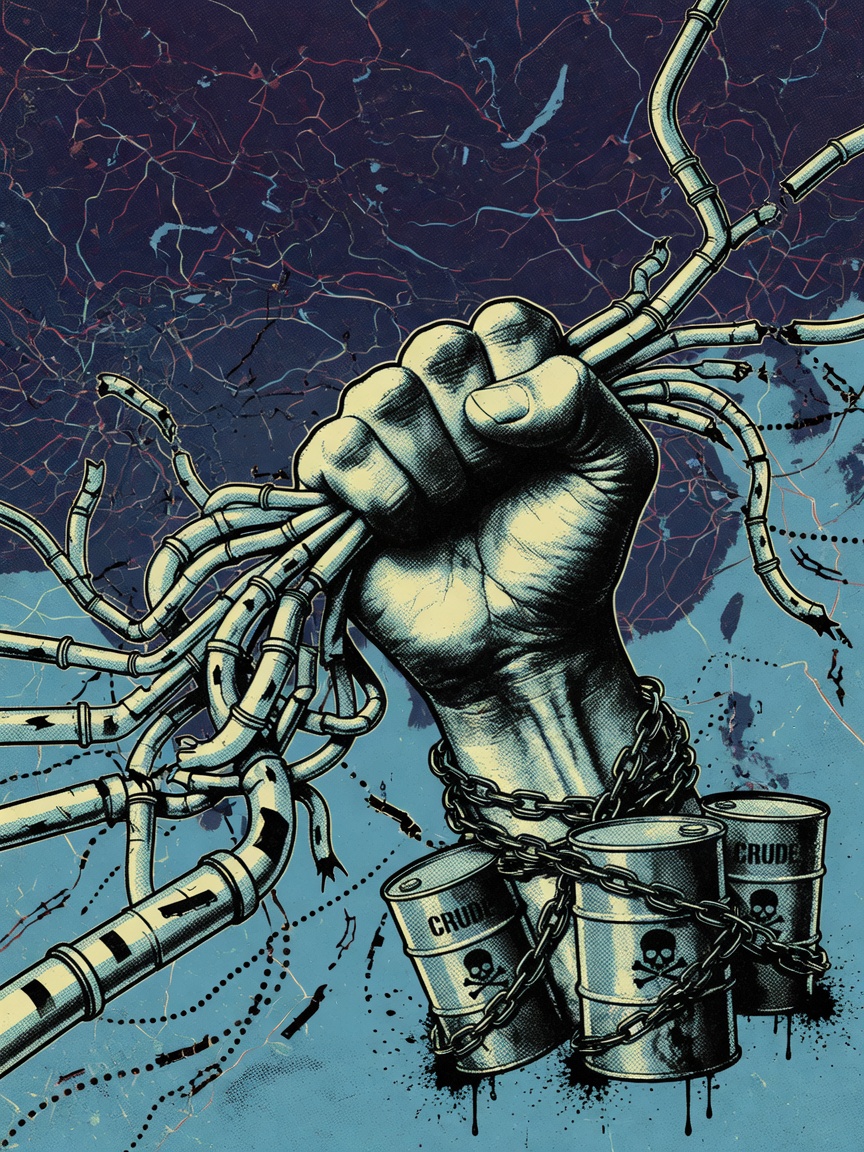
President Donald Trump declared what he called “economic D-Day” against Iran on Wednesday evening, threatening severe penalties against any country that does business with Tehran after a 60-day ceasefire expired without a diplomatic breakthrough. Treasury Secretary Scott Bessent said the plan to crush Iran’s economy will likely negate the need for major American military operations. The campaign extends a pressure effort that began in April.
The war began at the end of February, when American and Israeli forces launched military action against Iran. Trump had initially hoped the campaign would overthrow the regime in Tehran or force its surrender. That did not happen. A 60-day ceasefire formally expired on Monday with no sign of a diplomatic settlement, clearing the way for the new economic campaign.
Trump wrote in all capital letters on Truth Social that he was launching “the most crushing economic operation ever taken against any country.” No nation other than Iran was named. He warned that any country allowing its financial institutions, businesses, airports, or government entities to provide a lifeline to Iran would face “TREMENDOUS Economic Consequences.” His post listed oil smuggling, swap lines, cash transfers, exchange houses, ship registries, and front companies as activities that must stop. Specific punishments were not outlined.
Bessent draws a line
Bessent told CNBC in an exclusive interview on Thursday that maximum economic pressure would reduce the need for military action. “If we are doing the maximum economic pressure, then that means that likely there will not be a large-scale kinetic restart,” he said on “Squawk on the Street.” Bessent vowed that Washington would create “the greatest coordinated economic isolation in the history of the world” against Iran. He promised details on Monday. The Treasury secretary previewed a blunt message to allies: “You are either with us or against us.”
Bessent said the economic pressure would work alongside an ongoing American naval blockade of Iranian ports in the Gulf of Oman. “It is a one-two punch,” he said. “We have the blockade, and we are going to have the toughest sanctions in history,” Bessent said. “We are going to collapse this regime,” he added. Oil prices rose. Trump has claimed Iran is “on the ropes” and “hanging by a thread,” and Iran’s GDP is believed to have contracted while inflation has ballooned to historic highs, though some experts caution against assuming imminent collapse.
Allies and adversaries respond
The United Arab Emirates, an American ally, announced on Wednesday it would sever all financial and economic ties with Iran. The UAE’s defence ministry said it detected two ballistic missiles launched from Iran targeting maritime traffic, both of which landed in the sea. Iran denied the claims. Iranian entities have long used Dubai’s financial system to transfer money through exchange houses and shell companies. Iran’s armed forces warned neighboring Gulf states that any assistance to American forces would be considered collusion.
Iranian Foreign Minister Abbas Araghchi dismissed Trump’s threats as “a diversion” from America’s own economic problems. Araghchi wrote on X that doubling down on failed policies would only bring further defeat and enmity of Iranians. Iran’s state media also brushed off the announcement. The IRIB broadcaster said Trump’s comments followed “the failure of military aggression,” while the semi-official Tasnim news agency called the announcement “not a new development,” noting that Tehran has learned to circumvent restrictions.
China, though not named in Trump’s post, is the biggest buyer of Iranian oil. The Treasury has sanctioned several privately owned oil refineries in Shandong province, but China’s Ministry of Commerce said the sanctions violate international law and ordered that they not be recognized, enforced, or complied with. Frederic Schneider, a nonresident senior fellow at the Middle East Council on Global Affairs, told Al Jazeera that Washington has deployed 14 sanctions packages and a 25 percent tariff on any country doing business with Tehran. “Sanctions do raise the cost of trading with Iran, but they cannot end it,” Schneider told Al Jazeera. Schneider noted that Turkiye has maintained since 2018 that it will not join American sanctions against Iran, and that China barred its own firms from complying with U.S. sanctions in May.
Iran’s oil exports fell to below 300,000 barrels per day in May, the lowest level in at least six years, down from roughly 1.3 million to 1.5 million barrels per day before the war. The Treasury reimposed sanctions on Iranian oil on Tuesday, ending a 60-day waiver that had allowed Tehran to sell crude oil as part of a June memorandum of understanding between the two countries. Iran’s Central Bank Governor Abdolnaser Hemmati said exports had fallen but that authorities had prepared for revenue losses. Non-oil exports between March 21 and August 16 reached nearly $15 billion, while imports stood at $17 billion, with trade declining 24 percent from a year ago.
The Strait of Hormuz, through which about 20 percent of the world’s crude oil and liquefied natural gas usually flows, remains highly disrupted. Iran has been able to stem the flow of marine traffic through the strait since the war began, raising energy prices globally. Trump is facing pressure over the cost of the war ahead of the American midterm elections in November. American and Omani officials have been negotiating separately with Tehran to reopen the strait. Trump reportedly threatened to bomb Oman, an American ally, if it “gets in the way” of his administration’s talks with Iran.
Sources & methods
- BBC reporting on Trump's Truth Social post, the expired ceasefire, UAE severing ties with Iran, China's response to sanctions, Araghchi's remarks, and Operation Economic Fury. Archived Aug 20, 2026
- CNBC exclusive interview with Treasury Secretary Scott Bessent on 'Squawk on the Street,' covering the economic pressure plan, the naval blockade, oil prices, and Iran's economic conditions. Archived Aug 20, 2026
- Al Jazeera reporting on Iran's trade data, oil export figures, analyst commentary from Frederic Schneider, Iranian state media responses, the UAE trade embargo, and sanctions waiver details. Archived Aug 20, 2026
This article was compiled from Trump’s Truth Social statements, CNBC’s interview with Treasury Secretary Scott Bessent, and corroborating reporting from BBC, CNBC, and Al Jazeera. All direct quotes are drawn verbatim from the source texts.