Two US service members killed and one missing after Iranian strike in Jordan
The deaths raise the US toll to 16 as both sides trade strikes across the Middle East following the collapse of a June ceasefire agreement.
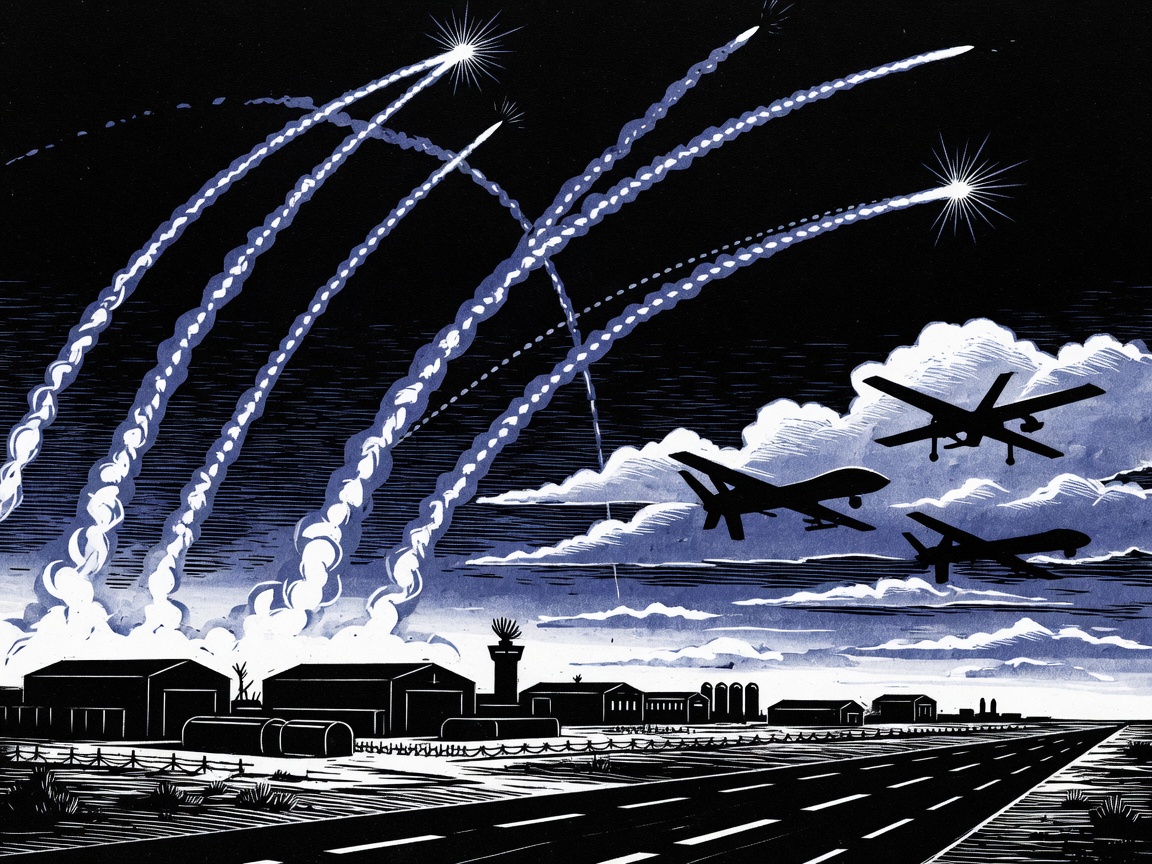
Two American service members were killed in Jordan on Friday and one remains missing after Iranian ballistic missile and drone attacks, US Central Command confirmed on Saturday, as Washington and Tehran traded strikes across the Middle East.
In a statement shared on Saturday, US Central Command, which oversees American military operations in the Middle East, said four service members were medically evacuated to Jordanian hospitals. They have since been discharged. Others returned to duty. US military officials did not disclose the identities of those killed, nor did they provide details about the circumstances of the incident or where in Jordan the attack took place. The command said the attack occurred on July 17.
The statement appears to be the first US confirmation of casualties resulting from renewed Iranian strikes on American forces. The attacks followed the breakdown of a memorandum of understanding that had temporarily paused fighting between the US and Israel on one side and Iran on the other.
The US death toll in the conflict has now risen to 16. An American Navy pilot who went missing earlier this month was declared dead, marking the second increase in the toll this week.
“Out of respect for the families, CENTCOM will withhold additional information, including the identities of the fallen warriors, until 24 hours after the next of kin have been notified,” the command said. Responding to the announcement of the deaths, US Defence Secretary Pete Hegseth wrote on X: “Godspeed, heroes. Their sacrifice only stiffens our resolve.”
Strikes and blockades intensify
Hostilities between the US and Iran have re-escalated over the past week. The US reimposed a blockade on Iranian ports. Tehran declared the Strait of Hormuz closed. The US has now carried out the seventh consecutive night of strikes on Iran since President Donald Trump declared the temporary ceasefire agreement “over,” according to the military.
At least 50 people have been killed and more than 500 injured in US strikes over the past three weeks, Iranian state media reported, citing the country’s health ministry. The US has struck Iranian civilian infrastructure, including bridges and desalination plants. Iranian forces have also reportedly struck energy infrastructure and desalination facilities, a key source of water, in Gulf states that host US military forces. The damage to civilian infrastructure has drawn condemnation from the Gulf Cooperation Council.
Legal experts have said such attacks by both sides violate international law. The head of the Gulf Cooperation Council slammed recent Iranian attacks on Jordan, Kuwait, and Bahrain as a “war crime” and “highly dangerous escalation,” saying that the strikes included the targeting of civilian infrastructure. Neither side appears interested in stepping back.
Observers have watched escalating attacks between Iranian and US forces with growing alarm, warning that people across the region would suffer from a return to full-scale war. Thousands more have been killed across the Middle East since the US-Israeli war with Iran began on 28 February, official figures show.
A ceasefire unravels
Washington and Tehran struck a preliminary deal to end the war in June, but the agreement unraveled within weeks of its signing. Late on Saturday in Iran, Supreme Leader Mojtaba Khamenei said in a written statement that America’s “repeated breaches” of the agreement had “laid bare a fundamental truth: the signature of the US president is utterly worthless and devoid of credibility.” Khamenei has not been seen in public since the attack which killed his father at the start of the war.
Jordan’s military earlier said it had intercepted 10 Iranian missiles fired into its airspace overnight, without reporting any damage. The Islamic Revolutionary Guard Corps said it had destroyed at least two US fighter aircraft early on Saturday on Al-Azraq base in Jordan, according to Iranian state media. The BBC contacted CENTCOM regarding this report, but it declined to add further details.
Sources & methods
- BBC News report on two US troops killed and one missing after Iranian attack in Jordan, including CENTCOM statements, casualty figures, and details on the broader US-Iran conflict escalation. Archived Jul 18, 2026
- Al Jazeera report on the same CENTCOM statement, the breakdown of the memorandum of understanding, US and Iranian strikes on civilian infrastructure, GCC condemnation, and legal expert assessments. Archived Jul 18, 2026
This article was compiled from CENTCOM statements and reporting by BBC and Al Jazeera, with casualty figures attributed to Iranian state media and the country’s health ministry.