Zelensky fires defense minister Fedorov, triggering protests across Ukrainian cities
The surprise dismissal of a popular reformer has drawn backlash from soldiers, civil society, and prominent military figures, with crowds in Kyiv demanding Fedorov’s return.
Ukrainian President Volodymyr Zelensky has dismissed Defense Minister Mykhailo Fedorov in a surprise shake-up, setting off protests and drawing sharp criticism from soldiers and military figures who saw him as a driving force behind the country’s drone warfare.
Fedorov confirmed his dismissal on Wednesday in a social media post, calling it a “great honor to serve the Ukrainian people.” He listed his team’s achievements during his six months in office. These included the shutdown of Starlink systems for Russian forces, the isolation of occupied Crimea, and what he called “an unpopular but extremely important transformation of the army.” In a Facebook post shortly after his dismissal, Fedorov said he would “continue... to defeat the enemy through asymmetry, speed of innovation, and organisational strength.”
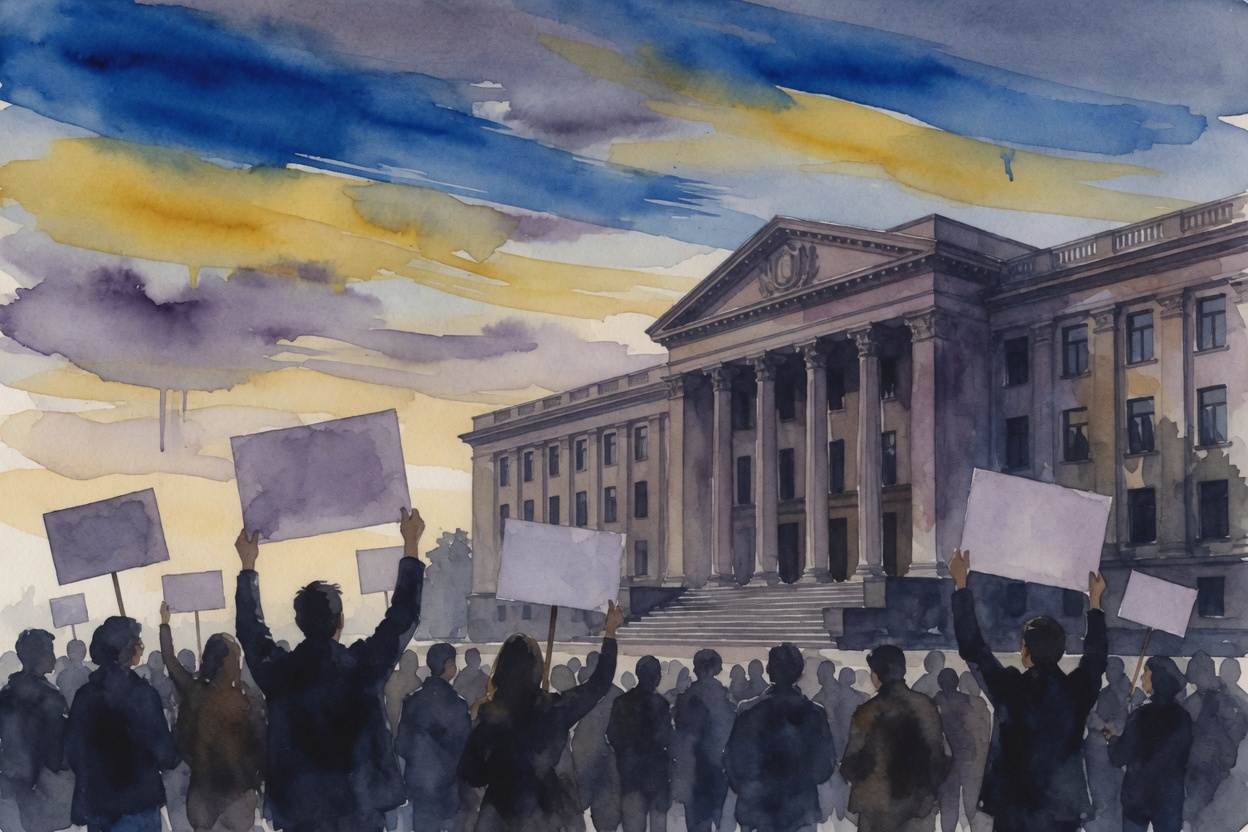
By Thursday, more than a thousand people had gathered in Kyiv’s central square, waving Ukrainian and European Union flags and chanting “shame” and “bring Fedorov back,” according to CNBC, which could not independently verify the report. In Ivan Franko square, a mostly young crowd held signs reading “Hands off Fedorov” and “Stop sabotaging victory!” and chanted “Shame!” the BBC reported.
Zelensky has not explained his decision. The silence is fueling anger. Some in Ukraine have linked the dismissal to tensions between Fedorov and Commander-in-Chief Oleksandr Syrskyi, who is described as more conventionally minded, while others pointed to Fedorov’s failure to move swiftly enough on overhauling mobilization. MPs were due to vote on the proposed replacement, Ihor Klymenko, who currently heads the interior ministry.
The backlash from the military was immediate. Pavlo Yelizarov, a renowned drone unit commander, resigned from his position as deputy commander of the Ukrainian Air Force in protest at Fedorov’s sacking, calling the move “a great evil for the country’s defence capability.” A soldier identified as Oleksandr, who signed up earlier this year because he trusted Fedorov’s team and vision, told the BBC: “This is the worst mistake Zelensky has made during his entire presidency.” He said he did not know anyone who supported the replacement. “Not within the army, not in society,” he said.
A reformer cut short
Fedorov was appointed only in January. Before that, he served as minister of digital transformation, a role in which he was active from the early days of Russia’s full-scale invasion in 2022, setting up a volunteer “IT Army of Ukraine” to launch cyber-attacks against Russians. He later led a fundraising campaign called the Army of Drones and introduced “gamification” to the war, designing a system that awarded Ukrainian military units with credits for hitting Russian assets.
His focus on drones, high-tech warfare, and procurement continued after he became defense minister. In the early days of his tenure, he asked SpaceX founder Elon Musk to stop Russia from using Starlink satellites for drone attacks, a move that caused considerable disruption to Russia’s frontline operations and advance. His ministry also played a significant part in Ukraine’s recent attacks on the Moscow-occupied Crimean peninsula, which last month Fedorov vowed to “cut off” from Russia entirely through mid-range drone strikes.
Prominent blogger Serhii Sternenko, whom Fedorov brought in as an adviser, called his former boss “the best minister of defence in our entire history” and criticized the “bureaucratic obstacles and artificial delays” he said had stood in the way of deeper reform. Maria Lavrynets, 31, protested at Ivan Franko square. “I have lots of friends in the military. Lots of them died. I don’t want this to go on,” she told the BBC. “We see [Fedorov’s] results. We see the motivation of the soldiers, we should stand for them.”
A broader reshuffle
The dismissal came amid a wider government overhaul. Ukraine’s parliament accepted the resignation of Prime Minister Yulia Svyrydenko after just a year in office. Serhiy Koretsky, the current CEO of Ukraine’s state-owned energy company Naftogaz, has been nominated as the country’s next prime minister, parliament speaker Ruslan Stefanchuk announced via Facebook. Zelensky had previously described preparing for winter and bolstering efforts to secure a ceasefire as immediate government priorities.
On Sunday, Zelensky announced that “Ukraine is changing its political strategy.” He said each priority area of foreign policy would be assigned to a specific person “with substantial experience who is capable of implementing what we agree on at the leaders’ level and what the Ukrainian people expect.” The shake-up marks Ukraine’s fourth government reshuffle since Russia launched its full-scale invasion in February 2022.
Dmytro Koziatynskyi, a war veteran who helped lead nationwide protests last summer, called for people to gather at Franko Square on Thursday morning. “It’s no longer possible to tolerate what’s happening with our government,” he said on X, according to a translation. He urged people to show the president that they oppose “constant reshuffles in the government and replacing effective ministers with convenient opportunists.” Daria Kaleniuk, executive director of the Anti-Corruption Action Center in Kyiv, said she planned to join the protest, according to The Kyiv Independent.
Sources & methods
- BBC reporting on protests against Zelensky's dismissal of Defense Minister Fedorov, including on-the-ground interviews with soldiers and protesters, Fedorov's background, and military resignations. Archived Jul 16, 2026
- CNBC reporting on the protests in Kyiv, Fedorov's social media confirmation, the broader government reshuffle including the prime minister's resignation, and Zelensky's announcement of a changed political strategy. Archived Jul 16, 2026
This article was compiled from BBC and CNBC reporting on the dismissal of Ukrainian Defense Minister Mykhailo Fedorov and the subsequent protests, with direct quotes drawn from both outlets’ interviews, social media posts, and on-the-scene coverage.