Anthropic files for IPO with soaring revenue, staggering losses, and warnings of catastrophic risk
The maker of Claude reported explosive revenue growth alongside mounting losses as it prepares for what could be the largest public offering in history.
Anthropic filed its S-1 with the SEC on Monday, setting the stage for what could be the largest initial public offering in history and a crucial test of the AI industry’s financial viability. The company plans to list on the Nasdaq under the ticker ANT.
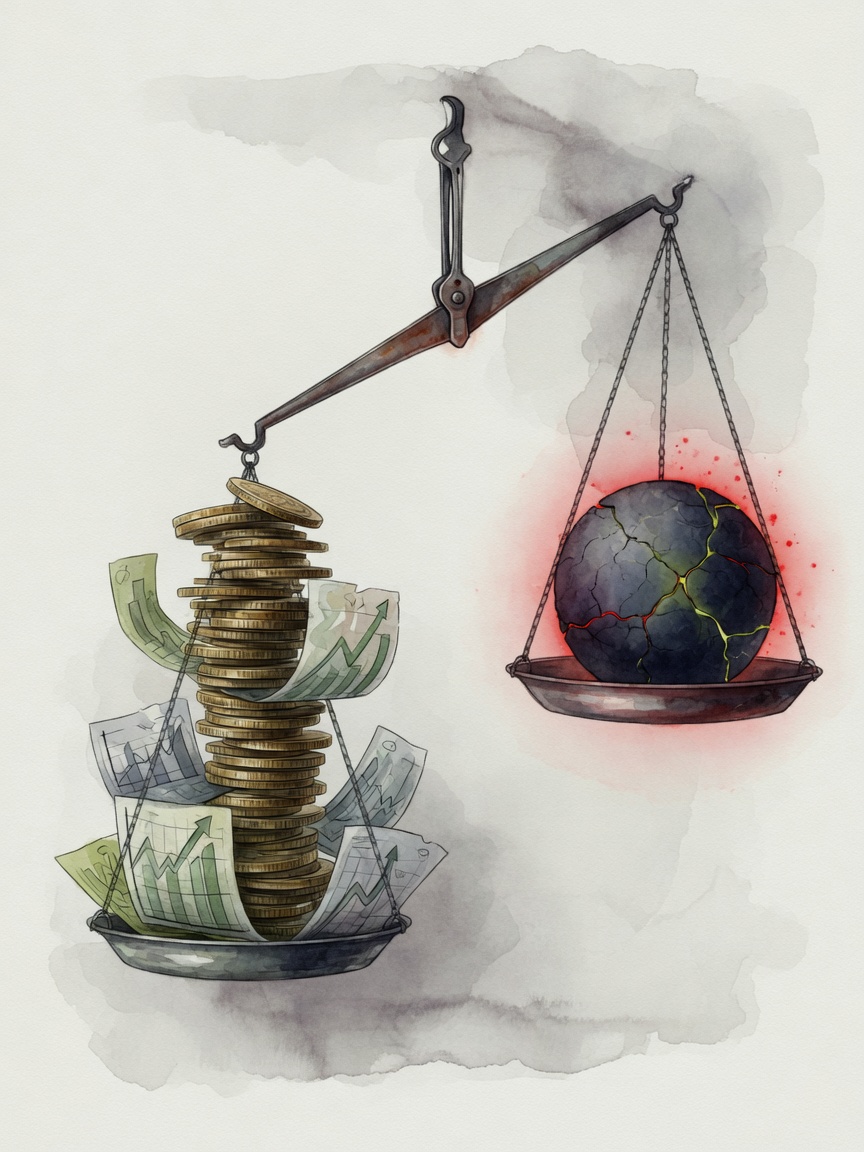
The filing shows revenue of approximately $16.3 billion for the first half of 2026, up from $1.2 billion in the same period last year. The company, which announced its intention to go public in June, also disclosed a net loss of approximately $80.7 billion, largely driven by noncash accounting adjustments tied to convertible debt. The operating loss was $693 million, an improvement from $2.1 billion in operating losses during the first half of 2025. The company’s flagship product, the Claude chatbot, offers text generation alongside advanced coding and cybersecurity capabilities.
Revenue was $41 million in 2023, $386 million in 2024, and $4.585 billion in 2025, an increase of more than 1,000%. The company will be the first fully AI-focused company to go public, making its debut a test case for the broader AI boom. Analysts and investors have valued the San Francisco-based company at more than $1.5 trillion. Its valuation is expected to exceed that of SpaceX, which was the biggest-ever listing at an initial valuation of approximately $1.8 trillion. As of the end of June, Anthropic had raised $141.1 billion in total capital. The company has also incurred $6.2 billion in debt as it built out its infrastructure, spending billions yearly on computing power provided by third parties.
Roughly 90 pages of risk factors
The filing warns that advanced AI could pose catastrophic or existential risks to humanity. The prospectus states that such systems “could, if not developed, deployed, and operated with appropriate safeguards, oversight, and security measures, pose catastrophic or existential risks to humanity, particularly if such systems were misused, replicated, weaponised, or allowed to operate with a high degree of autonomy.” The risks fill roughly 90 pages. Anthropic identified four categories of risk: misuse by bad actors, loss of control, authoritarian abuse, and economic disruption. The company said its most capable models have capabilities that could assist malicious actors seeking to develop chemical, biological, or other dangerous weapons. According to The Guardian, Anthropic disclosed in the filing that in September 2025 it detected what it believes was the first large-scale cyber-attack conducted without significant human intervention, attributing it to a Chinese state-sponsored group that manipulated its Claude Code tool to attempt infiltration into roughly 30 global targets. The Guardian separately reported that the Trump administration designated Anthropic a supply chain risk, a first for an American company, preventing any military agency from contracting with the firm, and that Anthropic has challenged the blacklisting.
Anthropic said it “may not achieve or sustain profitability in the future.” The company warned of regulatory action arising from harms associated with its AI models, citing concerns over AI being used by children or individuals at risk of suicide. The risks extend beyond technology. The owners of the rights to Elvis Presley’s music sued Anthropic, accusing it of using hundreds of Presley’s songs to train Claude. The filing also warned that the company relies on a cluster of cloud computing providers, Taiwanese chipmakers facing huge demand, and data centres concentrated in the US.
Enterprise focus and founder control
Anthropic has focused on businesses as its primary paying customers, unlike OpenAI, which has courted everyday consumers for ChatGPT. As of the end of September, the company had more than 11,900 customers spending $100,000 or more annually, about 1,900 customers spending $1 million or more, and about 250 customers spending $10 million or more. A quarter of revenue comes from the top five customers, though no single customer represents more than 10% of the business.
The company’s governance structure will enable its seven co-founders to maintain control after the IPO. Dario Amodei, Daniela Amodei, Tom Brown, Jack Clark, Jared Kaplan, Sam McCandlish, and Christopher Olah will make up a Founder LLC collectively controlling 50.1% of shareholder voting power, a move the company says is designed to preserve its AI safety mission. The Long-Term Benefit Trust, established in 2023, will have authority to appoint most of the board. Voting power is not proportional to economic ownership, meaning public shareholders will have little practical control over a company building technology that, by its own admission, could pose existential risks. Dario Amodei is CEO and founded the company in 2021 after quitting OpenAI.
Anthropic has not disclosed the number of shares, the price range, or the exact date for the listing. The timing remains uncertain. The Wall Street Journal reports the company is aiming to start trading the week of Nov. 16. On Kalshi, traders place 95% odds that Anthropic officially announces an IPO by the end of 2026, but just a 14% chance that trading begins before the week of Nov. 16. On Polymarket, traders give a 69% chance that Anthropic will list and open for trading by Nov. 20. OpenAI’s listing is expected early next year.
Sources & methods
- BBC News, published Oct. 26, 2026 Archived Oct 26, 2026
- The Guardian, published Oct. 26, 2026 Archived Oct 26, 2026
- TechCrunch, published Oct. 26, 2026 Archived Oct 26, 2026
- CNBC, published Oct. 26, 2026 Archived Oct 26, 2026
Reported from Anthropic’s S-1 filing with the SEC, corroborated across four news outlets. Financial figures, risk disclosures, governance details, and prediction-market data drawn from the filing and contemporaneous reporting.