Barclays announces major job cuts as AI-driven efficiency reshapes the bank
The reductions accompany a quarter in which pre-tax profit rose 12% year on year, even as group income missed analyst expectations.
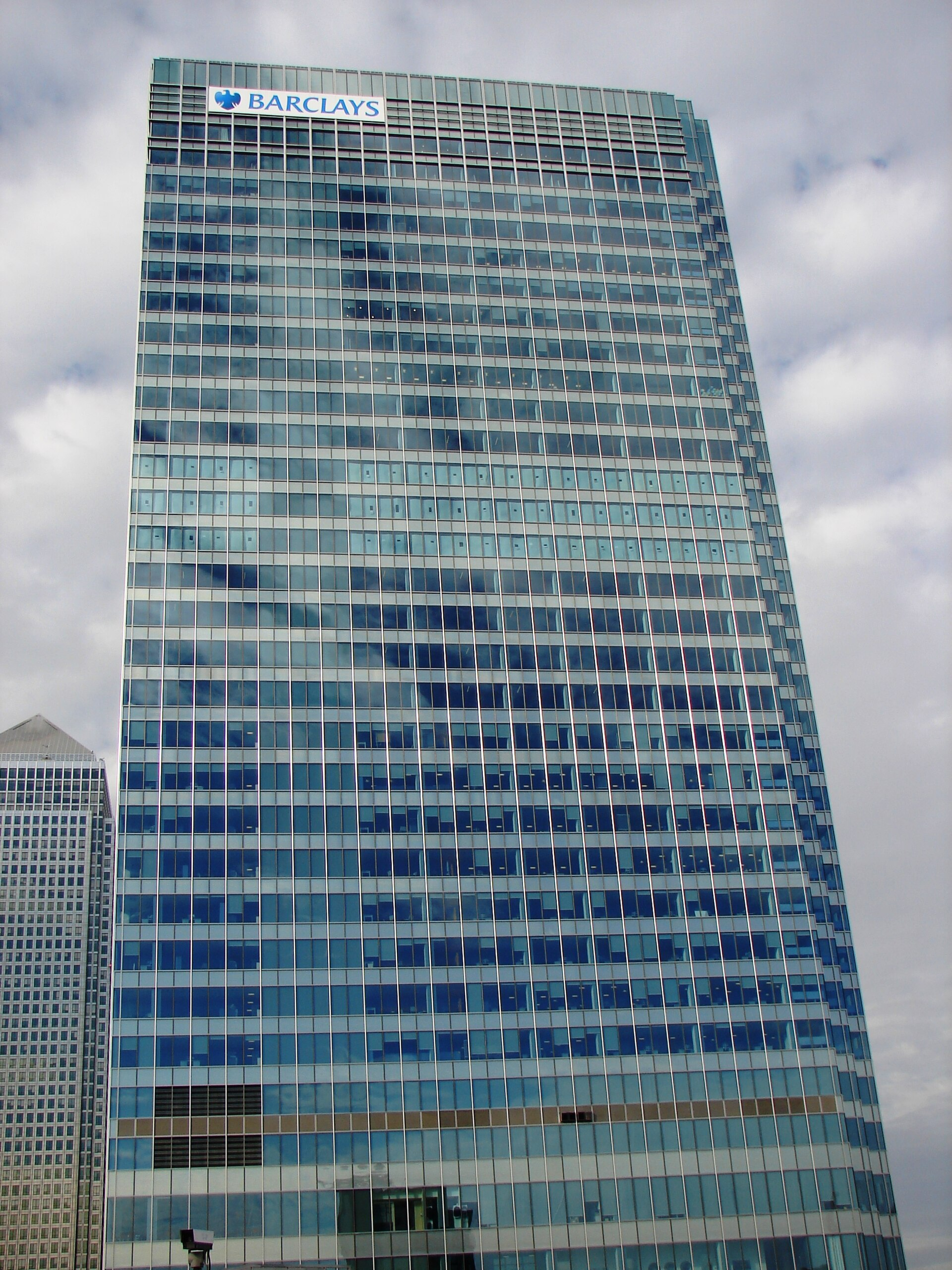
Barclays is cutting 5,000 jobs, approximately 5% of its global workforce, as the British lender cites AI-driven efficiency and sustained technology investment as the primary drivers behind the reductions announced alongside its latest quarterly results.
The bank reported £2.3bn in pre-tax profit for the latest quarter, up 12% year on year. 1,000 cuts have already been implemented. A further 4,000 are expected to be complete by the end of 2026. About 60% of the cuts relate to support functions across the organisation. Barclays employs approximately 93,000 global staff, meaning the reductions will touch roughly one in 20 of its workers worldwide.
AI driving efficiency gains
Chief executive CS Venkatakrishnan told reporters that years of technology investment underpin the restructuring. ‘That is driving the bulk of the efficiency gains that you’ve seen so far. AI has an important role to play and may have a more important role to play in the future,’ he said. He described AI as ‘icing on the cake’ to modernising the bank’s technology, adding: ‘We have been focusing on the infrastructure build, and where the infrastructure is modern, we’ve been applying AI.’ The cuts were ‘a result of the investments which we’ve made into technology over a number of years and which we continue to make,’ he said. Barclays’ earnings statement described the approach as ‘structurally reducing the cost base to generate capacity for investment,’ while the accompanying presentation noted an outcome of ‘organisational simplification and technology change efficiency driven by AI.’ The cuts form part of plans to save more than £1.1bn in 2027. Barclays is reaching the end of a three-year cost-cutting programme focused primarily on its UK retail banking arm, though the investment banking division has also been affected. A Barclays spokesperson said the bank was ‘positioning Barclays for the future, building the workforce and skills needed to deliver our strategy and meet the evolving needs of our customers and clients.’
Profit rises but income misses estimates
Group income for the period totalled £7.4bn, falling short of analysts’ estimates of £7.61bn. Net interest income was broadly unchanged at £3.91bn. The bank’s CET1 capital ratio, a measure of financial solvency, edged down to 14.2% from 14.3% at the end of the second quarter, while return on tangible equity fell to 11.7% from 16.1%. Venkatakrishnan said the cost to income ratio improved from 63% to 62% in the last three months. Barclays also said it is handing a further £500m back to shareholders.
Investment bank delivers mixed picture
In the investment bank, which accounts for 42% of group revenues, equity income rose by 47% during the period, according to the Guardian. Fixed Income, Currencies and Commodities income was 19% lower. The overall gain was 4%.
Sector pressure and share price
The announcement comes months after Standard Chartered said it would cut more than 7,000 jobs over four years, slashing around 15% of its back-office roles by 2030 as it ramped up its use of AI. Barclays shares were almost 1% lower by 8:50 a.m. in London on announcement day, and have fallen about 20% over the last three months, according to the Guardian. The Guardian also reported that the Bank of England was examining whether Barclays traders had misrepresented illiquid private credit loans by using derivatives, per reports on Monday. Richard Hunter of interactive investor said the sector faces an ‘additional hurdle’ in the imminent budget. ‘One market estimate suggests that the bank surcharge will be returned to 8% from the current 3% which in turn would reduce earnings by a possible 6%, although whatever the outcome some of the uncertainty which has been overhanging the banks would be removed,’ Hunter said. He described the quarterly update as a ‘mixed bag which is unlikely to blow away the clouds which have been hovering over the sector.’ Hunter added that concerns have ‘blemished the investor confidence which was clearly in evidence at the interim results,’ though he said the longer-term picture for the bank remains solid. The shares have posted a gain of 15% over the last year, compared to 13% for the wider FTSE100, and are ahead by 74% over the last two years, the Guardian reported.
Sources & methods
- BBC News, reporting on Barclays job cuts and AI investment Archived Oct 22, 2026
- CNBC, covering Barclays third-quarter earnings and AI-linked efficiency push Archived Oct 22, 2026
- The Guardian, live business blog on Barclays results, share price, and sector context Archived Oct 22, 2026
This article draws on reporting from BBC News, CNBC, and The Guardian, with figures cross-referenced across all three sources where available and discrepancies resolved per the editor’s guidance.