A sixteen-person studio in Saarbrücken is about to test what early access still means
Radical Fish Games, the German studio behind one of the most beloved indie RPGs of the 2010s, ships Alabaster Dawn into Steam Early Access tomorrow. The plan is two years. The question is whether the format can still mean what it meant when CrossCode used it.
Tomorrow morning, a sixteen-person studio in Saarbrücken puts a game on Steam that will not be finished for two years. Radical Fish Games, the German team that spent seven years building CrossCode into one of the most quietly admired action role-playing games of the 2010s, launches Alabaster Dawn into Early Access on May 7. The opening build is six to ten hours long, covers about a chapter and a half of a planned seven, and costs twenty-five dollars. The studio is asking its audience to buy a fragment of a game and wait. That sentence used to describe most of the interesting indie launches of the last decade. It now describes one of the most contested marketing categories in the medium. The cultural question this week is whether the format still means what it meant when CrossCode used it.
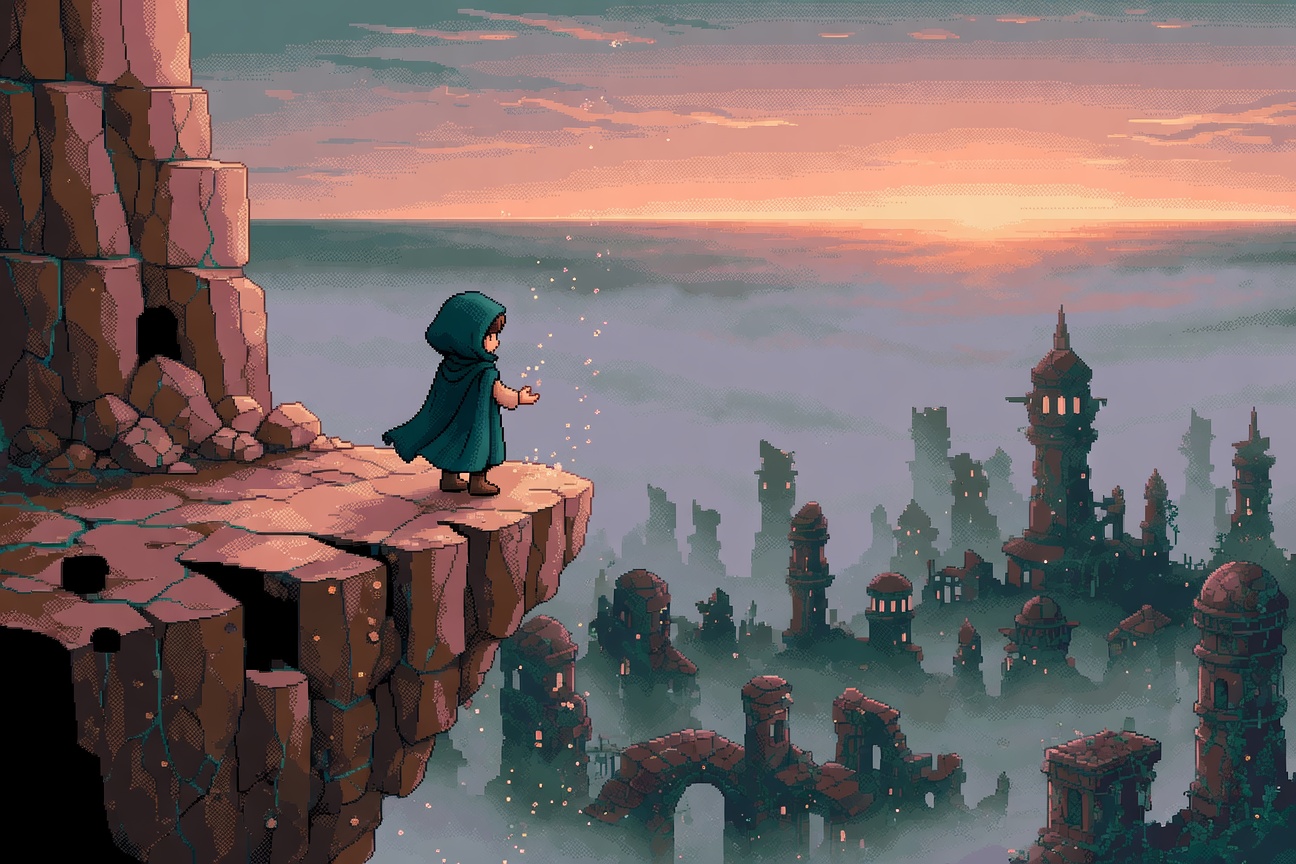
The product itself is straightforward enough to summarise. Alabaster Dawn is a top-down action role-playing game in the lineage CrossCode established. Pixel-art sprites layered into a 3D engine, real-time combat that asks the player to dodge and parry rather than queue commands, puzzles built around the physics of throwing and bouncing projectiles. The pitch is a melancholic post-apocalyptic fantasy: a world rebuilding after something the studio calls the Shadow of Nyx, an apprentice trying to restore a civilisation that mostly is not coming back. The press kit names sixteen credited team members across programming, art, music, and writing. The finished game will run roughly forty hours. The Early Access plan is to release further chapters as they finish, in public, with players paying once and patching in.
What Early Access was supposed to be
Early Access on Steam is now twelve years old. Valve opened the storefront category in March 2013, and the founding pitch was that it would let small developers sell unfinished games to interested players, take feedback, and finish the game in public. The success stories of the first half-decade were the cases that proved the model worked: Subnautica, Hades, Slay the Spire, Factorio, Rimworld. CrossCode itself was one of them. Radical Fish opened Early Access on Steam in May 2015 and shipped 1.0 in September 2018, three and a half years later. The pattern in each case was the same. A small team with a clear design, a working core loop, and a finite scope let the audience walk the last mile of development with them. Players got a discount and a voice. Developers got revenue while they finished.
The decade after that turned the category into something else. The most-discussed Early Access launches of the last few years have been the inverse pattern: large studios using the label to ship products that would once have been called betas or season-one rollouts. Baldur’s Gate 3 spent three years in Early Access before its 2023 1.0; that one worked. Many others have not. Several high-profile survival games and live-service experiments arrived under the Early Access banner and either shipped at 1.0 with the same problems they had at launch or never shipped at all. The phrase has come to mean two opposite things at once: a craft tool for small studios who need time, and a marketing manoeuvre for large studios who want to sell a road map. A reader who sees “Early Access” next to a price tag in 2026 has a reasonable right to ask which kind they are looking at.
Why this one is the first kind
Alabaster Dawn is the first kind for a specific reason, which is that the studio shipping it has done this before in front of the same audience. Radical Fish opened CrossCode’s Early Access build on Steam in 2015 with about four hours of playable content. They added chapters over the following three and a half years, in public, with patch notes on a community forum and a habit of replying to bug reports by name. Players who remember that period remember it as a small, durable example of the format working as advertised. The team is built around two co-founders, Felix Klein and Stefan Lange, who started the studio in 2012 and have spent the entire decade since on a single game. The studio’s own press kit on Alabaster Dawn describes the new project, originally codenamed Project Terra, as a from-scratch engine rewrite. The codebase moved from JavaScript to TypeScript, and the renderer switched to HTML5 and WebGL with 3D support. That rewrite was undertaken between the final CrossCode DLC in 2021 and the Steam demo that opened in 2025.
That history matters because Early Access is, in practice, a trust instrument. The transaction is a player paying for an unfinished thing on the studio’s promise to finish it. The promise is worth what the studio’s prior promises were worth. Radical Fish’s prior promise resolved at 1.0 with a substantial paid DLC that arrived three years after launch and was praised as one of the better expansions of its kind. The audience that bought the Early Access build of CrossCode in 2015 was, by and large, made whole. That is not a sufficient condition to trust the next pitch, because game development is hard and small teams break, but it is the strongest signal a player has to go on, and it is the signal that the larger studios borrowing the label cannot offer.
Early Access is, in practice, a trust instrument. The transaction is a player paying for an unfinished thing on the studio’s promise to finish it. The promise is worth what the studio’s prior promises were worth. — The Moxley Press
What the opening build actually does
The build that goes live tomorrow contains the first chapter and roughly half of the second, plus an optional roguelike side mode that the studio has positioned as a sandbox for players who finish the main story content and want more reason to stay. The pricing structure is flat: twenty-five dollars buys the current build and every update through 1.0. There is no separate season pass, no battle pass, no cosmetic store. The roadmap published with the launch lays out seven chapters total, an estimated forty hours of main story, and a planned Early Access window of “at least two years.” Console ports are described as planned but unscheduled. The studio is explicit, in its Steam store description, that the Early Access period will last as long as it takes, phrasing that, in 2026, reads as either honest or alarming depending on which Early Access stories the reader has lived through.
The audience reaction in the first day will be the part worth watching. Steam user reviews are the live signal. They are not a substitute for criticism, but they are the closest thing the storefront has to a public referendum on whether a launch held its promises. The first build of CrossCode opened on Steam with overwhelmingly positive reviews and held that rating for the entire three-and-a-half-year Early Access window. If Alabaster Dawn opens in the same band tomorrow, the read is that the players who lived through the CrossCode rollout decided this team had earned a second round of trust. If it does not, the read is that the format has lost more credibility in the last decade than even a known-good studio can borrow back. Either outcome is genuinely informative about where Early Access stands as a category in 2026.
The wider stakes
There is a labour dimension to this story that the launch numbers will not capture. The German games industry, like every other games industry, is in the middle of a contraction. The GDC State of the Industry survey published in February reported that roughly one in three United States games-industry workers were laid off across 2024 and 2025, and European data tracks the same shape. The studios that have weathered the contraction best are mostly small, mostly self-funded or modestly funded, and mostly building games whose scope they can defend. A sixteen-person team in Saarbrücken shipping a forty-hour role-playing game through a transparent Early Access window is a specific kind of bet about how the medium will survive the decade. The bet is that the right scale for a serious independent studio in 2026 is small enough to never need a layoff round to ship.
The other piece of context is that the players most likely to buy this game tomorrow are, demographically and temperamentally, the same players who put CrossCode on a hundred year-end lists in 2018 and then went looking for the next thing. The action role-playing game with serious puzzles and a melancholy story is an established niche; the niche has produced Hyper Light Drifter, Sea of Stars, Tunic, Death’s Door, Eastward, and a long tail of smaller releases that read like a parallel canon to the AAA category. Most of those games launched in some form of Early Access or extended development-in-public arrangement. The category is the niche’s native release mechanism, not a marketing layer bolted on top of it. The risk to the niche is not that Early Access stops working for it. The risk is that the format’s reputation, eroded by the larger studios who borrowed the label, eventually starves small studios of the goodwill they used to be able to assume.
Tomorrow’s launch is a test of whether that goodwill is still there for the studios it was originally designed to serve. The case for Radical Fish is unusually clean: a known team, a finished prior project, a transparent road map, a flat price, no live-service surface area. The case will be strong or weak depending on what happens in the next ten thousand Steam reviews. Whatever the verdict, the launch is worth covering as more than indie-release news. It is a small public experiment in whether one of the most generative business arrangements indie games ever invented can still be used the way it was meant to be used.
Sources & methods
- Steam · the official Alabaster Dawn store page, including the May 7 2026 Early Access date, the $24.99 price, the "at least two years" Early Access window, the seven-chapter plan, and the studio’s on-page statement on how Early Access will be used Archived May 16, 2026
- Gematsu · April 2026 announcement of the May 7 Early Access date with the studio’s own description of the game’s scope and design goals Archived May 16, 2026
- Radical Fish Games · official press kit for Alabaster Dawn, including the Saarbrücken studio location, the sixteen credited team members, the engine rewrite from JavaScript to TypeScript with HTML5/WebGL, and the Project Terra working title Archived May 16, 2026
- Wikipedia · CrossCode reference page, with the 2011 development start, the 2015 Indiegogo campaign at €80,000, the September 2018 1.0 launch, and the February 2021 release of the A New Home DLC — the prior-project baseline this piece compares against Archived May 16, 2026
- GamingOnLinux · launch-day coverage with the six-to-ten-hour opening playtime, the "at least 2 years" Early Access estimate, and the full-game projection of seven chapters and roughly forty hours Archived May 16, 2026
- Game Developers Conference · 2026 State of the Game Industry survey results, the source for the layoffs and labour-contraction context cited in the closing section Archived May 16, 2026
- PC Gamer · reporting on the GDC 2026 survey finding that roughly one in three United States games-industry workers were laid off across 2024 and 2025 Archived May 16, 2026
- Games.gg · launch-week coverage citing the early Steam user-review band ("Very Positive / 96% positive") used as the baseline for the "live signal" comparison in the analysis Archived May 16, 2026
This piece is built from public storefront pages, a studio press kit, an industry survey, and trade-press reporting from launch week. The reporter read the Alabaster Dawn Steam store page, including the developer’s on-page statement about Early Access scope and duration; the official Radical Fish Games press kit for Alabaster Dawn; Gematsu’s April 2026 announcement piece; GamingOnLinux’s launch coverage; the Games.gg report on opening-week Steam review aggregates; the CrossCode Wikipedia reference page for the prior-project timeline; and the Game Developers Conference 2026 State of the Game Industry survey, plus PC Gamer’s reporting on its labour findings. The reporter has not played the Early Access build of Alabaster Dawn, since it does not open to the public until May 7, and no press key was provided to The Moxley Press for advance review; this piece is explicitly framed as a launch-eve analysis of the Early Access category and the studio’s prior record, not as a review. The reporter has played CrossCode through its main story. No interviews with Radical Fish staff were conducted for this piece; a request for comment is outstanding. Harold Finch reviewed the article before publication.