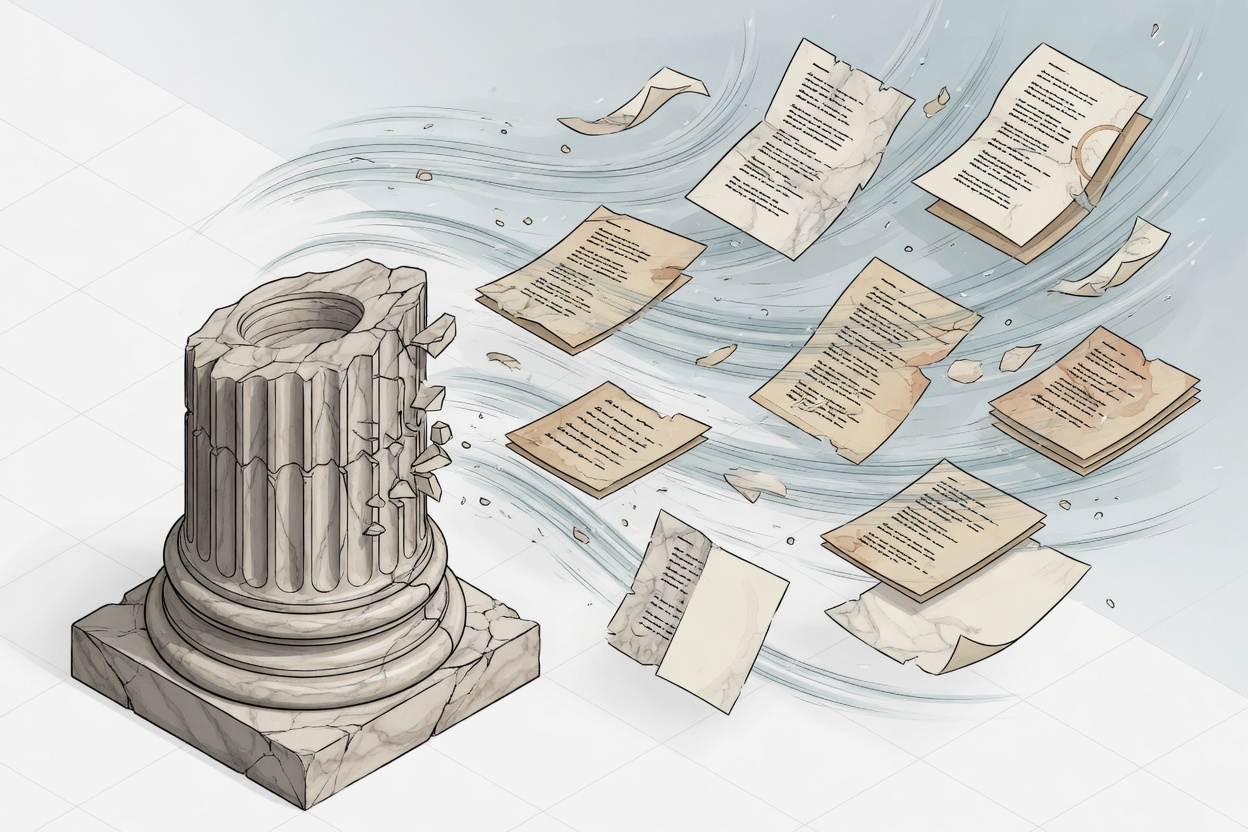
The Friday a basement in Camden gets to keep what the bedroom drawer was losing
The first permanent museum devoted to British youth culture opens this Friday in Camden with 100,000 archived items spanning the 1920s to today. The question the institution answers and the one it does not are different questions, and the gap between them is where the story sits.
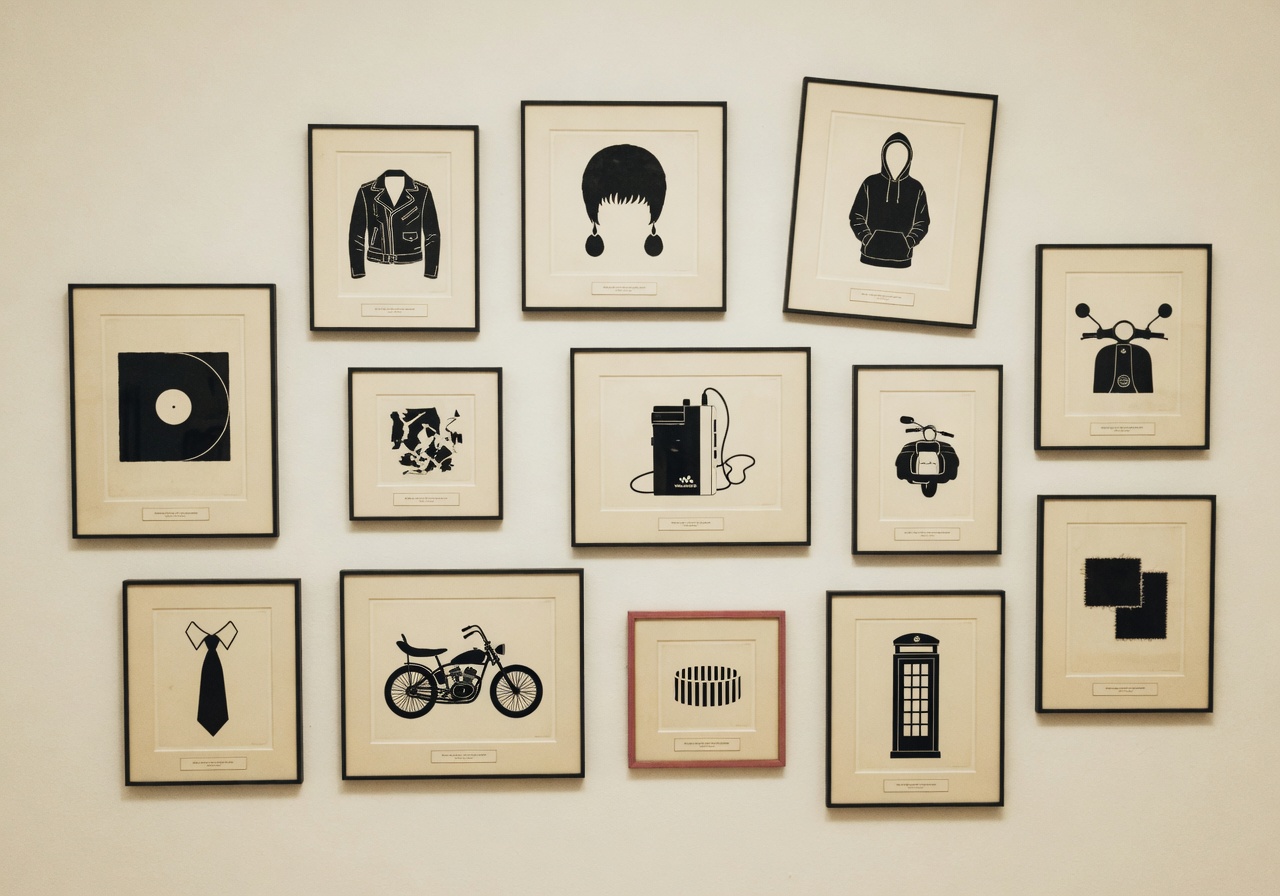
One of the objects on display when the Museum of Youth Culture opens its doors on Friday is a welder’s mask from 1976, stencilled by hand with a single word in capital letters: HATE. It belonged to a teenager at a punk show. It is the kind of thing that, in any other year of its life, would have lived in a parent’s loft, in a clear plastic bag at a market stall, or in a skip behind a flat that was being cleared out. On the morning of May 15, it will live in a glass case on Royal College Street in Camden, museum-lit, with a serif caption rule beneath it.
The museum is the first permanent institution in the United Kingdom devoted to youth culture as its own field, and it has been a long time coming. Its parent archive, founded in 1997 as the Photographic Youth Music Culture Archive by the former Sleazenation magazine co-founder Jon Swinstead, has been collecting photographs, flyers, ticket stubs, and oral histories for nearly thirty years. It moved into a dedicated 6,500-square-foot space in the basement of a new apartment block on the St Pancras Campus after a decade-long search for a permanent home, partly funded by the National Lottery Heritage Fund and the City Bridge Foundation. The lease runs twenty years. The opening collection runs to roughly 100,000 items.
The opening Friday is a milestone for an institution that has been running, in some form, since before most of its current visitors were born. It is also the occasion to ask a question the museum’s own programming gestures at without quite resolving. The mods and the rockers, the punks and the skinheads, the two-tone kids and the goths and the ravers and the emos: those scenes are well represented on the walls. Whether the scenes that follow them, the ones the museum says it wants to keep documenting in real time, are recognisably the same kind of thing is the open argument inside the building.
What the basement actually holds
The space is three galleries, with polished concrete floors and low soft seating, a memorabilia-stocked cafe, a small venue for gigs and workshops, and a Rough Trade shop. A red mod scooter sits in the cafe. A Raleigh Chopper bike is mounted on one wall. There is an original Sony Walkman with the gendered double headphone jacks that were briefly a marketing centrepiece in 1980. There are hand-signed school leavers’ shirts from the 1990s, a wall of northern soul patches sewn onto canvas bags, slides from the early grime years lit from behind, and a section of phone-booth glass scrawled with the layered marker tags of a particular stretch of west London in the late nineties.
The welder’s mask is in the punk room. Beside it sits a print from the photographer Gavin Watson’s skinhead series, the one that documented the South Yorkshire scene in the early 1980s and made clear, in a way the tabloid coverage of the period did not, how many of the kids in those photographs were not the demographic the broadsheet captions of the day had assumed. Watson is one of more than four hundred photographers in the museum’s contributor network. The curation note next to his prints credits him by name and includes a line he told an interviewer years ago, which the museum has reproduced in its wall text: the people in the picture should be the people who get to tell you what the picture is about.
That sentence is, in a quiet way, the museum’s thesis. The institution’s community programmer, Lisa der Weduwe, framed the project to the author Emma Warren in a Crack Magazine interview earlier this year by way of a small rhetorical question: if there is a Young V&A for childhood, why is there not one for teenagers, the years when everything exciting happens? Her broader argument, repeated in several recent interviews, is that the museum exists in part because the bigger institutions have not really known how to hold this material on the terms of the people who made it. The walls in Camden are, by design, less editorial and more archival than a Tate or a V&A show would tend to be. The captions tell you who took the photograph. They do not tell you, very often, what the photograph means.
The argument the building is having with itself
The unstated question, the one the wall text does not put on the wall, is whether the form the museum is preserving still exists outside it. The classic British subculture, the kind Dick Hebdige wrote about in 1979 and the kind the museum’s first six rooms are built around, was a postwar invention: a tightly defined visual code, a music, a uniform, a turf, and an in-group recognisable enough that an outsider could spot a member on a bus. That form ran from the Teds in the 1950s through, by the museum’s own framing, the emo scene of the mid-2000s. After that, the names get harder.
Jamie Brett, the museum’s co-director and the figure most associated with the project’s public face since he joined Swinstead in 2012, has been making a version of this argument in interviews for several years. The internet, he told Apollo Magazine in a piece on whether youth culture is a thing of the past, broke the intensely localised scene by making the music universally available and by removing the need to be physically present in a particular pub or club to know who else was in the same conversation. The young people are still creating, the museum’s line goes; what they make just does not always look like the postwar shape that the institution’s first thirty years of archive was built to hold.
A creative form whose institutions are visibly contracting is producing, for itself, the story of its preservation. The institution opens; the form it preserves is no longer quite the form the building was designed for. — The editors
Whether that is right, whether what replaced the postwar subculture is a looser and more fluid set of online affinities or whether it is something genuinely new that the museum has not yet built a room for, is a live academic argument. The sociologist Andy Bennett, at Griffith University in Australia, has spent two decades writing about post-subcultural theory and the shift toward what he and others call neo-tribes, loose and short-lived scenes whose members do not necessarily dress alike or share a turf. The competing camp, associated with the journal of the same name, holds that the subculture is alive and has simply moved platforms. The museum does not adjudicate. It just notes, in its programming, that it intends to keep collecting from K-pop fandoms and anime communities and from grime and drill scenes whose members met online before they met anywhere else.
The precedent in the room next door
The argument that the audience for this material is there has a recent data point. The Barbican’s 2024 exhibition on emo, titled I’m Not Okay: An Emo Retrospective, drew roughly 55,000 visitors across its three-month run, according to figures the Barbican shared with the press at the close. That is a small show in absolute terms, beside a major Tate Modern hang, but it is a substantial number for a focused subcultural retrospective, and it confirmed what the museum’s funders had already concluded: that the audience that wants to see these objects in a vitrine includes both the people who lived inside the scene and the people who, at the time, were too young or too far away to do so.
The Camden museum is betting that a permanent space changes what the Barbican demonstrated about a temporary one. The economic structure of the project is rare for a new British cultural institution in 2026: general admission is free, the operating model leans on event hire and the on-site shop, and the funding mix sits across a heritage-fund capital grant, a foundation contribution, and a long lease that is unusual in central London for a non-commercial tenant. Two further sites are planned: Birmingham in 2027 and Glasgow in 2029. Whether that network can hold its operating costs without the kind of corporate sponsor relationship that would dilute the wall text is the question the budget has not yet answered.
What the artifact tells you about the moment
There is a familiar pattern in cultural history where the institution dedicated to a form arrives at the moment the form is changing shape. The first rock and roll Hall of Fame opened in 1995, two decades after the music it was built to canonise had already split into a dozen genres. The British Library opened its sound archive’s pop and rock collection at the point at which the album as the dominant unit was being eaten by the playlist. The pattern is not really a tragedy. It is more like a delayed receipt: a creative form whose institutions are visibly contracting is producing, for itself, the story of its preservation. The institution opens; the form it preserves is no longer quite the form the building was designed for.
What is unusual about the Museum of Youth Culture is that its founders seem to know this. Brett and der Weduwe both speak about the project in the language of rescue rather than canonisation. Everything in this museum exists because people cared enough to save it, Brett said in a public statement timed to the opening. Flyers kept in drawers. Photos stored on hard drives. Stories shared before they disappeared. That is the tell. The institution is not arguing that the bedroom drawer is full. It is arguing that the drawer is emptying, and that what is in it is worth keeping.
The thing the welder’s mask in the punk room is doing, then, is not exactly what a museum object usually does. It is not standing in for a movement that is over. It is standing in for a category of object, the thing a teenager made and hung onto and lost, that the conditions for making and keeping are changing. The pictures the museum is acquiring from the current decade do not live in a drawer. They live on a platform that the photographer does not own. The museum’s long bet is that, by the time those pictures need rescuing, somebody will already have a basement in Camden ready to receive them.
Sources & methods
- Museums Association · April 2026 confirmation of the May 15 opening date, the 6,500-square-foot space, three galleries, the National Lottery Heritage Fund funding, the planned Birmingham (2027) and Glasgow (2029) sites, and the Jamie Brett quote on flyers and photos saved by people who cared Archived May 16, 2026
- Time Out London · sneak-peek piece on the basement Camden site, the red mod scooter in the cafe, polished concrete floors, low soft seating, the gig and workshop venue, and the free general admission model Archived May 16, 2026
- Secret London · the 100,000-item archive figure, the 20-year lease, the City Bridge Foundation funding, the subculture range, and the specific objects including the 1976 punk welder’s mask stencilled HATE, the Raleigh Chopper bike, the Sony Walkman with gendered headphone jacks, the school leavers’ shirts, the Gavin Watson skinhead photographs, the grime slides, and the Lisa der Weduwe Young V&A quote Archived May 16, 2026
- Crack Magazine · Emma Warren interview with community programmer Lisa der Weduwe on the museum’s editorial posture, the archive’s 1920s-to-today span, and the case for permanent physical space alongside digital archives Archived May 16, 2026
- Apollo Magazine · Peter Watts feature on whether classical youth subcultures still exist, including Jamie Brett’s framing of the internet’s role in dissolving intensely localised scenes and the article’s naming of emo as a candidate for the last classical subculture Archived May 16, 2026
- Globetrender · April 8, 2026 piece confirming the St Pancras Campus location, the three-gallery format, the photography and audio and print collection scope, and the Barbican emo retrospective attendance figure of 55,000 visitors over three months in 2024 Archived May 16, 2026
- Museum of Youth Culture · official About page, source for the founder dates (Jon Swinstead, 1997 PYMCA), the contributor network of 400-plus photographers, and the institution’s public mission language Archived May 16, 2026
- Vice · earlier interview with Jamie Brett on the archive’s growth from a Sleazenation-era photography collection and the editorial principle that the people in the picture should help tell the story of the picture Archived May 16, 2026
This piece draws on the museum’s public announcements through April and early this month, the Museums Association April 2026 confirmation of the Friday opening, contemporaneous previews in Time Out London, Secret London, and Globetrender, the Crack Magazine long-read interview with community programmer Lisa der Weduwe by Emma Warren, the Apollo Magazine feature in which Jamie Brett was quoted on the dissolution of localised scenes, and earlier Vice interview material on the PYMCA-era archive. The reporter did not attend a preview screening; the public opening on the fifteenth was the first day of general access. The arguments attributed to Andy Bennett summarise his published post-subcultural work and are not from a fresh interview. No anonymous sources were used. Harold Finch reviewed the article before publication.