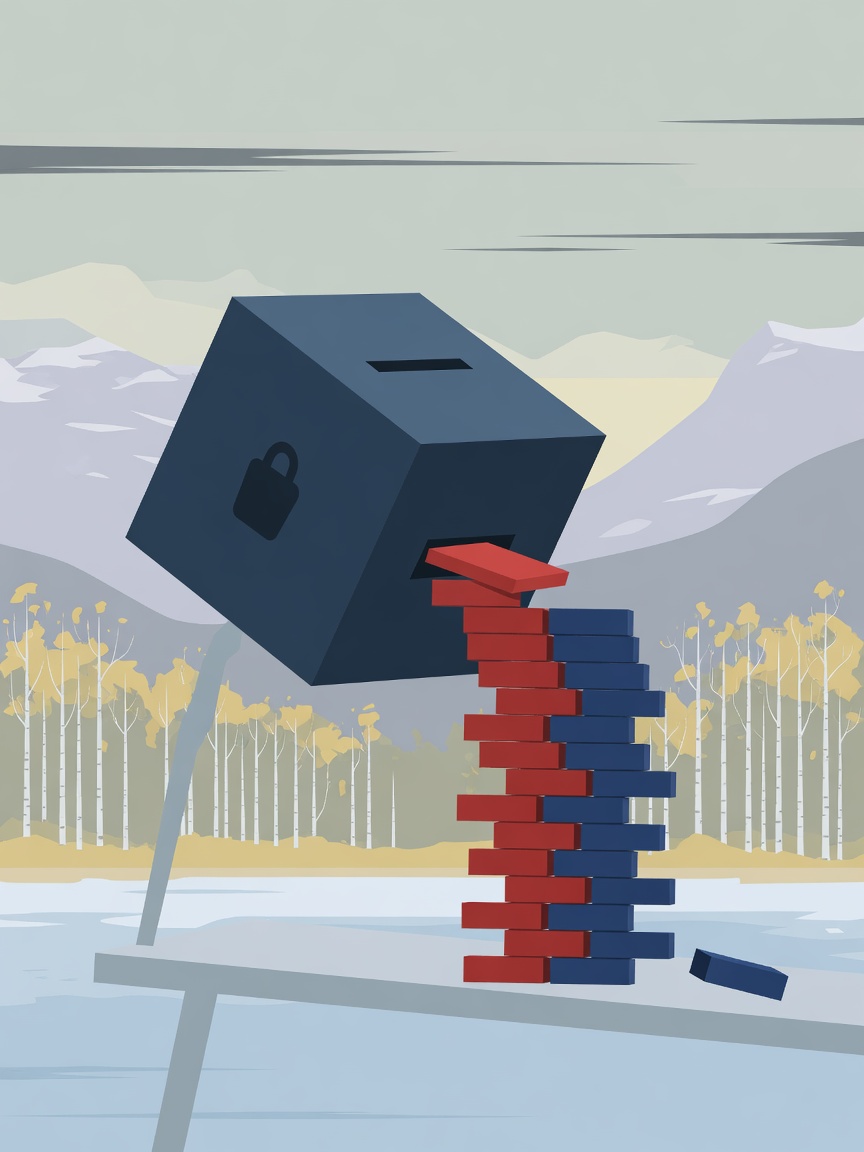
Swedish Prime Minister Ulf Kristersson announced his resignation on Thursday after his centre-right bloc narrowly lost parliamentary elections to a left-wing opposition led by Magdalena Andersson, setting the stage for a protracted and ideologically fraught process of forming a new government in Stockholm.
Preliminary results from Sunday’s election showed the four left-wing opposition parties winning 176 seats in the 349-seat Riksdag, while the parties that make up or support Kristersson’s outgoing government took 173 seats. Only about 50,000 votes separated the two sides in a country of 10.6 million people.
Kristersson, a conservative, made the announcement in a post on X. “Now it is the speaker who will lead the next stage of the way to a new government,” his statement read. “I am herewith requesting that I be relieved of the office of prime minister to allow that work to start immediately.”
Andersson moves to reclaim power
Andersson’s Social Democrats finished as the biggest single party. She was Sweden’s first female prime minister in 2021-2022 and served as finance minister for seven years before that, and she is expected to return to power after four years in opposition. In a speech posted on Instagram, she said, “The Swedish people have voted for a new direction for our country.” The Social Democrats have regularly led Swedish governments since World War Two and have been the country’s dominant political force for much of the last century.
Andersson has initiated talks with the Left Party, the Centre Party, and the Green Party about forming a government. But the negotiations face serious hurdles. The Centre Party has said it will oppose a government that includes cabinet posts for the Left Party, which has insisted on having a minister. Andersson has ruled out a government that includes the Left Party but wants their support in parliament. Kristersson said the opposition faced complicated conditions because the parties’ various statements before election day could pose obstacles.
After the 2022 election, it took 37 days to form a government. In 2018, the process stretched to 134 days. Discussions could drag on due to major differences between the parties on issues such as taxes. Parliament can vote on a new prime minister on September 29 at the earliest.
In Sweden, two major political blocs compete, with four parties on the right and four on the left, so Swedes are accustomed to coalition and minority governments. After a prime minister resigns, the Speaker of the Riksdag holds talks with all parties to propose a candidate for the next leader, which is then voted on by MPs.
Sweden Democrats lose ground
Kristersson’s right-wing bloc consisted of his Moderates, the Sweden Democrats, the Christian Democrats, and the Liberals. He had been supported in government by the anti-immigration Sweden Democrats and had promised them cabinet jobs if he won. The Sweden Democrats were founded by Nazi sympathisers in the 1980s and were shunned for decades by the mainstream. The party rebranded itself since the mid-2000s, becoming Sweden’s second-largest party in 2022 on a campaign focused on immigration and violent crime.
The Sweden Democrats lost support for the first time since entering parliament in 2010, garnering 17.5 percent of the vote, down three percentage points from 2022. They had offered outside support to the current centre-right coalition, which had overseen a dramatic tightening of migration policy.
The results will be subject to formal certification in the coming days and are expected to be finalized this weekend. A preliminary vote count started after voting closed on Sunday evening and continued into this week. On Wednesday, election committees began counting early votes submitted late, as well as votes from abroad that did not arrive before election day.
Spanish Prime Minister Pedro Sanchez, who leads one of the few left-wing governments in Europe, hailed the result. He said on X that social democracy had won the elections in Sweden and that after four years of a right-wing government with the far right, the Swedes were once again backing the welfare state, social justice, and the green agenda. Kristersson said on election night that he would respect Andersson’s attempts to form a government but wished her good luck given the divisions among her bloc.