Container ship sinks in the Strait of Hormuz as Iran vows to fight until Washington yields
A Singapore-registered vessel went down after a projectile strike, and a second ship was damaged, in an escalating campaign that has driven crude flows through the strait far below prewar levels.
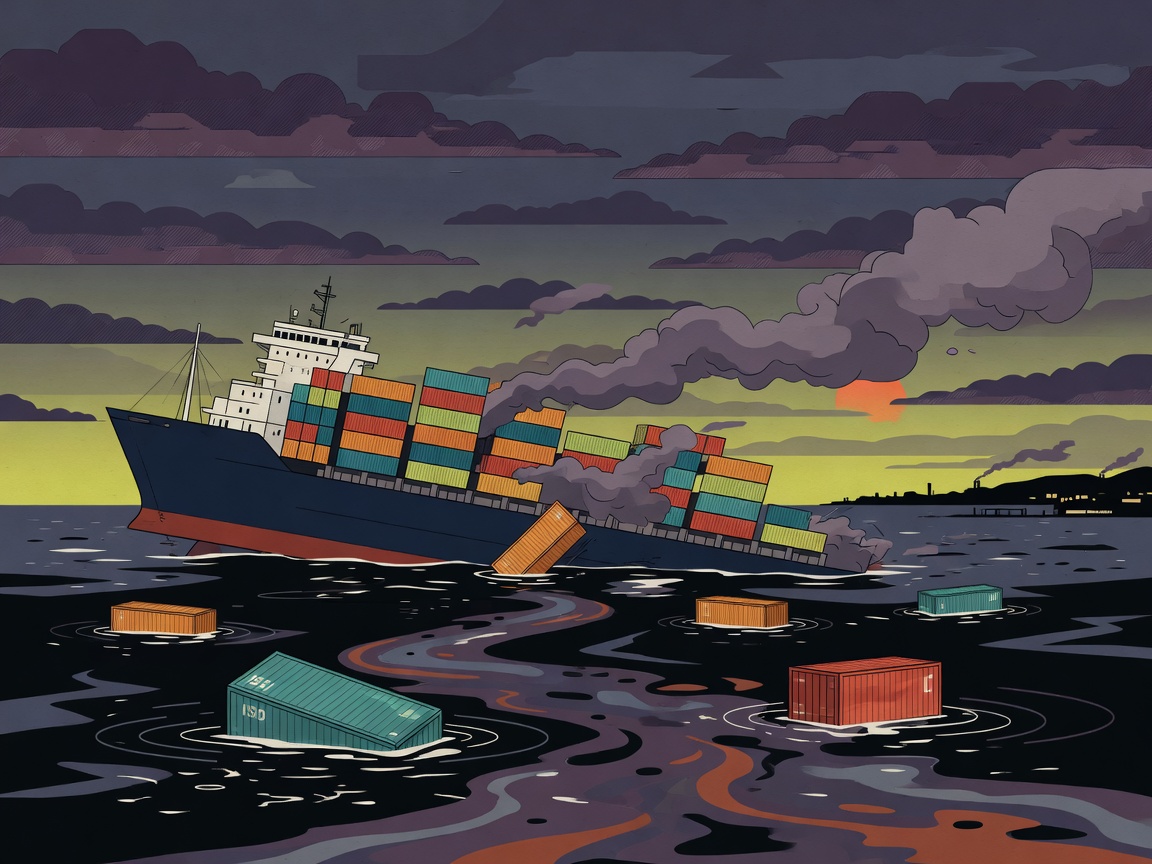
The GFS Pride sank after being struck by a projectile near the Strait of Hormuz, as Iran vows to keep fighting until the United States accepts its demands.
Iran has escalated attacks on commercial vessels in the Strait of Hormuz area in recent weeks, part of an intensifying campaign that has sent oil prices higher and rattled maritime traffic through one of the world’s most critical energy chokepoints. A second vessel was damaged in the same window of strikes. Iran is trying to choke off a rebound in crude oil exports through the strait, targeting the fragile recovery in tanker traffic that had only recently returned to prewar volumes. The strategy appears designed to squeeze global energy markets and pressure Washington into concessions, though Tehran has not specified what those concessions are.
Ships struck near Hormuz
The GFS Pride, registered in Singapore, sank after being struck by an unidentified projectile and caught fire. Its 21 crew members were safely evacuated and no injuries were reported, according to the Maritime and Port Authority of Singapore. Containers were floating in the water after the vessel went down, a Pakistani maritime navigational alert warned. It is the third commercial ship sunk during the Iran war, according to the International Maritime Organization. A second Singapore-registered container ship, the GFS Giselle, sustained hull damage after being hit by an unidentified projectile and arrived at safe anchorage with no crew injuries, the Singapore maritime authority said.
Iran’s Revolutionary Guard claimed a container ship exploded and sank after hitting a naval mine, according to the state news agency Tasnim. But the maritime security firm Marisks said there is no independent evidence to confirm that a mine caused the Pride to sink. Marisks said Iran’s claims are consistent with an ongoing psychological operations campaign aimed at generating fear, increasing uncertainty and discouraging commercial shipping in Hormuz.
Oil flows under pressure
Crude oil exports through Hormuz hit prewar levels in September as the U.S. military guided tankers through the strait, but shipments have since pulled back as attacks multiplied. Exports through Hormuz averaged 8.5 million barrels per day in the week ended Oct. 12, nearly 40 percent below normal levels before the Iran war, according to data from Kpler. The day-to-day picture is even more erratic. Only 3 million barrels transited Hormuz on Monday, while 6 million passed through on Friday, per Kpler, underscoring how quickly traffic thins when vessels come under fire. Shipments from the Middle East, including pipelines to the Gulf of Oman and Red Sea, stood at 14 million bpd, nearly 20 percent below prewar levels.
More than 20 vessels, mostly oil tankers, have come under attack this month in Hormuz, the Persian Gulf, and the Gulf of Oman, according to incident reports from the United Kingdom Maritime Trade Operations Centre. The attacks this month have left two sailors missing and more than a dozen injured, according to the IMO.
Tehran’s stance
Iranian Parliament Speaker Mohammad Bagher Ghalibaf says Tehran does not seek an endless war or prolonged negotiations with the United States but will keep fighting until Washington accepts its demands, according to a single source reporting his remarks. Tehran has also vowed new tactics against shipping in Hormuz, though it has not specified what those tactics entail.
The Maritime and Port Authority of Singapore called the attacks unprovoked. “Such attacks are unprovoked, unjustifiable and a breach of international law,” the authority said in a statement.
Sources & methods
- Al Jazeera live blog, published Oct. 15, 2026 Archived Oct 15, 2026
- CNBC report, published Oct. 14, 2026
This article draws on a live blog from Al Jazeera and a report from CNBC, cross-referencing corroborated facts between the two sources and flagging single-source claims as such.