Death toll reaches 474 as barrier lake overflow halts rescues along Nepal-Tibet border
More than 1,500 people remain missing after a glacial collapse sent floodwaters through Himalayan valleys, and a landslide-formed lake now threatens a second catastrophic surge.
The death toll from flash flooding along the Nepal-Tibet border has reached 474, with more than 1,500 people still missing, as a landslide-formed lake overflowed and forced rescue operations to halt on both sides of the frontier.
The disaster began on Wednesday when a glacier collapsed near Langtang Lirung peak, sending a torrent of ice, water, rock, and mud down Himalayan river valleys. Entire villages were buried. Roads and bridges were destroyed. Nepal’s prime minister’s office reported 469 confirmed deaths on Friday, with 977 people still missing in Nepal, while Chinese authorities said at least five people died in Tibet and another 558 are missing there, nearly half of whom are foreigners.
Barrier lake threatens second flood
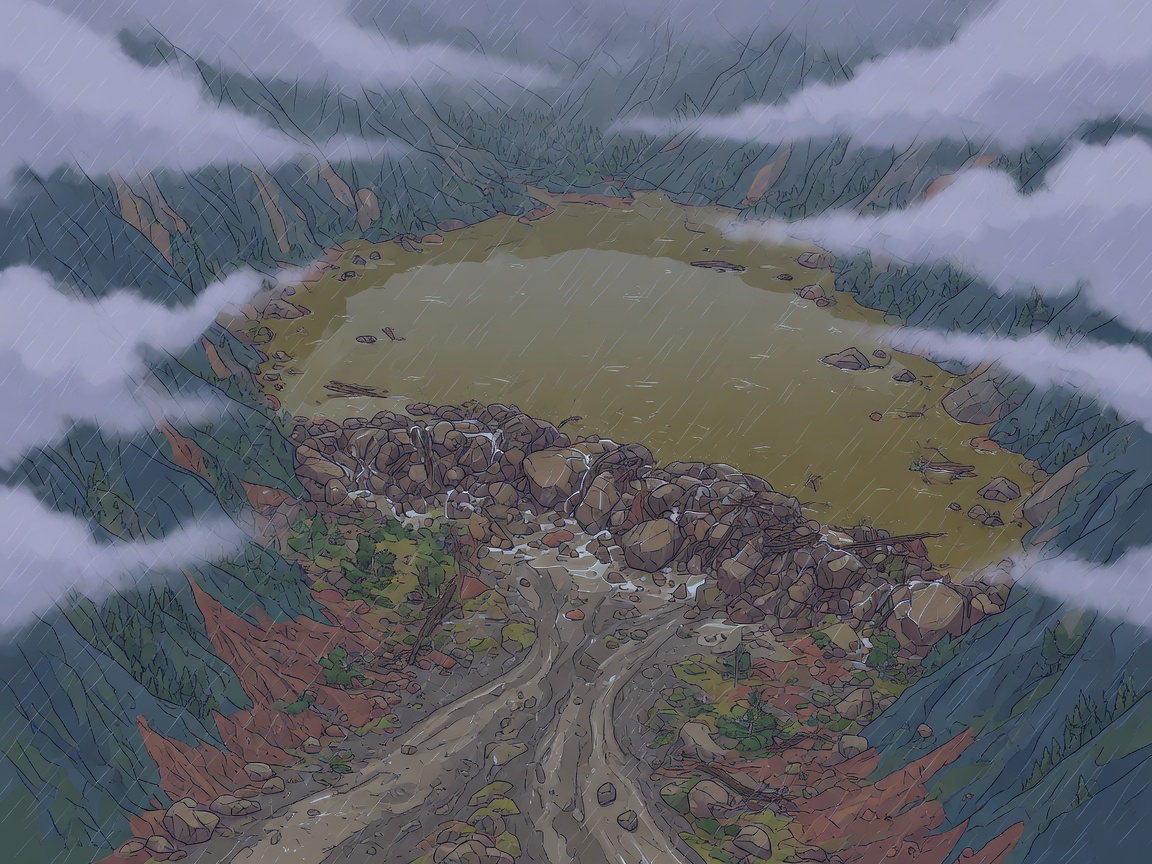
The flood carried debris that trapped water to form a barrier lake at the confluence of the Chhochen Khola and Purepu Tsangpo rivers. By Friday, the lake held more than 2.5 million cubic metres of water, up from 1.5 to 2 million a day earlier, according to state broadcaster CCTV. Officials expected three million cubic metres to flow in between Thursday and the weekend. China warned of a high risk of breach. The lake started overflowing on Thursday. Chinese emergency services stopped about seven kilometres from Gyirong Port, the major land crossing between Nepal and China. Nepalese authorities paused operations for 90 minutes. Residents scrambled up hillsides.
By Friday afternoon, state media reported the risk had come under control. CCTV said water was flowing out naturally, with outflow exceeding inflow, and that the risk was gradually decreasing. Rescue operations resumed. Engineering teams monitored water levels, and drones delivered supplies.
Hundreds of tourists among the missing
Nepal’s Department of Tourism said 668 tourists from 34 countries had been out of contact since Wednesday, most on trekking expeditions. They included at least 177 Indians, 90 Americans, 34 Australians, 33 Britons, and 25 Canadians. Many Indian nationals were heading to Tibet for the Kailash Mansarovar Yatra, a Hindu pilgrimage to a sacred peak and lake. So far, 117 tourists have been rescued, including 85 Indians, 16 Chinese, nine South Koreans, two Italians, and two US nationals.
In Chantilly, Virginia, Sneha Sudhir told Reuters that her husband was among 10 men from northern Virginia on a trek to Tibet’s Mount Kailash when the region was struck by disaster. “Where are they?” she said tearfully from her home on Thursday. She said the women were supporting each other and reaching out to officials, politicians, and friends and family in the United States and India, hoping for updates. “Everybody is taking turns in shedding their tears, wiping it off and getting back to work,” she said.
In Bhopal, Devika Adhikari told the India Today television channel that her family was anxiously waiting for news about her elder brother, younger brother, and two sisters-in-law, all missing in Nepal. She said the family last spoke to them at about 9.30am on the day of the disaster. “In our last conversation, my elder brother told us that everyone’s lives were in danger and that they had hidden in the mountains. He also asked us to take care of the children,” she said.
One Australian, Cara Severino, 25, contacted her family on Friday after more than two days without communication. She was stranded on the Langtang trek. Her parents said she called from Gosainkunda and was hiking toward Kathmandu on foot with a group of Nepali hikers, a trek of more than 110km. She was the first of 39 Australians reported missing to be confirmed safe.
Nepal declines foreign rescue teams
Nepal’s foreign ministry said it did not need foreign rescue assistance, despite offers from several countries with nationals missing in the disaster. “The offer for help is natural. Our security agencies are doing the search and rescue operation. For now we don’t require such help,” said spokesperson Lok Bahadur Chhetri. South Korea’s foreign ministry said Nepal had indicated it was not yet planning to accept foreign rescue teams.
The Red Cross said more than 90,000 people are estimated to have been affected by the disaster, and aid officials voiced fears of further flooding. David Fisher, head of delegation for the International Federation of Red Cross and Red Crescent Societies in Nepal, said the organisation was very concerned about the secondary flood and that relief trucks were blocked. About 1,550 people have been rescued, including 800 by helicopter and 700 by land. Nepal deployed 30,000 security personnel. China sent about 500 military and paramilitary personnel and dispatched Premier Li Qiang to supervise.
In Bidur, on the banks of the Trishuli, most homes were washed away when mud and debris flooded the valley on Wednesday morning, and survivors described clinging to buildings and trees as the water rushed over them. The mangled concrete remains of a bank, a government office, and an ATM booth stood submerged in mud. Officials said bodies remained inside but it was too dangerous to enter. On Friday morning, river levels rose again. Workers were cleared from the area.
The Kathmandu Post reported that bodies were turning up far downstream, and morgues were running out of space. Authorities used health and science academies as temporary morgues and planned to tag unidentified bodies with burial information. Most battered areas remained accessible only by army helicopter, with choppers flying in and out every five minutes at the Bidur army camp, dropping off traumatised victims who said the floods had taken their loved ones, their homes, and everything they owned in a matter of minutes.
Sources & methods
- BBC News report on the barrier lake overflow risk, glacier collapse cause, and Chinese emergency response near Gyirong Port. Archived Aug 28, 2026
- The Guardian live updates covering the rising death toll, tourist rescues, the Severino family statement, Nepal's refusal of foreign rescue teams, and destruction in Bidur. Archived Aug 28, 2026
- Al Jazeera report on the rescue halt, barrier lake formation, confirmed death toll figures from both Nepal and China, and deployment of security personnel. Archived Aug 28, 2026
- Al Jazeera explainer on the glacial collapse cause, missing tourist nationalities, family accounts from Virginia and Bhopal reported by Reuters and India Today, and rescue challenges including the Upper Trishuli tunnel rescue. Archived Aug 28, 2026
This article was compiled from reports by BBC News, The Guardian, and Al Jazeera, which in turn cited Reuters, India Today, CCTV, and statements from Nepalese and Chinese authorities, the Red Cross, and affected families.