Deloitte Cyprus helped Abramovich aides falsify documents to strip $672m from company accounts, investigation finds
Leaked files from the Cyprus Confidential investigation show backdated records removed superyachts, mansions, and jets from the oligarch’s accounts in what a leading barrister calls straightforward tax evasion.
A BBC Panorama and Guardian/Bureau of Investigative Journalism investigation has found that Deloitte Cyprus helped falsify documents to hide Roman Abramovich’s wealth and evade tax. Accounts signed off by the firm meant $672m (£508m) in superyachts, mansions, and private jets vanished from Abramovich’s company accounts.
The investigation is based on the Cyprus Confidential leak, involving the International Consortium of Investigative Journalists, the Guardian, the Bureau of Investigative Journalism, BBC Panorama, and other media partners. Abramovich’s profits from Russian oil deals were funnelled into a web of offshore companies administered from Limassol by MeritServus, a corporate services firm that Deloitte owned until 2005. After the two split, they continued working closely with Abramovich’s associates to manage his global fortune. The backdating strategy ran from 1999 until at least 2013. The leaked documents cover the period from 1995 to 2022.
Making assets disappear
In 2006, a new transparency law in Cyprus required company accounts to be made public, threatening to expose the secrets of Abramovich’s wealth. His associates and MeritServus responded by backdating an asset transfer by three years to 2003, moving assets from Amiscan Investments to its parent company in the British Virgin Islands. Deloitte Cyprus reviewed the backdated documents and said they were ‘adequate’ to allow removal of the assets from Amiscan’s accounts. When the 2003 accounts were signed off by Deloitte in 2006, only $75,000 of assets remained. Deloitte signed off even though leaked documents show it knew the accounts were completely misleading. Amiscan’s assets had included a mansion in West Sussex, a luxury flat in London, an estate in the south of France, helicopters, private jets, and a small fleet of boats including the $147.5m Pelorus.
The Kravin arrangement
Kravin Investments, another Abramovich Cypriot company, had almost $2bn in the bank in 2003, earning large amounts in taxable interest. Kravin had received a $3bn windfall in May 2003, retaining about $2bn. In August 2005, Demetris Ioannides of MeritServus emailed Abramovich’s Russian associates to propose changes to Kravin’s financial statements. ‘If you agree, it will be necessary to change the financial statements and the accounting records accordingly for 2003 and 2004,’ he wrote. The response came a month later. An associate in Russia emailed: ‘I agree.’ MeritServus then created backdated documents falsely showing Kravin was only holding and investing funds on behalf of its BVI parent company, Kelvedon Worldwide, making it appear Kravin did not own the money and was not liable for tax. Deloitte wrote in a September 2005 email that ‘certain changes will have to be made to the accounts (bank account balances, interest income, profit and loss account).’ Documents detailing the supposed trust arrangement were given dates between March and December 2003, despite being created at least two years later.
An earlier extraction
In 2000, Eugene Tenenbaum and Demetris Ioannides met in London to discuss Abramovich’s desire to extract almost $100m from Cypriot companies holding stakes in Sibneft. The conditions were strict. The transaction could not reveal these companies, and the money had to appear ‘earned.’ Deloitte Cyprus’s solution involved backdated consultancy agreements showing Abramovich’s Sibneft-owning companies paid an intermediary business $98m for ‘consultancy services,’ which then passed 99.9% to Abramovich as ‘commission.’ Ioannides found a Cypriot off-the-shelf company called PB Mediapower Enterprises for the arrangement. With Tenenbaum’s authorisation, directors of Deloitte Cyprus signed the backdated documents. The share purchases referenced had already happened a year earlier.
Assessment and denials
Barrister Andrew Mitchell KC described the scheme as ‘straightforward’ tax evasion and a ‘blatant move to protect from legitimate taxation assets which should otherwise have been subject to tax.’ Lord Sikka, professor of accounting at the University of Sheffield, said it was a ‘violation of a statutory duty’ and ‘pretty scandalous’ to misrepresent transaction dates and not publish true and fair accounts. Abramovich’s lawyers deny he evaded tax or concealed his fortune, say it was legitimate to rely on advice from professionals, and say Panorama provided no evidence he knew about, authorised, or directed the falsification of any document. Deloitte Cyprus said it ‘acts in compliance with applicable laws’ and could no longer access the relevant material because of the time elapsed. Tenenbaum denied any wrongdoing. He said he relied on specialist advice from Deloitte Cyprus. MeritServus and Ioannides were sanctioned by the UK in 2023 for helping Russian oligarchs hide their wealth.
From Sibneft to sanctions
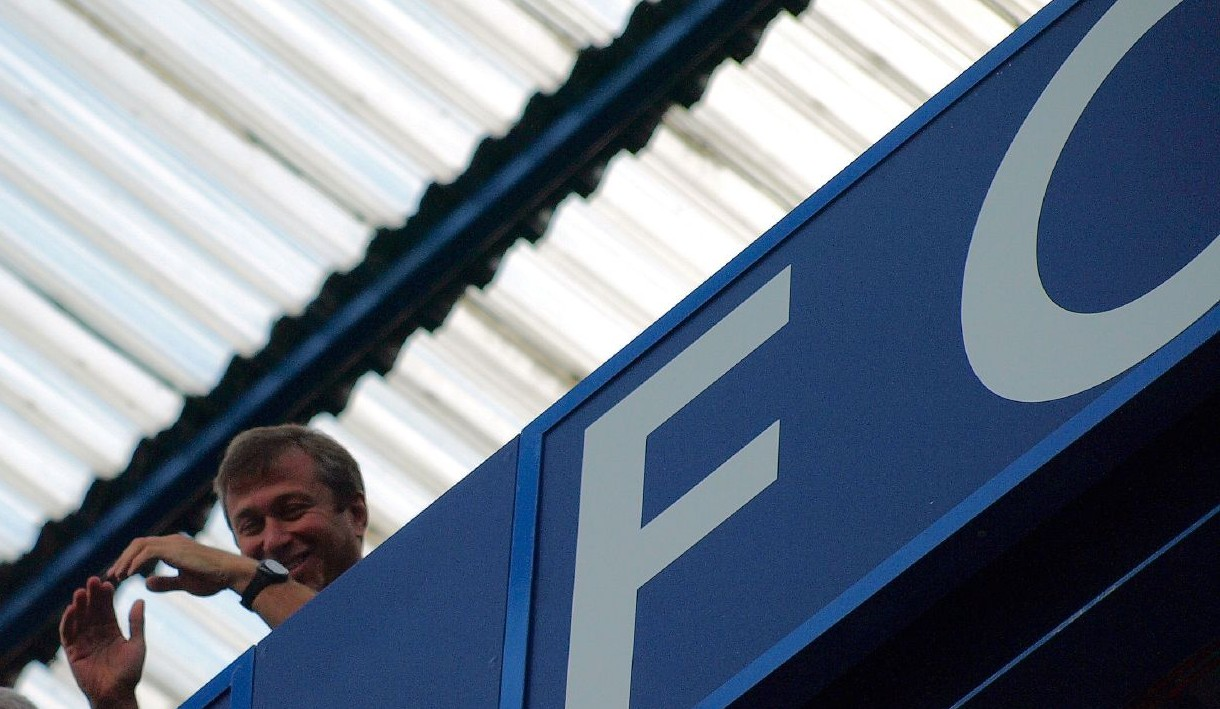
Abramovich made his fortune buying Russian state-owned oil company Sibneft in the 1990s for roughly $250m, reportedly spending as little as $19m of his own money. By the time he sold the last of his Sibneft shares to Gazprom in 2005, he had raised $16bn. He bought Chelsea Football Club in 2003. He was sanctioned by the UK government after Russia’s full-scale invasion of Ukraine in 2022, forcing him to sell Chelsea. In Jersey, £5.4bn of Abramovich’s assets remain frozen and a criminal investigation has been ongoing for four years. Abramovich’s lawyers say the Jersey investigation was ‘undertaken for political purposes.’ Abramovich has been reported to be living in Turkey, which did not apply sanctions.
The BBC Panorama programme ‘Roman Abramovich: How He Hid His Fortune’ was broadcast on BBC One at 20:00 BST on Monday 12 October and is available on BBC iPlayer.
Sources & methods
- BBC News / BBC Panorama report on documents falsified to evade tax on Abramovich's wealth Archived Oct 12, 2026
- The Guardian report on Abramovich aides falsifying paperwork to disguise assets and dodge tax Archived Oct 12, 2026
Based on analysis of leaked corporate records from the Cyprus Confidential investigation, comprising more than 500,000 documents first released to the ICIJ and examined by the Guardian, the Bureau of Investigative Journalism, and BBC Panorama.