Flávio Bolsonaro’s shock first-round win over Lula upends Brazil’s presidential race and triggers a market rally
The right consolidates power across congress as prediction markets and Brazilian stocks surge on the prospect of a market-friendly government.
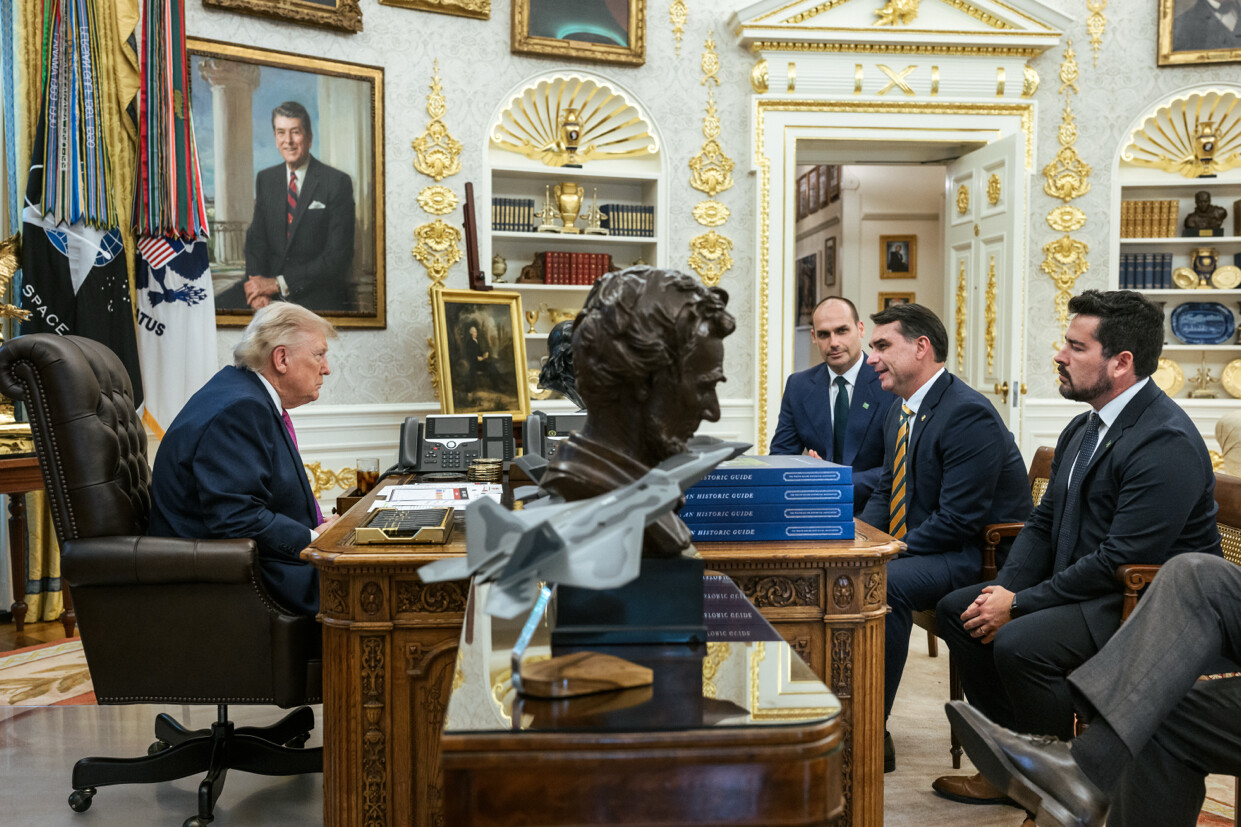
Flávio Bolsonaro outpolled incumbent Luiz Inácio Lula da Silva in the first round of Brazil’s presidential election on Sunday, sending both candidates to a runoff on 25 October with Bolsonaro now the firm favourite to win the presidency.
Bolsonaro secured 47.03% of the vote, or 56.1m ballots, against 45.16% and 53.8m for Lula. Bolsonaro was widely expected to trail Lula in the initial tally. He was favoured to win a runoff even so, making the first-round margin a jolt to both camps.
Markets surge on fiscal-discipline hopes
Brazilian assets soared on Monday. The iShares MSCI Brazil ETF (EWZ) was up more than 12%. U.S.-listed shares of Itau Unibanco gained 15%, and shares of Banco Bradesco surged 19%. Brazil’s local Bovespa index was up 8%. Investors broadly saw Bolsonaro as more favorable to markets, as he is promising greater fiscal discipline at a time when Brazil’s deficit-to-GDP ratio was almost 10% in June. Prediction markets recalibrated sharply after the vote. On Kalshi, Bolsonaro’s chance of winning jumped from about 60% before the first round to more than 80% after. On Polymarket, his odds jumped from 63% to 85%.
A Bolsonaro dynasty consolidates
Flávio, 45, is a rightwing candidate and the son of former president Jair Bolsonaro, who is 71 and serving a 27-year sentence for plotting a coup after losing the 2022 election to Lula. The elder Bolsonaro is living under house arrest in a Brasília mansion. His brother Eduardo, 42, is in self-imposed exile in the United States, sentenced in absentia to four years in prison for coercion related to lobbying the Trump administration to interfere in their father’s coup trial. “I think he will be freed and I think he will be very important during Flávio Bolsonaro’s [presidency],” said Lago. “Flávio will be running the country and [Jair] Bolsonaro will be doing what he has always done: leading the revolution.”
Four relatives of Jair Bolsonaro were elected to congress. His wife Michelle and second son Carlos won senate seats, while youngest son Jair Renan and brother Renato won lower house seats. The Liberal Party (PL) will have the largest senate caucus with 28 of 81 seats; combined with other hard-right parties, that rises to 43, giving the movement an upper house majority. Pro-Lula senate candidates Marina Silva, Benedita da Silva, and Simone Tebet suffered defeats. Nikolas Ferreira and Lucas Pavanato, two young Bolsonarista social media warriors, became the best-voted congresspeople in Brazilian history, securing more than 3m votes. Tarcísio de Freitas was re-elected governor of São Paulo state, and Sérgio Moro was elected governor of Paraná state. Both were ministers during Jair Bolsonaro’s 2018-22 government.
An uphill runoff for Lula
Never since the return of democracy in 1985 has the first-round runner-up won the second ballot. Lula is 80 and running for a fourth term. He won back the presidency in 2022 after 12 years out of office. His campaign has tried to tie Flávio to corruption allegations. “Miracles are possible in politics. But I don’t see that happening,” said Miguel Lago, a political scientist. “I don’t see Flávio losing this election now.”
Lula was president from 2002 to 2010, when a global commodities boom allowed him to fund major social welfare programmes. Donald Trump, speaking outside the White House on Monday, called it “a big victory” and predicted “a very close election” in the runoff.
Sources & methods
- The Guardian, reporting on Flávio Bolsonaro's first-round victory and the Bolsonaro family's consolidation of power across Brazilian politics. Archived Oct 5, 2026
- CNBC, reporting on market reactions and prediction-market shifts following the first-round result. Archived Oct 5, 2026
Reporting based on two published accounts of the first-round result, market data, and on-the-record statements from political scientists and elected officials. All facts, figures, and quotations are drawn from the fact ledger, which attributes each item to its corresponding source.