Flávio Bolsonaro wins first round and heads into 25 October run-off as favourite against Lula
The right-wing senator outpolled the incumbent with nearly all votes counted, but fell short of the majority needed to win outright.
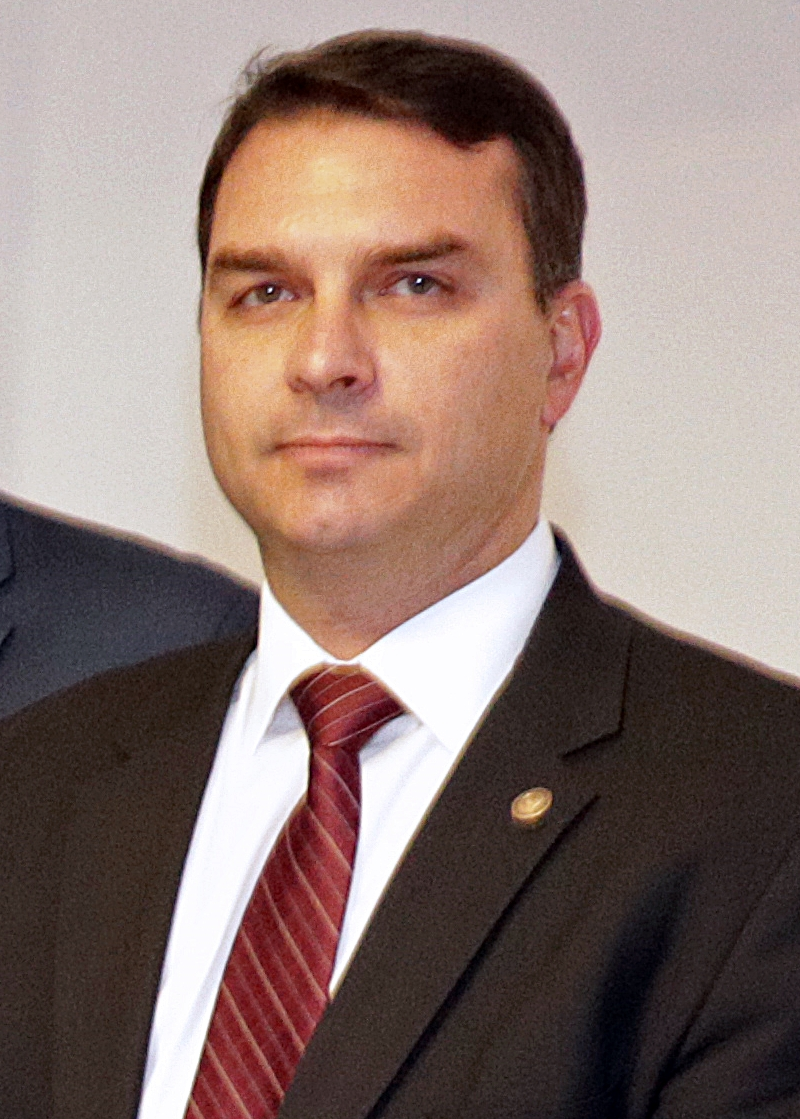
Brazil’s presidential election will go to a run-off on 25 October after right-wing challenger Flávio Bolsonaro won the first round against incumbent Lula da Silva. With 98.81% of votes counted, Bolsonaro held 47.24% to Lula’s 44.91%.
Neither man cleared the threshold needed to win outright, because candidates need more than 50% of the vote to avoid a second round. Flávio, 45, is a senator, lawyer from Rio de Janeiro, and the right-wing challenger. Lula, 80, is the left-wing incumbent seeking an unprecedented non-consecutive fourth term. Bolsonaro’s first-round result exceeded expectations, making the second round his to lose, partly because some knocked-out first-round candidates were right-wing alternatives whose voters may now gravitate toward him. Pre-election polls had suggested an extremely close race.
A family’s bid for return
Flávio is the son of former president Jair Bolsonaro, who is in prison serving a 27-year sentence for masterminding a failed coup after losing the 2022 election. That contest, in which Lula beat Jair by less than 2%, was the closest presidential result in Brazil’s history. After it, Jair’s supporters vandalised government buildings on 8 January 2023. Jair was banned from running for re-election even before his prison sentence, but he endorsed Flávio’s campaign and hopes to regain his freedom if his son wins. Flávio has pledged to grant his father and January 8th riot supporters amnesty if elected. Jair’s wife, Michelle Bolsonaro, was elected to the Senate on Sunday, deepening the family’s foothold in national politics. Flávio told supporters he wanted to “free the Brazilian people.”
Washington, sovereignty, and the Trump shadow
Donald Trump used the coup trial of Jair Bolsonaro as justification for imposing tariffs on Brazil and sanctioning top officials and judges last year, casting a long shadow over the race. Flávio lobbied the US earlier this year to designate Brazil’s two biggest gangs as terrorist organisations, a move he has made central to his security platform. In July, Brazil refused visa for two US State Department officials it alleged were sowing doubt in the electoral system; the US called the allegation “baseless.” Flávio reportedly told foreign diplomats that Brazil’s voting machines share the same origin as Venezuela’s, which is false. The president of Brazil’s supreme electoral court said no evidence of international interference was found. Lula made “sovereignty” a key pillar of his campaign and at times accused the US of trying to interfere. A Flávio win would likely see Brazil join the US’s “Shield of Americas” coalition against narco-trafficking. The majority of Latin America has now elected right-wing presidents aligned to the Trump administration.
China, the economy, and competing visions
China has overtaken the US as Brazil’s biggest trading partner and is a crucial customer for soy and beef exports, making the bilateral relationship a fault line in the campaign. Flávio pledged an “economically pragmatic” relationship with China, alongside a public debt ceiling, government spending cuts, revision of social welfare, and bolstering the critical minerals sector. Lula’s legacy includes Bolsa Família, credited with lifting millions out of poverty, and building more universities. He backed more investment in data centres and rare earth minerals with strong state involvement, and supported oil drilling exploration near the mouth of the Amazon River, controversial with environmentalists. Lula has a record of tightening environmental protections and reducing Amazon deforestation; deforestation increased significantly under Jair Bolsonaro. The country faces high levels of personal debt and slowing growth. Lula served his first two terms between 2003 and 2011, overseeing commodity-fuelled growth and poverty reduction.
Security and the corruption backdrop
Brazil’s homicide rate has fallen but street crime such as phone thefts has increased, and violence and drug trafficking remain major problems. Flávio pledged to designate Brazilian gangs as terrorists and build maximum-security prisons akin to those in El Salvador. Jair Bolsonaro during his presidency loosened gun ownership restrictions. Lula criticised the US terrorist designation of Brazilian gangs but launched reforms to tackle financial networks of organised crime, improve homicide investigations, and invest in prisons. A corruption scandal involving jailed banker Daniel Vorcaro, who orchestrated one of Brazil’s largest financial frauds, embroiled senior figures across the political spectrum. Flávio acknowledged asking Vorcaro to bankroll a biopic about his father after recordings emerged in which he asked for 134 million reais ($25.9m; £19.5m). Police suggested Vorcaro reached out to Supreme Court judge Alexandre de Moraes to ask for help avoiding arrest; Moraes denies wrongdoing. Moraes was not appointed by Lula but is seen as his ally, given he presided over Jair Bolsonaro’s coup trial.
The road to 25 October
Minas Gerais is a bellwether state with 21 million inhabitants; since democracy returned in the 1980s, no candidate has won the presidency without winning it. In 2018, Jair Bolsonaro beat Lula’s candidate there by more than 1.7 million votes and was elected president. In 2022, Lula reclaimed Minas Gerais by fewer than 50,000 votes and won the nationwide race. Lula was elected in 2002, 2006, and 2022. In 2018, he was jailed on corruption charges; his conviction was quashed after 580 days behind bars. Opinion polls suggest no clear leader in polling for the 25 October run-off. Brazilian presidents are limited to two consecutive terms, so if Lula wins he cannot stand in 2030. The new leader will take power on 5 January 2027.
Sources & methods
- BBC News, Brazil election coverage, 4 October 2026 Archived Oct 5, 2026
- The Guardian, Brazil presidential election 2026 first-round live results, 4 October 2026 Archived Oct 5, 2026
- Al Jazeera, Brazil election results live blog, 4 October 2026 Archived Oct 5, 2026
This article was assembled from three wire-source reports published on 4 October 2026. Corroborated facts appearing in two or more sources were treated as established; single-source facts were included where the brief required them and clearly attributed. No figures, turnout data, or candidate vote shares beyond those in the ledger were used.