Germany accuses Russia of explosive drone attack at Leipzig airport near Ukrainian cargo planes
German intelligence officials say the device matched Russian military technology, prompting consulate closures and sanctions threats. Moscow denies involvement and promises retaliation.
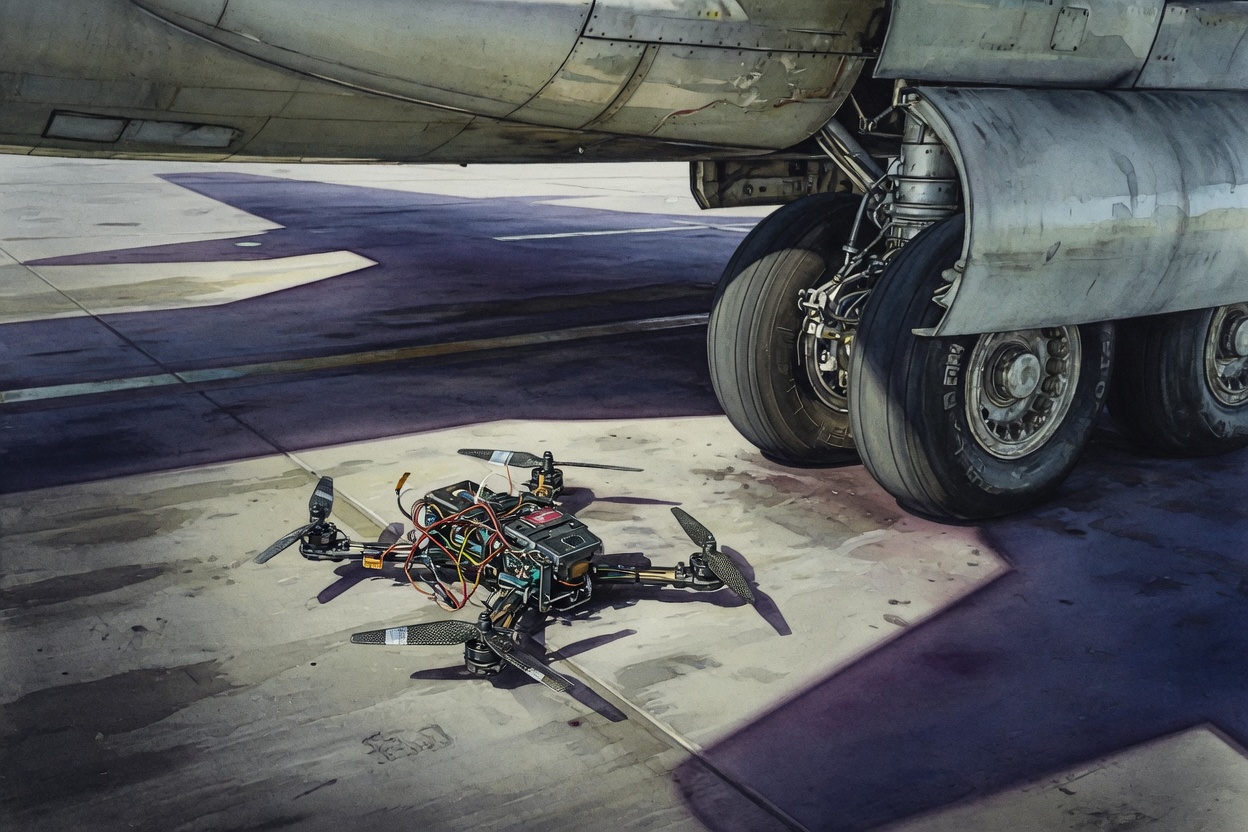
Germany has formally accused Russia of deploying an explosive-laden drone at Leipzig/Halle Airport near Ukrainian cargo planes, a finding that has triggered consulate closures, sanctions threats, and a sharp deterioration in relations between Berlin and Moscow.
An employee flagged the drone on the evening of August 4. It was located in a cargo area near a runway, close to aircraft belonging to Antonov Airlines, Ukraine’s main aerial cargo carrier. The device failed to detonate. The detonator was faulty. A second drone reportedly collided with a cargo aircraft nearby, and a third was found near the airport 10 days later. Specialists were called in to defuse the explosives with a robot. The discovery resulted in a temporary shutdown of Leipzig/Halle Airport, a major cargo hub in the eastern state of Saxony that is also used by Germany’s military and NATO allies for transporting military goods.
Interior Minister Alexander Dobrindt announced the conclusions at a press conference in Berlin on Tuesday. He said examination of the equipment along with intelligence findings proved Russian involvement. The drone’s configuration and components resembled those used in Russia’s war against Ukraine, reflecting what he called a high degree of technical expertise. The task of carrying out the attack fell to low-level agents acting on behalf of Russian state entities, though he did not specify which ones. Dobrindt said the incident fit an established pattern of Russian hybrid operations across Europe and that the assumption was Germany would be targeted again. The government has not released all evidence.
Russia rejected the accusations. President Vladimir Putin accused Germany of planting evidence to frame Moscow and suggested Chancellor Friedrich Merz’s government was pointing the finger at Russia to distract from domestic problems and falling approval ratings. The Russian embassy in Berlin called the allegation absurd. Foreign ministry spokesperson Maria Zakharova told the German Press Agency that Moscow would respond in a mirror-image fashion and accused Berlin of sponsoring terrorism through its military and economic support for Ukraine. The embassy described Germany’s measures as an unprecedented escalation in Russian-German relations.
Foreign Minister Johann Wadephul, standing beside Dobrindt, announced a series of retaliatory measures. Germany will close the Russian consulate in Bonn starting September 18 and terminate the contract for the Russian House in Berlin, which observers have said was used for espionage and to spread Russian propaganda. Wadephul also announced tighter entry controls for Russian nationals and pledged to increase pressure on Moscow’s shadow fleet of old tankers used to circumvent Western sanctions following its invasion of Ukraine in 2022. He summoned Russia’s ambassador to Germany, Sergei Nechayev, who was seen arriving at the foreign ministry shortly after the announcement. There have been suggestions that the Goethe-Institut in Moscow would have to cease operations if Germany followed through with closing the Russian House.
NATO Secretary-General Mark Rutte said the organization stood in full solidarity with Germany, writing on X that the evidence was clear and welcoming Germany’s response. EU Commission President Ursula von der Leyen said the EU was united in its resolve to stand against Russian aggression and was preparing additional sanctions. She said she would discuss the incident with Rutte, and EU foreign ministers are expected to prepare a joint response. NATO allies including Poland, Italy, the United Kingdom, Sweden, and the Czech Republic have all backed Berlin’s claims against Moscow. The Czech Foreign Ministry posted on social media that whenever Russian hybrid activities target one of their allies, all are exposed.
Regional tensions and hybrid warfare
Polish Prime Minister Donald Tusk said Russia was escalating tension across the whole region. Germany is one of several NATO member states to have reported drone sightings at airports, military, and industrial sites over the last year. Berlin had been tight-lipped about who was behind the Leipzig attack, saying only that foreign powers may have been involved. US media had already reported that American officials had linked the incident to Russia. Security experts had speculated that Russia was responsible, though Russia has always rejected claims of involvement.
Germany says covert operations like the attempted drone attack at Leipzig airport are meant to undermine the country’s political backing for Ukraine in its defence against Russia. Such low-level operations are often called hybrid attacks, as they remain below the threshold of open conflict but still succeed in sowing unease through violence. The incident is seen as part of a growing trend in Europe, where officials fear Russia is mounting a campaign of intimidation against members of the NATO military alliance. Polish prosecutors are investigating whether foreign intelligence services were involved in a fire at a factory making drone components.
Sources & methods
- BBC News article reporting Germany's accusation that Russia was behind the Leipzig airport drone attack, including official statements from Dobrindt and Wadephul, Russian denials from Putin and Zakharova, allied responses from Rutte and von der Leyen, and details about the drone discovery and retaliatory measures. Archived Sep 2, 2026
- Al Jazeera explainer providing additional details on the drone discovery including robot defusal, Dobrindt's intelligence findings on Russian technology matching, consulate closure date of September 18, NATO and EU allied reactions including Czech Foreign Ministry statement, and description of hybrid warfare tactics. Archived Sep 2, 2026
This piece was assembled from two published news reports from BBC News and Al Jazeera covering the German government’s announcement, Russian denials, allied responses, and the broader context of hybrid operations in Europe. No independent reporting was conducted.