At least 17 people are dead after flash floods devastate the Nepal-Tibet border region
The disaster has washed away villages, damaged energy facilities, and severed the main road to Kathmandu, with officials warning of a far higher toll.
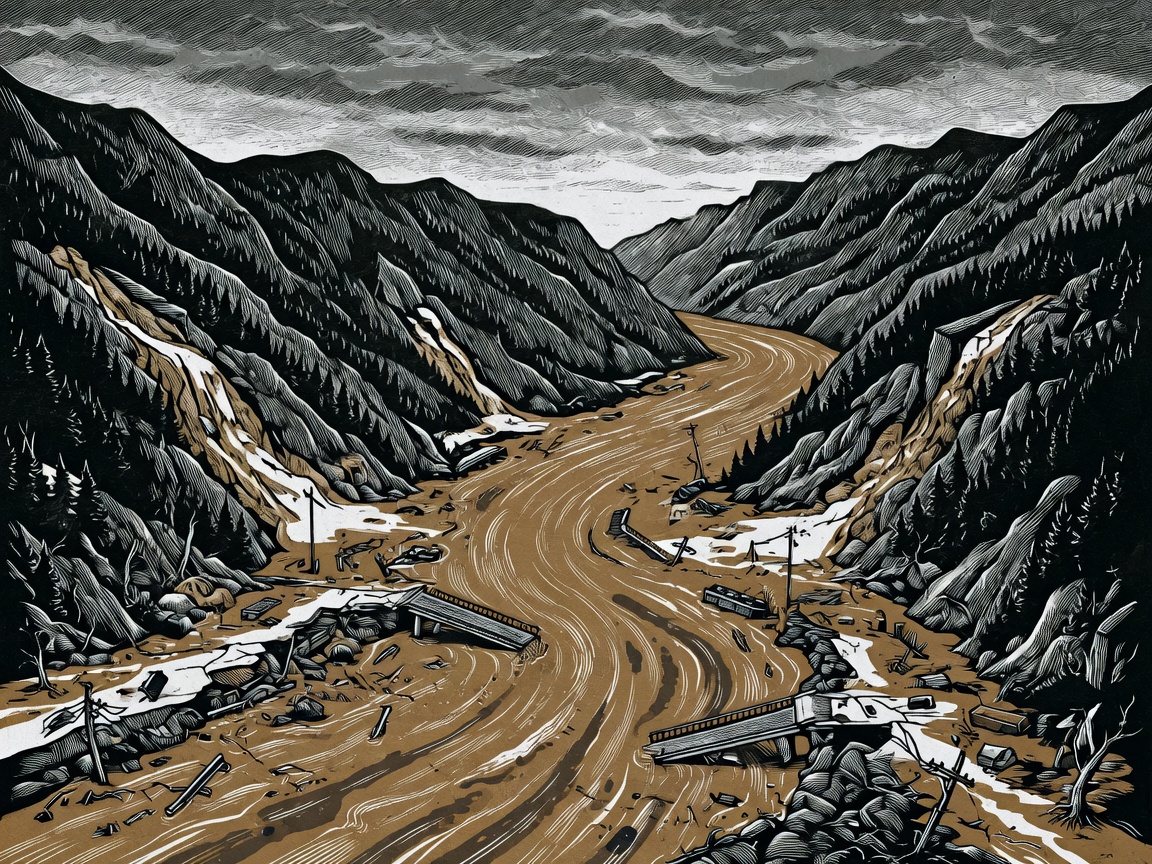
At least 17 people have been killed after a massive flash flood and mudslide along the Nepal-Tibet border washed away villages, damaged roads, and disrupted power and communications across the mountainous region, according to police.
The disaster, which struck early on Wednesday in Nepal’s Rasuwa district north of Kathmandu, has severed the main road to the capital and cut off contact with dozens of police officers. Officials on both sides of the border warned that the death toll could rise sharply as rescuers struggle to reach isolated communities in terrain where helicopters cannot land and roads have been swept away.
The flood hit Rasuwa, a district of about 50,000 people, reportedly caused by excessive snow melting into the Bhote Koshi river, which flows from Tibet into Nepal. Rescue teams are operating on both sides of the border. 12 people have been rescued so far. Nepal Police spokesman Abhi Narayan Kaphle told the BBC that all security agencies were working together on the rescue efforts. State media in China, which controls Tibet, reported significant casualties, and Nepalese officials said they anticipate “huge scale loss.”
Helicopters deployed but unable to land
The Nepal Army said it had deployed helicopters and disaster response personnel to the affected area, but officials said the waters were too high for helicopters to land in Syapru Besi and Timure, two of the hardest-hit areas in Rasuwa. District administrator Narendra Pariyar urged those living on the banks of the Bhote Koshi river to seek higher ground, pointing to reports that nearby villages and infrastructure project sites were washed away. “There could be heavy casualties or loss of property,” Pariyar told Reuters. “But I cannot say for sure now.”
Authorities said 13 officers from the armed police force were missing from two posts in Rasuwa district. They had not been able to contact dozens of other police officers.
Energy infrastructure hit hard
The Nepal Electricity Authority said about 430 megawatts of production capacity, including from hydropower and solar facilities, have been damaged. The authority said the disaster damaged production, transmission, and distribution facilities, resulting in disruption of electricity supply. Several highways were also closed. Videos shared by Nepal Police and others on social media showed torrents of muddy water crashing through mountain valleys and villages.
Yee Liang, a Chinese businessman based in Kathmandu, told the BBC that his logistics company had seven container trucks in the area, all staffed by Nepalese employees, and that he had lost contact with all of them. “There is no signal, so we cannot reach anyone,” he said. “As far as I know, there was no warning.” He added that there were occasional mudslides and landslides, especially in the rainy season, but that this one was much more serious.
On the Tibetan side, the extent of the damage remained unclear. The Xinhua official news agency reported major casualties, with people missing in the neighbouring county of Gyirong after a mudslide hit a land crossing between China and Nepal. The mudslide hit China’s Gyirong port, cutting off roads, communications, and power in the Shigatse region. President Xi Jinping urged all-out efforts to search for the missing and called for strengthening monitoring and early warning systems to prevent secondary disasters. The BBC spoke to Guan Daoxuan in Sichuan province, who said he had lost contact with his wife late on Wednesday morning. She works for a state-run construction company involved in building roads and bridges in Tibet. Guan said Nepalese authorities had tried to send a helicopter to inspect the area because road access had been cut off, but strong winds were making it difficult for the aircraft to reach the site.
Prime Minister Balendra Shah convened an emergency meeting of the National Disaster Risk Reduction and Management Authority to take stock of the situation. “Work has started to take necessary steps in coordination with the medical team, scouts, and Red Cross,” Shah said in a social media post. Nepal’s disaster management authority called on people living near river banks in vulnerable areas to remain alert and take precautions.
Rasuwa saw deadly flooding last year. The BBC reported that 18 people were killed after a glacier burst on the Chinese side of the border, while Al Jazeera put the death toll at nine with 24 missing. That flood, triggered by the draining of a supraglacial lake in Tibet, washed away the Friendship Bridge linking Nepal and China, disrupting transport and trade for months. Officials told the BBC that they believe the scale of Wednesday’s disaster exceeds last year’s floods. Monsoon rains from June to September regularly trigger deadly floods and landslides across South Asia. Scientists say climate change is increasing the frequency and intensity of extreme weather events in the region. The Bhote Koshi river originates in Tibet and empties into Nepal’s Trishuli river, which eventually flows into India as the Gandak river.
Sources & methods
- BBC report on the flash flood along the Nepal-Tibet border, including interviews with affected individuals and officials Archived Aug 26, 2026
- Al Jazeera report on the Nepal flash flood, covering damage to roads and energy facilities, with details from Reuters and Xinhua Archived Aug 26, 2026
This article was compiled from BBC and Al Jazeera reports, drawing on direct quotes from affected individuals, police spokesmen, and government officials as carried by those outlets.