Navy moves to relieve USS Abraham Lincoln as reports of food shortages and broken plumbing raise alarms
The carrier has been deployed for over 250 days with no return date announced, and lawmakers are demanding answers from the Pentagon about conditions aboard the ship.
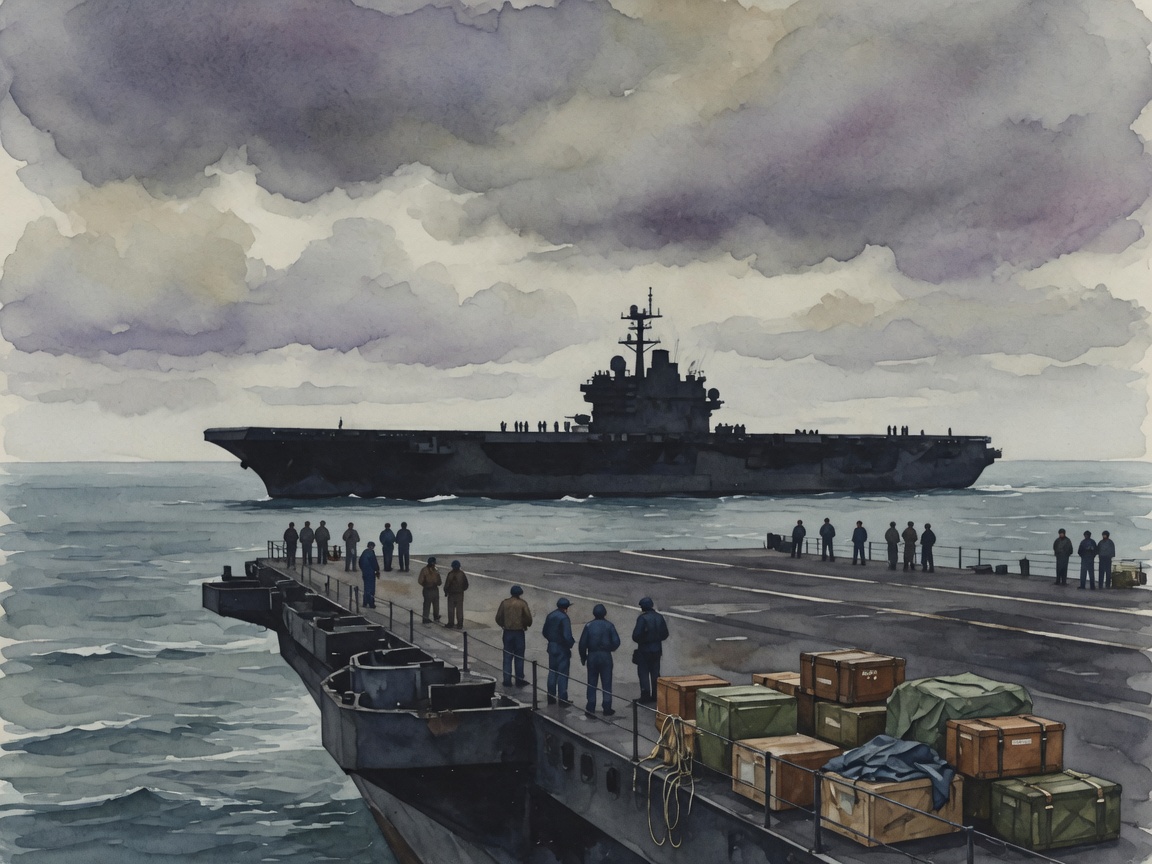
The USS Abraham Lincoln has been at sea for more than 250 days. About 5,000 people live aboard the carrier. Reports of food shortages, broken plumbing, and exhaustion have raised alarms among lawmakers, who are now demanding answers from the Pentagon as the Navy moves to relieve the troubled ship.
The carrier left California in November, originally bound for the South China Sea before being redirected to the Middle East ahead of attacks on Iran in February. Its deployment was set to end in May. It has been repeatedly extended. No return date has been announced. Multiple outlets reported that the USS George Washington is preparing to replace the Lincoln as part of a previously scheduled rotation plan. The George Washington strike group departed Vietnam on Aug. 12, according to a Navy statement.
Lawmakers demand oversight
Connecticut Senator Richard Blumenthal, a Democrat on the Armed Services Committee, sent a letter to Hegseth listing the reported hardships. They included shortages of basic supplies, water contamination, plumbing issues, deteriorating mental health, deck safety concerns, and mail disruptions that caused care packages to be lost for months. “These reports warrant immediate attention,” Blumenthal wrote, “but they also raise a broader question: whether the Navy can sustain the operational tempo now being demanded of its carrier force.” Fellow Democratic Senator Ruben Gallego called for the military to allow a congressional delegation to visit the ship and conduct an oversight investigation. “There is no reason to be denied access,” he posted on X.
Sailors and families describe harsh conditions
Citing two unnamed officials, CBS News reported that earlier this month a sailor went overboard and was recovered by a helicopter, treated by the medical department, and transferred off the ship for further care. The circumstances are under investigation. The Military Times and Stars and Stripes reported that multiple service members had considered jumping overboard, according to their families, who said extended time at sea and conditions on board were hurting mental health. Sailors have reportedly been unable to clean laundry for more than a week and have gone without fresh food due to infrequent port visits, when troops are not always allowed to leave the ship.
The relative of one sailor told BBC News that their family member has lost 65lbs (29kg) since the deployment began. The person spoke on condition of anonymity due to concerns about retaliation. In WhatsApp conversations, the sailor said, “I’m dead tired. Dead.” He described constant noise and vibration from the ship’s engine and planes taking off and landing. “It’s a constant vibration,” the relative said. “Morning, noon, and night when you sleep, when you eat, when you shower. There’s never a moment of peace in your mind.”
California Congressman Mike Levin, a Democrat, summarized the issues on X: moldy showers, broken toilets, laundry down for weeks, long stretches with no hot water, and no soap, deodorant, or toothpaste. He also described a meal that came down to half a cup of rice and two tortillas. Levin sent a letter to Hegseth and Acting Secretary of the Navy Hung Cao expressing serious concerns, writing that sailors and marines face an “overwhelming workload” contributing to “extreme fatigue and burnout.”
A Navy official told the BBC they had not identified an increase in reported suicidal ideation or suicide attempts aboard the ship and that “traditional supply hubs” had been “disrupted by combat actions.” The Navy was prioritizing delivery of mission-critical supplies, the official said. “First food, then hygiene items, then mail,” the official said on Wednesday. “Current reports from the ship confirm continuous access to clean water, functional AC (air conditioning), and healthy meal options.”
Hegseth, speaking to reporters in Panama, said the government ensures “every ship, every crew, every captain has everything we can provide them at every single moment.” He called reports of conditions “completely misrepresented.” Asked about conditions on board, Olivia Wales, a spokeswoman for Trump, told reporters that both Hegseth and Trump were committed to ensuring the US military was “equipped with the resources necessary to counter any threat to the United States,” according to the BBC.
A study of 956 sailors released in January 2025 found that troops aboard Navy ships suffer the highest rates of “serious psychological distress” compared with other branches of the military, the BBC reported, citing unique stressors including poor habitability, noise, and demanding schedules that leave inadequate time for sleep and rest. Suicide remains a leading cause of death in the Navy and Marines, according to an analysis of military data by USNI News cited in the same BBC report.
The broader strategic picture includes a continued naval blockade of Iran. Treasury Secretary Scott Bessent said the U.S. will apply economic measures “that have never been seen on Iran.” Bessent told Newsmax the strategy combines “economic isolation like the world has never seen before, and the continued blockade in the Strait of Hormuz that will keep anything from going in or out of the Iranian ports.” Hegseth told reporters the military can maintain the blockade “indefinitely,” rotating ships in and out as needed.
U.S. Central Command said reports alleging a brawl aboard the carrier were false and that no service members have died. This followed Iranian media claims that seven Navy personnel had been killed and several wounded in what Iranian outlets described as “a violent clash” on the Lincoln.
Sources & methods
- BBC News article reporting on conditions aboard the USS Abraham Lincoln, including accounts from sailors' families, statements from lawmakers, Navy officials, Defence Secretary Pete Hegseth, and Trump spokeswoman Olivia Wales. The article also references a January 2025 study of 956 sailors and an analysis of military data by USNI News. Archived Aug 14, 2026
- CNBC article covering U.S. economic measures against Iran, the naval blockade of the Strait of Hormuz, the planned carrier rotation, and Rep. Mike Levin's letter to Hegseth and Acting Navy Secretary Hung Cao. Archived Aug 14, 2026
This article was assembled from two published reports, one from BBC News and one from CNBC. The BBC report itself references additional sources including a January 2025 study of 956 sailors, USNI News, Military Times, Stars and Stripes, and CBS News, all cited within that article.