Philippine sailor injured near Second Thomas Shoal as China and Manila trade blame
A confrontation between Chinese and Philippine vessels has reignited tensions in the South China Sea, drawing condemnation from Washington ahead of Secretary of State Marco Rubio’s visit to Manila.
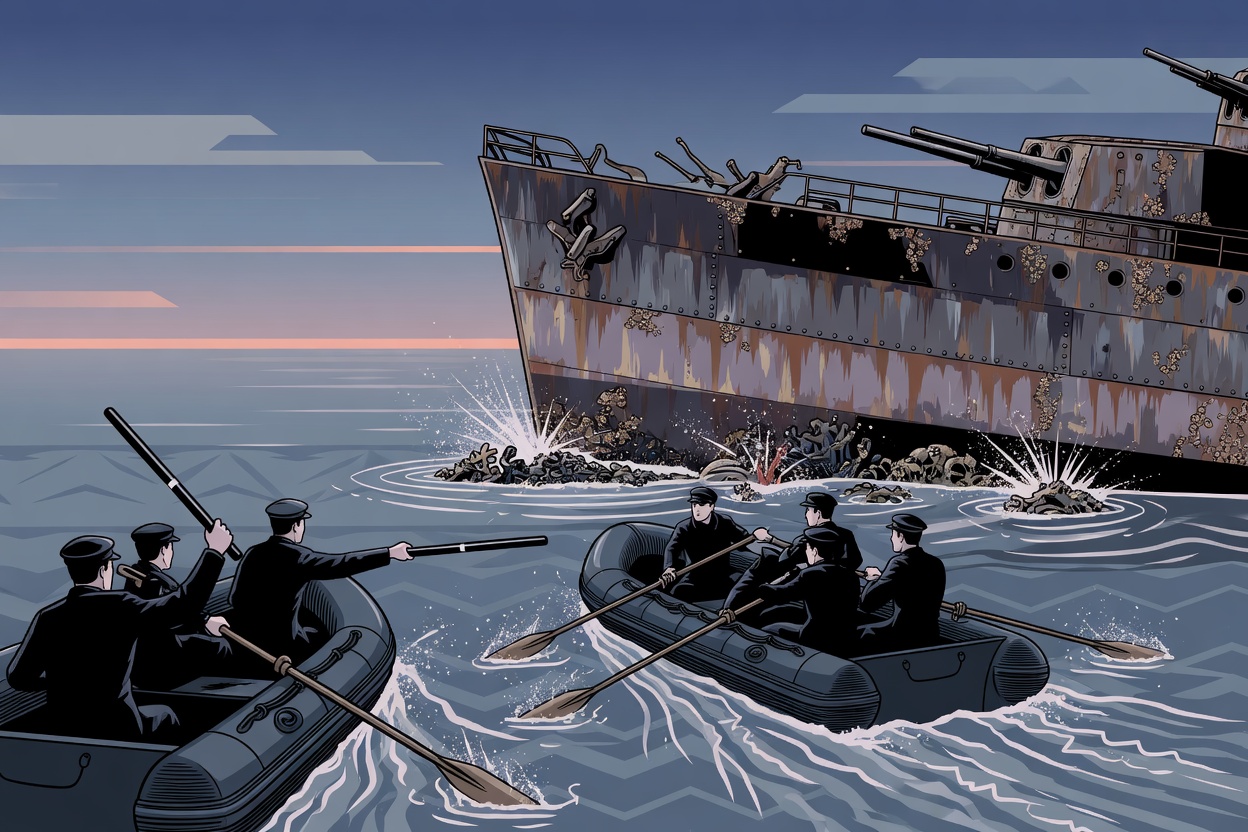
A Philippine sailor was injured on Monday in a confrontation between Chinese and Philippine vessels near the Second Thomas Shoal, setting off a fresh round of accusations between Beijing and Manila at a moment when foreign ministers from across Southeast Asia have gathered in the Philippine capital for talks certain to be dominated by maritime tensions.
The incident unfolded near a grounded Philippine warship, the BRP Sierra Madre, which Manila has maintained as a military outpost on the reef for nearly 30 years to anchor its territorial claim. The shoal sits within the Philippines’ 200-nautical-mile exclusive economic zone and roughly 1,000 kilometers from mainland China, yet Beijing claims almost the entire South China Sea as its own and has demanded the outpost be removed.
The two sides disagree. The Armed Forces of the Philippines said a Chinese inflatable boat carrying eight personnel approached the outpost at close range and, when two Philippine navy boats moved to drive the Chinese vessel away, the Chinese side reacted violently and aggressively. According to the Philippine military, a Chinese coast guard officer repeatedly struck a Filipino sailor on the head with a wooden baton, injuring him and damaging a navy rubber boat.
China’s coast guard rejected that account entirely. Beijing’s version holds that Philippine dinghies launched illegally from the Sierra Madre, ignored repeated warnings, and rammed a Chinese patrol vessel. Chinese authorities also claimed Filipino personnel attacked Chinese officers with oars and long sticks.
Washington weighs in
The United States moved quickly to condemn China’s conduct. State Department spokesperson Tommy Pigott said in a statement on Monday that Washington stands with its ally the Philippines, called on Beijing to immediately cease its destabilizing conduct, and reaffirmed the 2016 arbitral ruling that found China’s expansive South China Sea claims have no basis in international law.
A State Department spokesperson described a troubling pattern of provocation against lawful Philippine maritime operations, saying such behavior undermines regional peace and stability and directly contradicts China’s repeated commitments to resolve disputes peacefully. Washington is bound to Manila by a mutual defense treaty signed in 1951, meaning a serious escalation could draw in American support.
The shoal has seen repeated clashes since 2023. Chinese vessels have used water cannon, lasers, and ramming to block Filipino resupply missions to the Sierra Madre, making the reef one of the most volatile flashpoints in the contested waterway.
Diplomatic stage set
The confrontation landed just as foreign ministers from the Association of Southeast Asian Nations convened in Manila, with Chinese Foreign Minister Wang Yi among those in attendance. Wang is scheduled to meet Philippine Foreign Secretary Theresa Lazaro on the sidelines of the annual summit, marking the first meeting of the two countries’ top diplomats since 2024. U.S. Secretary of State Marco Rubio is expected to see President Ferdinand Marcos Jr., and the South China Sea disputes are set to dominate both conversations.
Rubio’s trip also comes days after President Donald Trump accused Beijing of substantial meddling in U.S. elections. Rubio met Wang on the sidelines of last year’s ASEAN gathering in Malaysia, and the two spoke by phone after Trump’s Beijing visit earlier this year.
Under the United Nations Convention on the Law of the Sea, which China has ratified, the Second Thomas Shoal falls within Philippine maritime territory. China did not participate in the arbitration proceedings that upheld Manila’s rights. The flare-up complicates a week Manila had hoped would showcase its ASEAN chairmanship.
Sources & methods
- Al Jazeera report on the confrontation near Second Thomas Shoal, the competing accounts from China and the Philippines, the legal context under UNCLOS, and the U.S. State Department's condemnation. Archived Jul 21, 2026
- CNBC report providing additional detail on the incident, the U.S. response through spokesperson Tommy Pigott, the 1951 mutual defense treaty, Secretary Rubio's scheduled visit, and the diplomatic meetings planned on the ASEAN summit sidelines. Archived Jul 21, 2026
This article was assembled from two wire reports, one from Al Jazeera and one from CNBC, both published on July 21, 2026. Claims were cross-referenced between the two sources, and direct quotations were drawn only from language that appeared verbatim in the source texts.