Pope Leo XIV arrives in Argentina and tells leaders the economy must serve the people
The pontiff used his first papal visit to the country to critique President Javier Milei’s austerity programme and urge the protection of democracy.
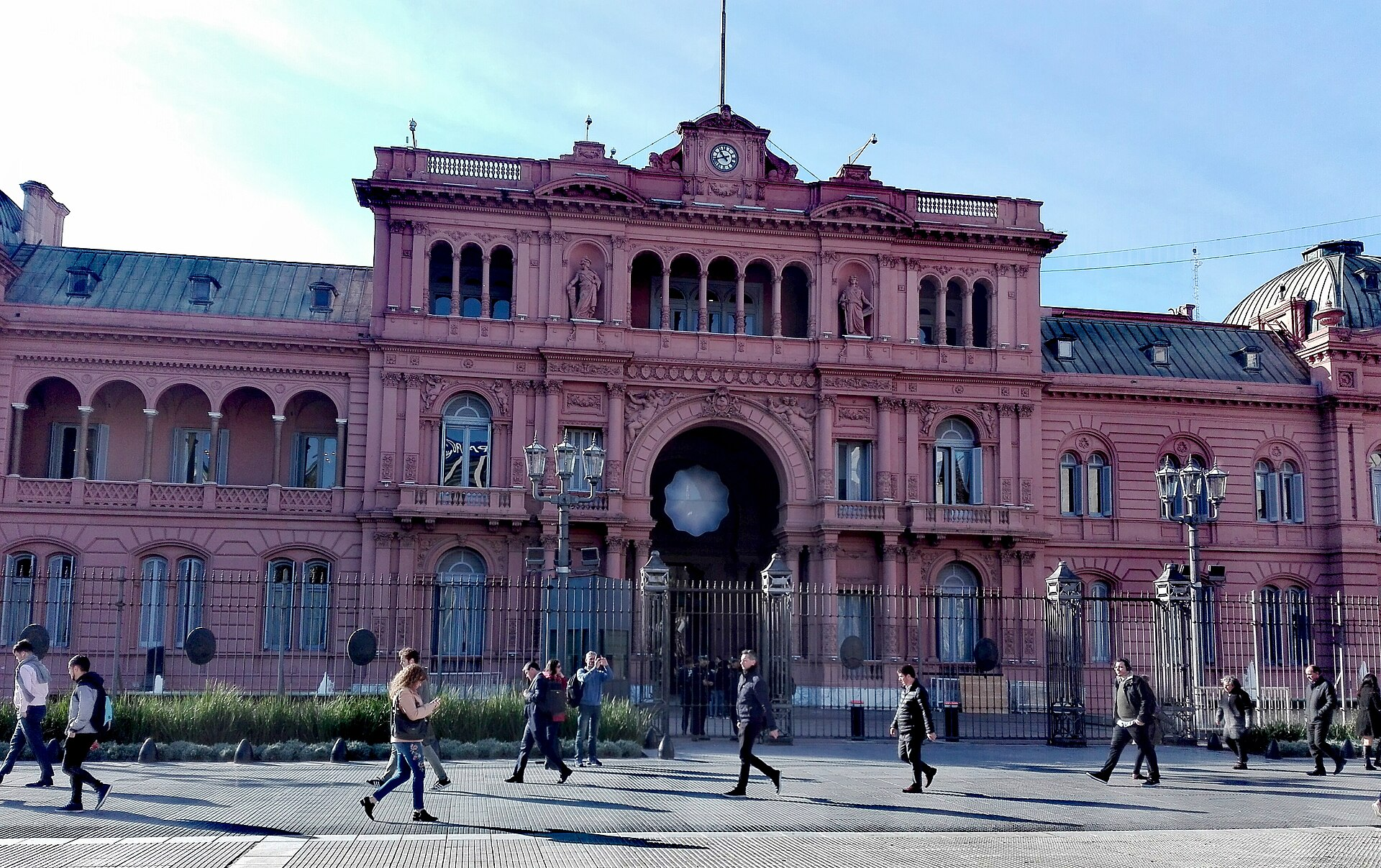
Pope Leo XIV arrived in Buenos Aires on Sunday, the second stop on a 12-day tour of Latin America, and said Argentina’s economy must benefit everyone including the poor, in a critique of President Javier Milei’s austerity measures.
Speaking shortly after landing, the Pope laid out a vision of economic life that placed human dignity at its centre. “The economy must be at the service of the people, rather than people being at the service of the economy,” he said. Leo stressed the plight of those who, “despite hard work, nonetheless struggle to meet their household’s needs,” and urged that “particular concern be shown for those affected by illness, dependency and disability” — a veiled reference to the government’s controversial cuts to disability assistance. The remarks landed in a country where the Catholic Church has denounced Milei’s slashing of public spending for hitting the poorest hardest, and they drew rapturous applause from the crowd gathered to hear him.
Leo also turned to the state of Argentine democracy, telling Milei, known for his combative rhetoric, that strengthening it required a “willingness to listen” and the “careful use of words.” “Those who exercise authority have a duty to act with prudence, to acknowledge the limits of the power entrusted to them, and to direct their decisions toward the good of the entire community,” the Pope said. He insisted on the importance of “personal integrity” in public office, stressing that “corruption undermines the confidence of citizens in their institutions.”
Milei defends his programme
In his own address welcoming the Pope, Milei defended his libertarian policies, citing rights to life, liberty and property as the backbone of Argentina’s constitution and of Western democracies. He said his government was working to avoid “punishing the Argentines of tomorrow in order to benefit the Argentines of today.” Milei came to office on a promise to revive Argentina’s economy and tame runaway inflation by shrinking the welfare state, targeting public hospitals, universities and pensioners in particular. The poverty rate increased to 32.3% in September. Yet Milei maintains a loyal supporter base for drastically reducing inflation, and he has said he will seek re-election next year.
A homage to Francis
The trip has been described as a homage to Pope Francis, who did not return to his homeland during his own papacy. It is the first visit by a pontiff to Argentina in nearly four decades, and Leo said he was “retracing” Francis’s steps. Milei had a tense relationship with his countryman, whom he insulted for his pro-poor teachings. He called Francis “evil on earth” and a “communist” for promoting a doctrine of social justice to help the poor, and on the campaign trail he branded him an “imbecile” for championing social justice. On Sunday, however, Milei struck a conciliatory tone, calling Francis an “exceptional figure” and “undoubtedly the most important Argentine in history.” He had earlier written on X that Argentina awaits the Pope “with immense joy.”
Health and itinerary
The tour comes just three weeks after the 71-year-old Pope underwent surgery for lung cancer. Last month’s operation to remove a tumour was successful, and his doctors say the cancer has not spread. The Vatican says no extraordinary measures are being taken, describing him as a “71-year-old who has undergone an operation” rather than someone with a “permanent medical condition.” Leo arrived in Buenos Aires from Uruguay, where he condemned drug violence and urged an end to child poverty. In Argentina, he will visit a home for disabled people and a prison and celebrate three open-air masses. The church expects seven million to attend the various events.
The visit also serves as a litmus test for the church in a country growing more secular. In a recent University of Buenos Aires poll, 57.7% of people identified as Catholic, down from about 90% in the 1960s. Argentines are hoping the leader of the world’s 1.4 billion Catholics will help unite a country bitterly divided between supporters and opponents of Milei. “Just like the World Cup unites us, hopefully the pope will too,” said Liliana Deblauwe, a 68-year-old retired teacher who waited with hundreds of people to see the pontiff visit a monument to liberation hero Jose de San Martin. Brian Inacio Rodriguez, a 26-year-old job seeker, spent five days travelling overland from Ushuaia to see him. Milei has been criticised for restricting several democratic freedoms, including the right to protest, and continues to heap insults on the press and opposition. A close ally of US President Donald Trump, Milei saw Trump criticise Pope Leo for his opposition to the Iran war.
Sources & methods
- BBC News, reporting on Pope Leo XIV's arrival in Argentina and his remarks on the economy and democracy
- The Guardian, reporting on Pope Leo XIV's visit to Argentina, his critique of Milei's austerity measures, and public reaction Archived Nov 9, 2026
This article draws on two published reports, one from BBC News and one from The Guardian, covering Pope Leo XIV’s speech in Buenos Aires and the political context of his visit. Direct quotations are drawn from those reports as recorded in the fact ledger.