Record rainfall in Japan’s Chiba prefecture kills four and strands thousands at Narita airport
The heaviest precipitation ever recorded in the country triggered the Japan Meteorological Agency’s first level five warning for the prefecture, forcing 400,000 people to evacuate as floods submerged roads, halted trains, and cut power to tens of thousands of homes.
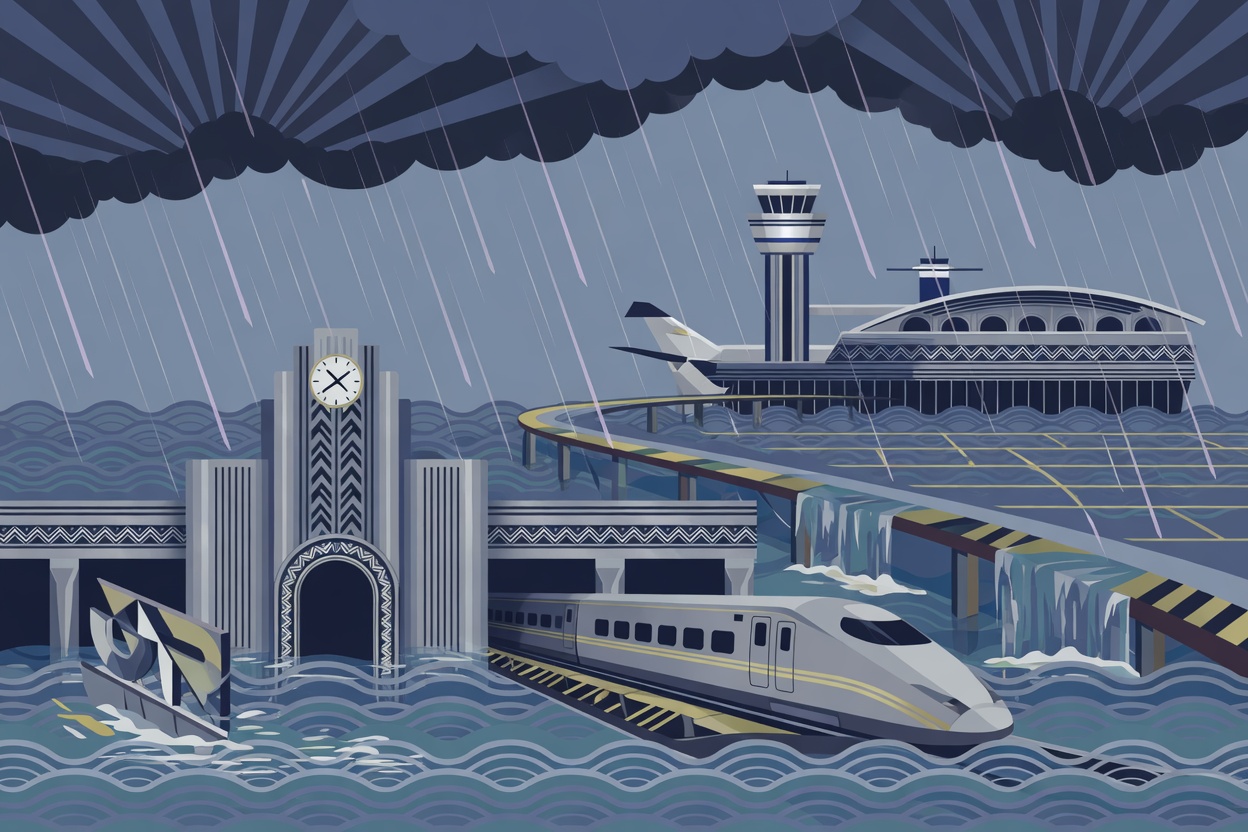
At least four people are dead after record rainfall pummeled eastern Japan’s Chiba prefecture on Thursday. Authorities described the deluge as “unprecedented.” The storm stranded 7,000 travellers overnight at Tokyo’s Narita airport, cut power to more than 22,000 households, and prompted evacuation orders for more than 400,000 people. It was the highest volume of precipitation ever recorded in Japan, arriving during the Bon Buddhist holiday week, one of the country’s busiest travel periods.
The torrential downpour began Thursday afternoon. Chiba logged more than 100mm of rain per hour at times, roughly three times the average for August. Areas of the prefecture recorded upwards of 360mm in 24 hours into Friday. The Japan Meteorological Agency issued its highest level five emergency warning for heavy rains and landslides, the first such warning ever for the prefecture.
By Friday morning, the agency downgraded the warning to level four across more than a dozen municipalities as rain subsided, but forecast more rain later in the day. The dead included a 66-year-old woman killed when her car became trapped in flood waters in Sakura City. A man believed to be in his 60s or 70s was found floating on a flooded road in Ichikawa City. A third victim, a man of unknown age, was found collapsed on a street. The fourth was a person of undetermined gender and age. Five others were wounded. A fifth person was feared dead. A sixth remained unaccounted for, according to the Chiba Prefecture Disaster Management Office.
Japan’s Ground Self-Defence Force was dispatched to the area. Soldiers evacuated 4,000 people from Soga train station after they were stranded by flooding for hours. Around 1,700 people spent the night at the Chiba prefectural government building. Others sheltered at metro stations across the region. More than 230,000 people were advised to take shelter, according to officials, while the Guardian reported evacuation orders covering more than 400,000 people in Chiba and other areas.
Travel chaos and power cuts
Narita airport, one of Tokyo’s main international gateways, became a temporary refuge for approximately 7,000 passengers who could not leave after trains stopped running. A spokesperson said all flights were scheduled to operate normally on Friday. Japan Airlines said some of its flights could see delays but that it did not expect cancellations. Rail services partially resumed Friday morning with delays. Several lines remained suspended and some major highways stayed shut.
Tokyo Electric Power reported more than 22,000 households without power by 11am Friday. The Guardian put the number at about 45,000 homes. At least 80 homes experienced flooding. Footage from public broadcaster NHK showed water gushing violently from what appeared to be a maintenance hole, rising above the height of a nearby five-storey building in Chiba’s central ward. Photographs and television images after daylight revealed homes, cars, and stretches of railway track submerged in muddy water.
A woman in Chiba’s Ichikawa city told NHK the rain “happened all of a sudden so it was a complete surprise.” “The power is out so I’m worried whether I can open my business in the next couple of days,” she said.
Officials warn of continued danger
Chiba Governor Toshihito Kumagai told reporters on Friday morning that the situation was extraordinary. “This case was an extremely unusual situation, even by Japan’s historical weather standards,” he said. “I have responded to many disasters in the past, but I have never experienced a case like this.” Kumagai said authorities would prioritise saving lives and continue rescue efforts.
Kazuhito Shimamoto, of the ministry of land, infrastructure, transport and tourism, urged residents near rivers to act. “For rivers where the risk of flooding is already high, please take action to protect your lives in any way possible,” he said. “There are also rivers where the risk of flooding is expected to increase further, so please check the evacuation advisories issued by your local municipalities and evacuate early.”
The Japan Meteorological Agency said the deluge was caused by warm, humid air flowing into the country’s east that combined with cold air above, making atmospheric conditions extremely unstable. Meteorologists in Japan say that climate breakdown is increasing the frequency and intensity of extreme weather events. The rains were expected to last through late Friday.
The disaster follows a series of storms that swept through Japan and neighbouring countries this week, including typhoons Dolphin, Chan-Hom, and Peilou, which churned across the region simultaneously. Dolphin had already brought heavy rain to Japan’s Okinawa island, cutting power to tens of thousands of buildings, toppling trees, and cancelling flights. Over the weekend, Chinese authorities evacuated more than 1 million people as Dolphin, the strongest typhoon to hit China so far this year, made landfall in the country’s east. In the Philippines, authorities shut schools and government offices across most of the country’s north, citing the threat of floods.
Sources & methods
- BBC News report on unprecedented rains killing four in eastern Japan, with details on Narita airport strandings, power outages, and regional storm context Archived Aug 14, 2026
- Guardian report on the Chiba deluge, including the first-ever level five warning for the prefecture, victim details, official quotes, and climate breakdown attribution Archived Aug 14, 2026
- Al Jazeera report providing 24-hour rainfall totals, power figures from Tokyo Electric Power, Bon holiday context, and Ground Self-Defence Force evacuations from Soga station Archived Aug 14, 2026
This article was compiled from reports by BBC News, the Guardian, and Al Jazeera. All facts, figures, and quotations were drawn directly from those three source texts.