Ship attacks near the Strait of Hormuz reach a record weekly high, sinking a container ship and squeezing oil flows
A record weekly high of ship attacks in and around the Strait of Hormuz has sunk a container ship, spread strikes deep into the Gulf of Oman, and squeezed oil flows through one of the world’s most critical chokepoints.
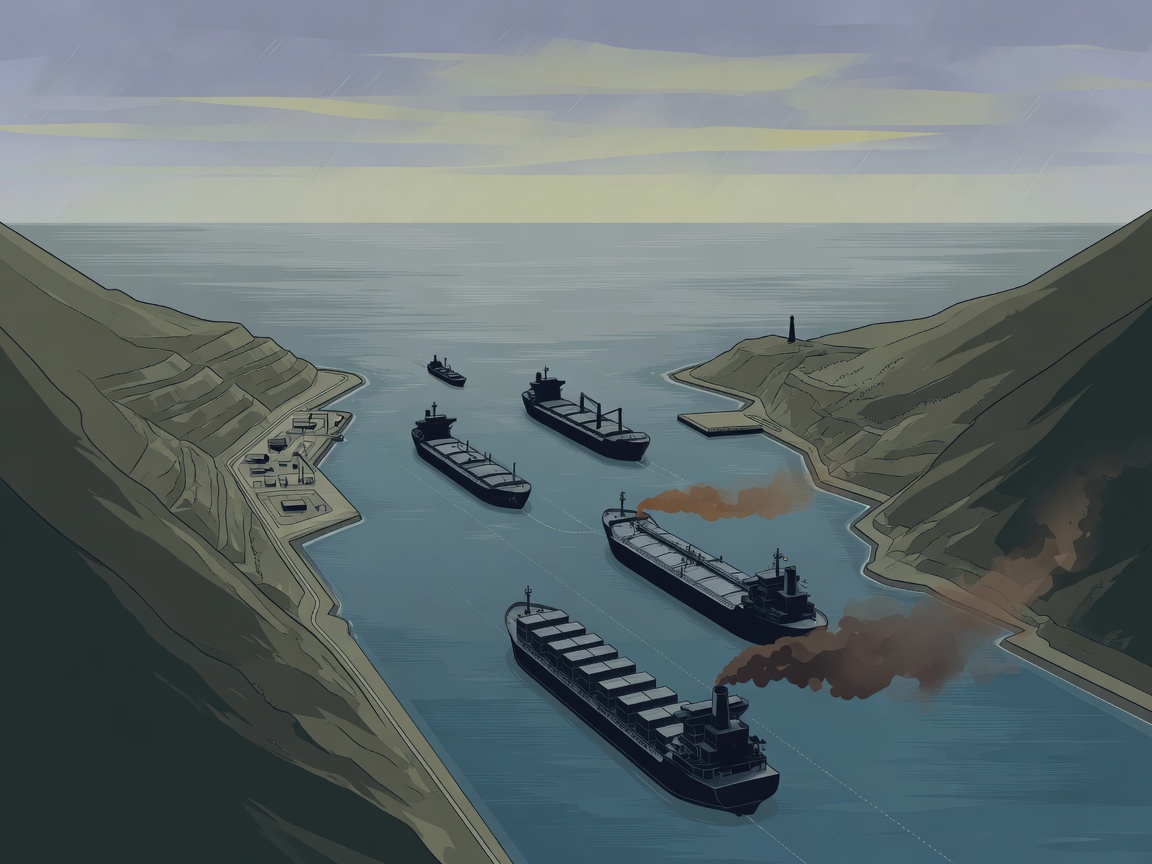
12 vessels were attacked between 5 and 11 October in and around the Strait of Hormuz, per UKMTO data analysed by BBC Verify, the highest weekly toll reported since the war began. The previous week saw 10 ships reporting attacks.
Six vessels were struck on a single Sunday, a one-day high. So far this week, four reported attacks have been recorded. Iran has been attacking commercial vessels in and around the strait, and the strikes have extended into the Gulf of Oman. Experts say Tehran has widened its reach in response to the US military shepherding more tankers through the south of the strait.
A container ship sinks in the strait
The container ship GFS Pride sank after being struck by a projectile in the strait on Tuesday. Twenty-one crew were safely evacuated. Iran’s Islamic Revolutionary Guard Corps published footage of what appeared to be the vessel sinking and said it was carrying 2,500 containers of contraband and had taken an unauthorised route. There has been no independent confirmation of those claims. Separately, the GFS Giselle, a Singapore-registered container ship, was damaged in an attack this week. Its crew were reported safe.
Strikes spread far beyond Hormuz
The Nicaragua-flagged tanker Petro Dolphin was struck by a drone close to the Sohar Anchorage, Oman, more than 250km from the strait, according to the maritime intelligence firm Vanguard. Verified footage showed the vessel on fire, filmed by the crew of a smaller boat nearby. 11 Indian seafarers were rescued, and two remain missing, the Forward Seamen’s Union of India said. On Thursday 8 October, a tanker was struck by multiple projectiles north of Qatar, more than 500km from the strait, resulting in multiple reported casualties. Another tanker was attacked close to the UAE town of Al-Jazirah al-Hamra on Friday 9 October. Verified footage from that incident showed crew members running across the deck and putting on lifejackets as a large cloud of black smoke rose over the ship.
Oil flows and crossings fall sharply
About 12.6 million barrels per day went through the strait on 13 October, per Kpler, below 15 million at the end of September and a pre-war baseline of some 17 million barrels per day. Crossings through the strait fell to 131 in the week ended 14 October, from 176 the previous week, also per Kpler. US Navy data indicates vessels given assistance to transit the strait during the first 10 days of October were up 85% compared with the same period in August. So-called assisted transits were a key factor in helping drive oil flows from the Middle East back towards pre-war levels in September. Iranian exports have completely stalled as a result of the US blockade of Iranian ports and ships.
Suspended lines and a self-insured shuttle
Major container shipping lines have largely stayed away from Hormuz since the outbreak of the war, with only some regional operators continuing sporadic services using smaller feeder vessels. A shuttle system is being used to move oil through the strait, involving smaller tankers transiting before transferring cargo to larger vessels in the Gulf of Oman. These shuttle ships use a route close to Oman’s coastline, which Iran says is unauthorised, insisting vessels take an alternative route closer to its own shore. A Gulf counterpart told Singapore Foreign Minister Vivian Balakrishnan that his country was earning more from oil exports than before the war by operating a Hormuz shuttle of about 20 very large crude carriers, effectively self-insured against attacks.
“The aim here is to stop the ships going through and to deter others,” said Martin Kelly, CEO of Orbital Risk Intelligence. He described Iran as having evolved its strategy in response to the loosening of its control over the strait. Jayendu Krishna, a director at Drewry Maritime Advisors, offered a starker warning. “If the Gulf of Oman became a zone of kinetic activity, a significant part of supplies to the Gulf countries would be cut off, since Khorfakkan and Sohar have been a lifeline for them,” he said.
Sources & methods
- BBC Verify analysis of UK Maritime Trade Operations incident reports, with additional reporting on oil flows, US Navy data, and expert interviews. Archived Oct 16, 2026
- CNBC reporting on Singapore-flagged vessel attacks, shipping industry responses, and analyst commentary on Strait of Hormuz transit patterns. Archived Oct 16, 2026
BBC Verify collated incident reports published by UKMTO on its website and created a timeline based on the first date cited in each report. Kpler provided data on daily oil throughput and weekly vessel crossings through the strait.