South Korea’s education minister resigns after AI-cheating scandal disrupts national college entrance exam
Choi Kyo-jin stepped down after a top scorer’s video confession to AI-assisted cheating triggered last-minute security measures that unsettled half a million test-takers.
Education Minister Choi Kyo-jin resigned on Sunday after a confessed AI-cheating scandal forced chaotic last-minute security measures during South Korea’s national college entrance exam. President Lee Jae Myung accepted the resignation, the presidential office said.
The scandal was triggered by a top scorer’s confession to AI-assisted cheating days before the Suneung, the annual college entrance exam taken by approximately 500,000 students across the country. The admission sent officials scrambling. They rolled out preventive measures with barely any notice, deploying national disaster alerts, body searches, and wifi blackouts in testing areas. The country had been gripped by fears of AI-assisted exam cheating since the confession surfaced the previous weekend. The government’s frantic response netted misconduct cases involving electronic devices and ultimately cost the education minister his job.
The confession that started it
Han Won-seok, age 34, topped the national tax accountancy exam in April with a near-perfect score, getting just one out of 160 questions wrong. His unusually high result drew speculation that only intensified as the Suneung approached. Then, days before the exam, he confessed via a video message. “I used a microcamera to photograph the test questions and sent them to an AI, then checked my answers on my smartphone to commit the cheating,” he said. The admission sent shockwaves through a country where concerns over academic dishonesty during the fiercely competitive exam had been brewing in recent weeks. It left education officials with almost no time to respond before the country’s most important test day.
A scramble to secure the exam
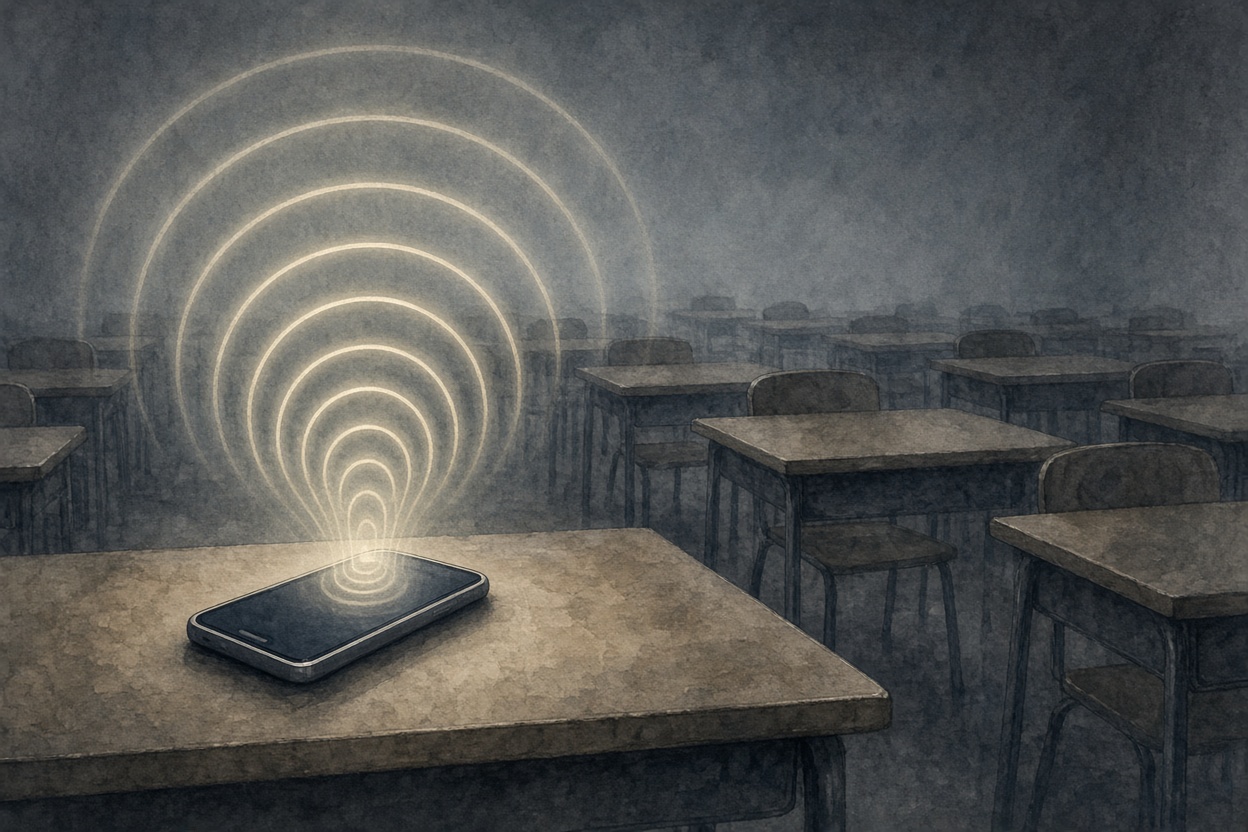
Three emergency alerts were sent between 08:00 and 15:00 on exam day, causing phones across the country to blare at full volume—a sound that could not be silenced, even on phones set to silent mode or on roaming. Only phones switched off or in airplane mode stayed quiet. It was the first time South Korea used its national disaster alert system to catch exam cheaters. Authorities inspected candidates’ glasses, watches, collars, sleeves, and buttons for concealed cameras, and candidates had to cover shirt and jacket buttons. Public wifi was blocked. Smart devices had to be turned off and handed in. Bags left in corridors were checked for any devices that were still on.
Exam day fallout
Officials identified 111 cases of misconduct involving electronic devices during the exam. Nearly half were detected through the emergency alerts that blared across testing rooms. The measures unsettled honest test-takers too. One high school senior told the Korea Times he was worried his horn-rimmed spectacles would be mistaken for smart glasses. Another told Yonhap he usually wore glasses but made an effort to put on contact lenses for the Suneung to avoid raising suspicions.
A minister on the back foot
Choi, 72, appeared at a parliamentary hearing on Monday. Asked whether he was confident that authorities could catch would-be cheaters on exam day, he replied: “Due to my age, I am not confident I could.” His response quickly drew public backlash. Citizens saw it as an admission of helplessness at the worst possible moment. Choi did not appear at press conferences in the days leading up to the exam; a vice minister announced the preventive measures instead. Teachers’ unions criticised the government response as belated. On X, Choi wrote that the exam had concluded without any major incidents but that he did not believe he was immune from public criticism that the government had failed to prepare adequately in advance. “Now that the exam is over, I take full responsibility and hereby offer my resignation,” he added.
The stakes behind the Suneung
The Suneung determines which university a candidate can attend and, in turn, their future career prospects in a society where educational credentials carry enormous weight. South Korea goes to extraordinary lengths each year. Aircraft take-offs and landings are rescheduled during the 25-minute English listening paper to minimise noise. Artillery fire stops. Tank movements are suspended. The stock market opens an hour late. Cars are stopped 200 metres from every exam centre. For the families of the half-million students who sat the test, those disruptions are a familiar ritual. This time, however, they unfolded under a cloud of panic the government had not anticipated, and the man responsible for overseeing the exam did not survive the fallout.
Sources & methods
- BBC News, reporting on Choi Kyo-jin's resignation, Han Won-seok's confession, and exam-day security measures Archived Nov 22, 2026
- The Guardian, reporting on the government response, parliamentary hearing, and Suneung disruptions, with Agence France-Presse Archived Nov 22, 2026
This article draws on reporting from BBC News and The Guardian, including verified quotes from Han Won-seok’s video message and Education Minister Choi Kyo-jin’s statements on X and at a parliamentary hearing.